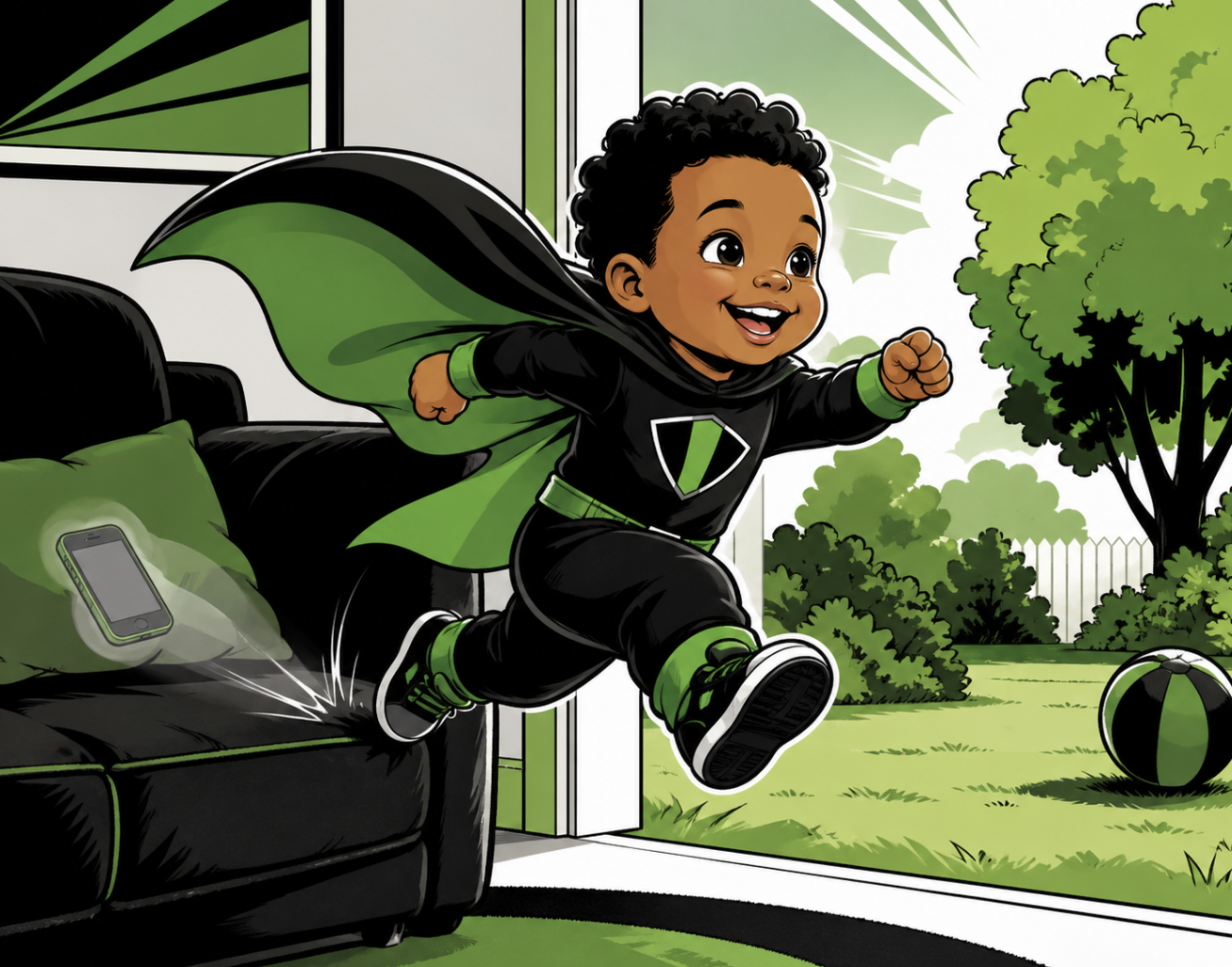
Born Strong, Raised Soft: The Toddler Screen Crisis No One’s Talking About
Mighty Oak Athletic Podcast S3:E83 - Born Strong, Raised Soft: The Toddler Screen Crisis No One’s Talking About
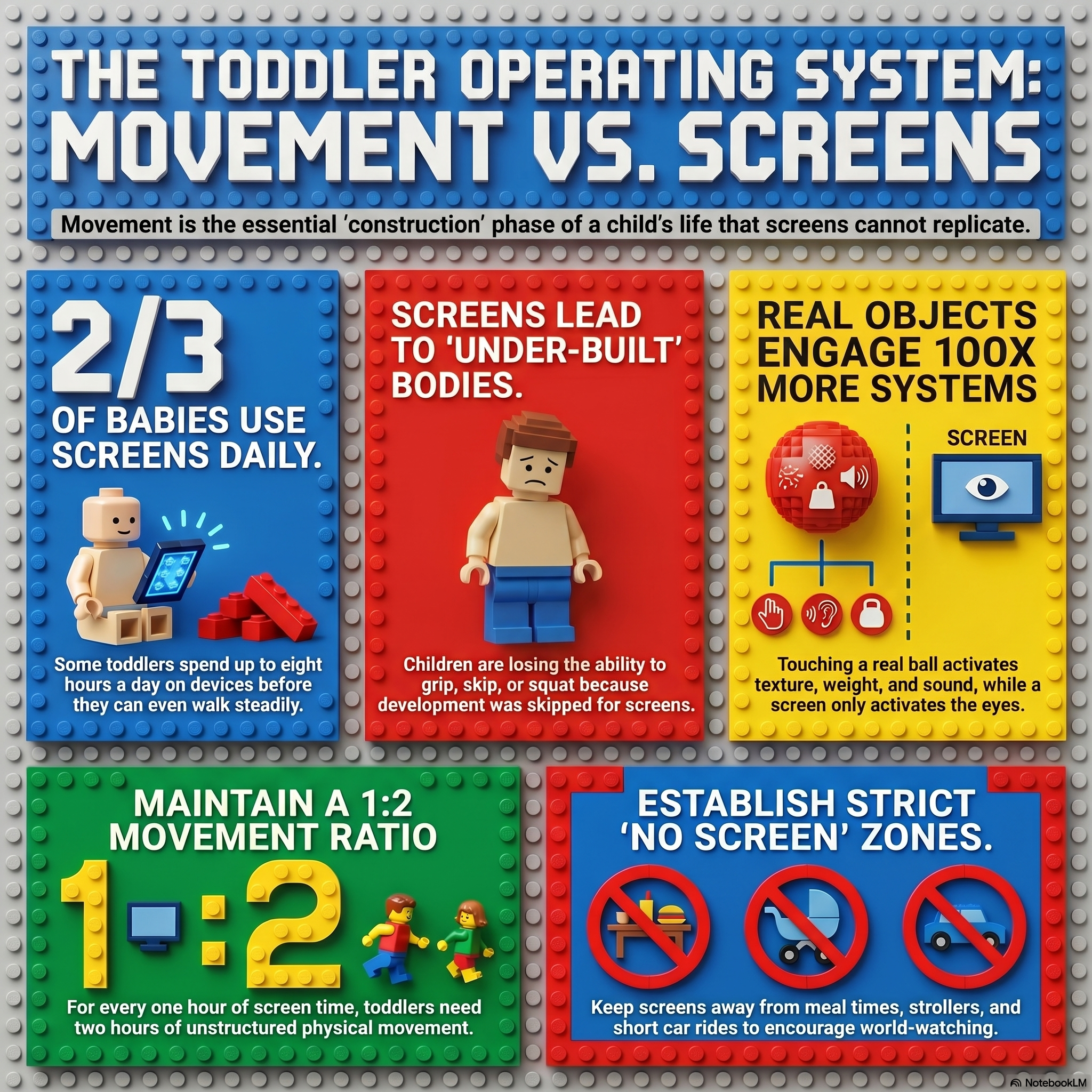
Two-thirds of British babies under two are using screens. Some up to eight hours a day.
Read that again.
Eight hours. On a child who hasn’t learned to walk steady. Whose brain is wiring itself for life. Whose hips, shoulders, and spine are still figuring out what gravity even is.
This isn’t a British problem. American parents aren’t doing better. We’re just less honest about it. Walk into any restaurant in DuPage County and count the toddlers with a phone propped on the table. The screen has replaced the rattle, the picture book, the older sibling, the grandparent.
It is the new pacifier.
What screens steal
A toddler’s job is to move. That’s it. Crawl, climb, grab, drop, fall, get up. Every wobble teaches their inner ear. Every reach builds their grip. Every fall — the small ones — teaches them how to fall safer next time.
Movement isn’t a hobby for a one-year-old. It’s the operating system getting installed.
When you replace movement with a screen, you don’t just lose the activity. You lose the wiring. The eyes never learn to track distance. The neck stays weak from looking down. The fingers learn to swipe before they learn to grip.
We see the result years later at MOA. Eight-year-olds who can’t hang from a bar for ten seconds. Ten-year-olds who can’t skip. Twelve-year-olds whose first deep squat looks like a folding chair collapsing.
These aren’t lazy kids. They’re under-built kids. The construction got skipped.
The other half of the bill
The body is one cost. The brain is the other.
When a baby touches a real ball, a hundred systems light up. Texture, temperature, weight, smell, the sound it makes when it hits the floor. When that same baby taps a glowing ball on a screen, one system lights up: the eyes.
Brains develop the parts they use. The parts they don’t use shrink.
We’re now raising a generation whose hands haven’t done the work their grandparents’ hands had done by age two. The data is starting to show up. Speech delays climbing. Attention spans shortening. Anxiety in elementary schoolers at the highest level on record.
Not all of it is screens. A lot of it is.
What to do
You don’t need to throw the iPad in the lake. You need to flip the ratio.
For every hour of screen time under age five, your kid should get two hours of unstructured movement. Outdoor if possible. Barefoot if possible. With other kids if possible. Boring if possible — boredom is where imagination starts.
A few rules that actually work:
No screens at meals. Ever. The dinner table is where language gets built.
No screens in the stroller. Let them watch the world.
No screens in the car for short trips. Eyes out the window beats eyes on glass.
And the big one — model it. Your toddler is watching how much you stare at your phone. They will copy what they see, not what you say.
Strong from the start
At MOA we train kids from age six. By the time they walk in our door, the foundation is already half-poured. The kids who move well were moved well. The kids who struggle were sat down too early, too often, for too long.
You can’t out-train a toddlerhood spent on a couch. You can repair some of it. We do that work every day. But it’s harder, and slower, and the kid pays for it twice.
The cheapest insurance you can buy your child is a yard, a pair of shoes, and a parent willing to be bored alongside them.
Put the phone down. Get on the floor. Roll the ball.
That’s the workout that matters most. And the only window for it is right now.