12 Weeks. 12 Chances. Don't Waste Them.
Key Takeaways
Twelve weeks without training isn't neutral — strength, conditioning, and mobility all decline measurably in 6-to-18-year-old athletes who take the summer off.
Foundational summer training for youth athletes should include the squat, deadlift, overhead press, and power clean — plus sprints, change of direction, and short, sport-specific conditioning.
A CSCS (Certified Strength and Conditioning Specialist) credential is the gold standard for youth strength coaching.
Look for coached programs with real progressions, not open gyms or whiteboard workouts.
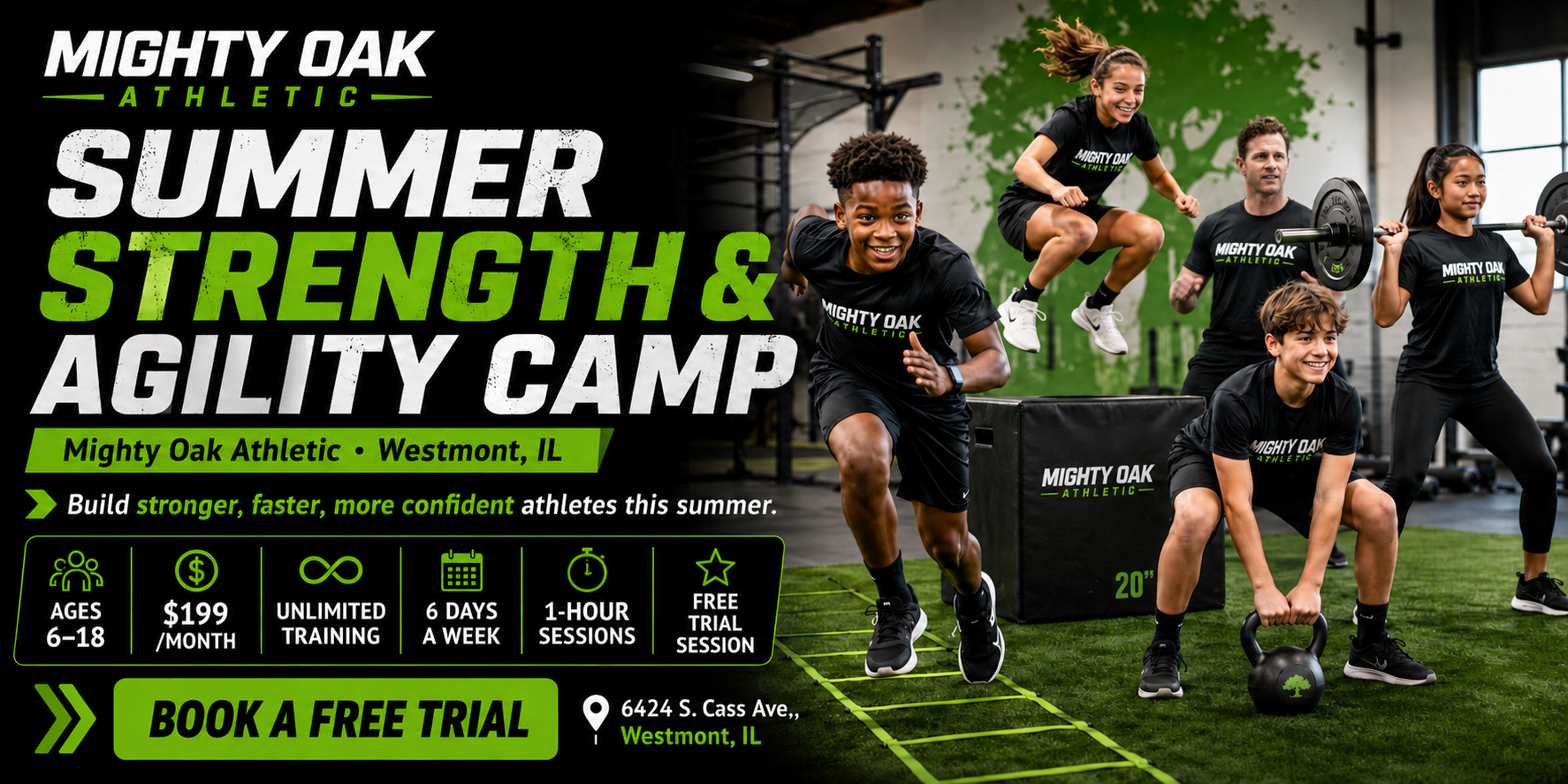
Mighty Oak Athletic runs an unlimited-session summer program for student athletes ages 6–18 in Westmont, IL ($199/month, six days a week, first session free).
Your Kid's Summer Has 92 Days. Don't Spend Them On The Couch
Every summer, parents in Westmont and the surrounding suburbs tell me the same thing in June: "We're just gonna let him take a break and have a normal kid summer."
Then they say the same thing in August: "Why does he look slower than he did in May?"
That's not a coincidence. That's biology.
The body doesn't sit still while a kid takes the summer off. It adapts to whatever you give it. Twelve weeks on the couch isn't neutral — it's twelve weeks of slow regression. Strength drops. Mobility tightens up. Conditioning evaporates. The kid who walked off the field in May confident and bouncy walks back onto it in August feeling stiff, sluggish, and a step behind.
Meanwhile, the kid who trained all summer? She didn't just maintain. She gained. She's stronger, faster, more confident, and harder to push around. She didn't get lucky. She got coached.
That gap doesn't close on its own.
What Summer Training Should Actually Look Like
Most parents picture summer training and imagine a sport camp — a week of skills work, maybe a tournament weekend, then back to the pool. That's fine. It's just not what builds an athlete.
What builds an athlete is the same boring, repeatable stuff that's worked for a century. Pick something heavy up. Put it down. Push something heavy overhead. Pull yourself up to a bar. Sprint. Jump. Land. Repeat for twelve weeks under a coach who actually watches you do it.
That's the foundation. Sport-specific skills sit on top of it. You can't out-skill a weak body, and you can't out-camp a missing foundation.
For a 6-to-18-year-old, that means a few non-negotiables:
The squat and the deadlift — the two lifts that build real lower-body strength. The overhead press — for shoulder strength, posture, and durability. The power clean from the floor — the single best movement for explosive athleticism. Sprints, change of direction, and footwork — because strength without speed is just heavy. And short, intense conditioning that actually transfers to sport, not pointless long-distance running.
Get those reps in three to five days a week for twelve weeks, with a coach calling out the cues, and you've changed the athlete. Skip them, and you've changed the athlete too — just in the wrong direction.
What to Look For in a Summer Program
If you're shopping for somewhere to send your kid this summer, here's the short checklist:
Is it coached, or is it a gym membership? Open weight rooms are great for people who already know how to lift. They're a disaster for kids who don't. Your kid needs eyes on every rep, not a key fob and a free water bottle.
Is there a real progression? A good program knows where every athlete is and where they're going next. If "the program" is whatever's on the whiteboard that day, run.
Does it train boys and girls the same? Strong girls become confident women. If a program softens the standards for girls, it's not serving them.
Is the coach actually qualified? A CSCS (Certified Strength and Conditioning Specialist) is the gold standard for youth strength coaching. Anyone can call themselves a trainer. Not everyone has earned the credential.
Does it use barbells? Real barbells, not just bands and bosu balls. Nothing else loads the body as honestly or builds strength as predictably.
What We Built at Mighty Oak Athletic
This is the program we run for student athletes ages 6 through 18 — every summer, six days a week, in Westmont. Twelve weeks. Unlimited sessions. One flat price. Every kid gets coached every rep through our nine-level color progression system, starting at white and working toward black.
Athletes come from Hinsdale, Clarendon Hills, Downers Grove, Darien, Burr Ridge, Oak Brook, Willowbrook, and every middle school and high school in between. Football players prepping for August two-a-days. Volleyball and basketball kids chasing a vertical. Soccer players trying to outrun the field. Cross country kids who want legs that don't fall apart. And plenty of kids who don't play a sport yet — just want to get stronger and feel good in their own body.
Beginners are welcome. Every athlete starts at zero and builds up. The first session is free.
Twelve weeks. Twelve chances a week. Don't waste them.
Be strong to be useful.
-
The week after their spring season ends. The single biggest summer training mistake is waiting until July to "get serious." By then a third of the summer is gone.
-
Three to five. Fewer than three doesn't move the needle. More than five without proper recovery is counterproductive.
-
Yes — when coached properly. Decades of research from the National Strength and Conditioning Association confirm that supervised barbell training is one of the safest forms of youth athletics and significantly reduces injury risk.
-
Mighty Oak Athletic runs a CSCS-coached summer strength and agility program for student athletes ages 6–18 at 6424 S. Cass Avenue in Westmont, IL — six days a week, unlimited sessions, $199/month. First session is free.
Coach Mike Ockrim, CSCS, is the Founder & CEO of Mighty Oak Athletic, a youth strength & conditioning facility in Westmont, IL, and the Founder of Sunday Funday Sports, a nonprofit youth sports league. He is a Certified Strength and Conditioning Specialist (CSCS) and a Life Time group fitness instructor with over eight years on the platform. He is the author of Death Resistant, 13 Pounds in 30 Days, and Mighty Oak Athletic Nutrition.
Why Your Daughter's UV Obsession Is Wrong
Mighty Oak Athletic Podcast S3:E86 - Why Your Daughter’s UV Obsession Is Wrong
Key Takeaways
10–15 minutes of midday sun on bare arms and legs provides a full day's vitamin D for fair-to-medium skin types.
Vitamin D synthesis requires a UV index of 3 or higher.
The body has a built-in cap on vitamin D production per session — more sun past the cap adds zero vitamin D, only UV damage.
A UV index of 5 is sufficient for full vitamin D synthesis with far less skin cancer and photo-aging risk than UV 8+.
"Minimum effective dose" applies to sun the same way it applies to strength, cardio, and nutrition.
15 Minutes
I took a nutrition class at the University of Arizona during my undergrad. Honestly, I don’t remember much from it — but one line from the professor has stuck with me for almost thirty years:
“Fifteen minutes in the Arizona sun gets your body all the vitamin D it needs for the day.”
That was it. That was the whole lesson. And it’s been quietly running in the background of how I think about health ever since.
Because that one sentence captures something we’ve collectively forgotten: the most powerful inputs for our health are already all around us — we just have to make the effort to go get them.
We’re drawn to supplements. We’re drawn to gadgets. We’re drawn to whatever new bottle promises to optimize our biology. Meanwhile, the sun is right outside. The air is right outside. Gravity is right outside. Water is right outside.
The Teenage Girl UV Problem
My daughters — and basically every teenage girl on the internet right now — are obsessed with the UV index. They watch it like a stock ticker. They wait for it to climb. Higher UV = faster tan = more efficient beach session, in their math.
But I think they’re missing the point that almost all of modern health misses when we chase intensity:
More isn’t always better. The question is the minimum effective dose.
Here’s the part most people don’t know: your body actually caps how much vitamin D it can make from sunlight in a single session. Once you hit the limit, more sun doesn’t equal more vitamin D — it just equals more UV damage. The sun is a fixed-portion meal, not an open bar.
So yes, a UV of 9 will crisp you golden brown faster. It’ll also fry your skin, age you, and trade your tomorrow for your today. A UV of 5 will still give you your vitamin D, still give you a beautiful gradual color, and still let you spend quality time outdoors with the sun on your body — without the damage.
Same logic applies everywhere in fitness and nutrition:
You don’t need to run a marathon to be cardiovascularly healthy.
You don’t need to lift 500 pounds to be strong.
You don’t need to eat zero carbs to be lean.
You don’t need a UV of 9 to get a tan.
Find the dose that works. Stop chasing the dose that hurts.
What That Looked Like Today
I lived this today at Life Time. Trained outside. Here’s the session:
Pool work: Jump squats, lunges, sumo squat jumps — exploding out of the water to use it as resistance. Way harder than it looks.
Breath work: Swam laps, then practiced underwater swimming holding my breath. Natural CO₂ tolerance training.
Resistance: Pool tools — push and pull through the water to load every movement.
Recovery: Hot tub, stretched everything out, loosened up.
The finisher: Laid out and got my 15 minutes in the sun.
A complete session — Movement, Recovery, and Nutrition (yes, sunlight is a nutrient) — built around the simple, elemental inputs that are right there waiting.
The Takeaway
Get outside. Move. Get in the water. Stretch. Get your 15 minutes.
Don’t chase the maximum. Hit the minimum effective dose.
Be strong to be useful.
Coach Mike Ockrim, CSCS, is the Founder & CEO of Mighty Oak Athletic, a youth strength & conditioning facility in Westmont, IL, and the Founder of Sunday Funday Sports, a nonprofit youth sports league. He is a Certified Strength and Conditioning Specialist (CSCS) and a Life Time group fitness instructor with over eight years on the platform. He is the author of Death Resistant, 13 Pounds in 30 Days, and Mighty Oak Athletic Nutrition.
-
About 10–15 minutes of midday sun on bare arms and legs is enough for fair-to-medium skin types when the UV index is 3 or higher.
-
At least 3. Below that, your skin cannot produce meaningful vitamin D. A UV of 5 is more than enough — you don't need extreme UV.
-
No. Your body caps how much vitamin D it can make in a single session. Once you hit the ceiling, extra sun is just damage.
-
UV 9 tans faster but damages faster. UV 5 produces the same tan with far less damage if you allow more days. Minimum effective dose wins.
They Walked In Soft. They Left Strong.
Mighty Oak Athletic Podcast S3:E85 - They Walked In Soft - They Left Strong
We are trying to put ourselves out of business with every kid who walks through our doors. That is the whole point.
May is graduation season. Caps and gowns. Class pictures. Last days of school. At Mighty Oak Athletic, May also means some of our athletes are moving on. Some are graduating grade school into high school. Some are heading from high school into college, into university rec centers, college athletic programs, or wherever life takes them next. That is a great thing. The goal was never to keep them here forever. The goal was to send them out ready.
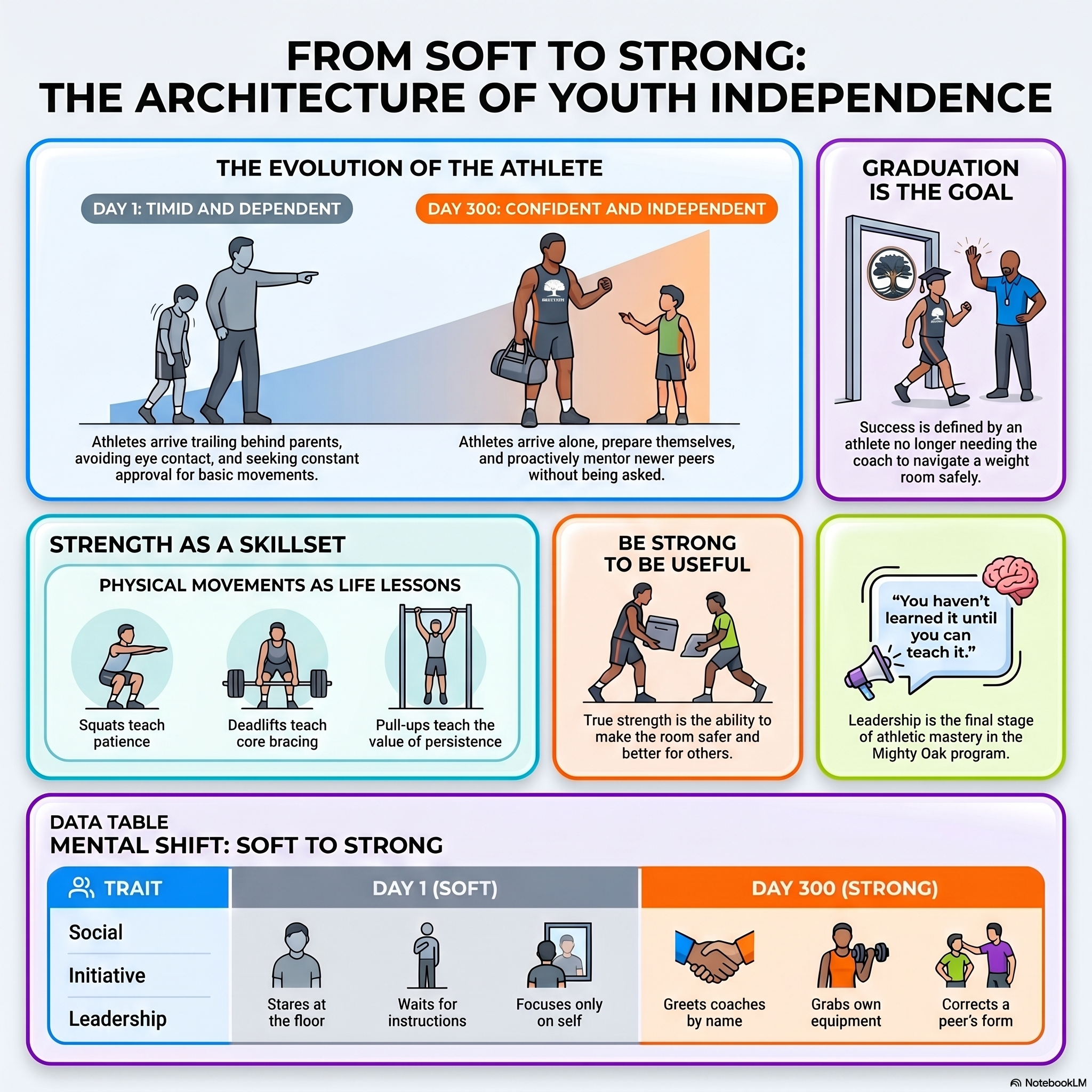
Many of them walked in soft. They left strong.
The First Day vs. The Last Day
Picture the same kid, two years apart.
Day one. The kid walks in behind a parent. Stands close. Stares at the floor when introductions happen. We ask for a squat. They bend at the knees, tip forward, and look at us for approval halfway down. We hand them an empty barbell. They hold it like it might bite. They say “I don’t know” to almost every question.
Day three hundred. The kid walks in alone. Says hi to the coaches by name. Grabs their own warm-up plate. A newer athlete is setting up a deadlift with bad form three feet away. Without being asked, the kid walks over and says, “Hey, try pulling the slack out before you lift. Like this.” Then they go back to their own bar.
That is the whole job.
Strength Is a Skill
Strength is not random. It is a skill, and skills are learned. A proper squat teaches patience and control. A deadlift teaches a kid how to use their hips, brace their core, and respect the weight in front of them. A push-up teaches body control. A pull-up teaches persistence. A carry teaches posture, grip, and toughness. The biggest lesson is that progress does not happen because a kid feels motivated one day. It happens because they show up consistently. That lesson follows them far beyond our gym.
You Have Not Learned It Until You Can Teach It
This is the part most strength programs miss. A kid has not really learned how to lift until they can guide someone else through it.
When a Mighty Oak Athletic graduate walks into a high school weight room, we want them to know how to set up their own squat. But we also want them to spot the freshman who has the bar resting on the back of their neck instead of their traps. We want them to say something. We want them to help.
That is what “be strong to be useful” actually looks like at age fifteen. Not lifting the heaviest weight in the room. Knowing enough to make the room safer. Knowing enough to lead.
That is the graduation we are really training for.
Graduation Is the Point
As parents, we sometimes want to hold on. We find a place that helps our kids and we want them to stay forever. But good coaching leads to independence. If a kid leaves us and walks into high school moving better, lifting smarter, and training with more confidence, that is a success. If they leave us and keep training for the rest of their lives, that is the biggest success.
The real goal is not a stronger middle school athlete. The real goal is a young adult who understands that strength is part of a healthy, active life — and who can help the people around them get there too.
We are proud of the ones moving on. We saw the first nervous session. We saw the awkward squats become clean ones. We saw the kid who used to stare at the floor start coaching the new kid.
You walked in soft. You left strong. Now go make the next room stronger too.

Your Grandma Falls. Their Grandma Lifts. The Difference Started at Age 9.
Mighty Oak Athletic Podcast S3:E84 - Your Grandma Falls. Their Grandma Lifts. The Difference Started at Age 9.
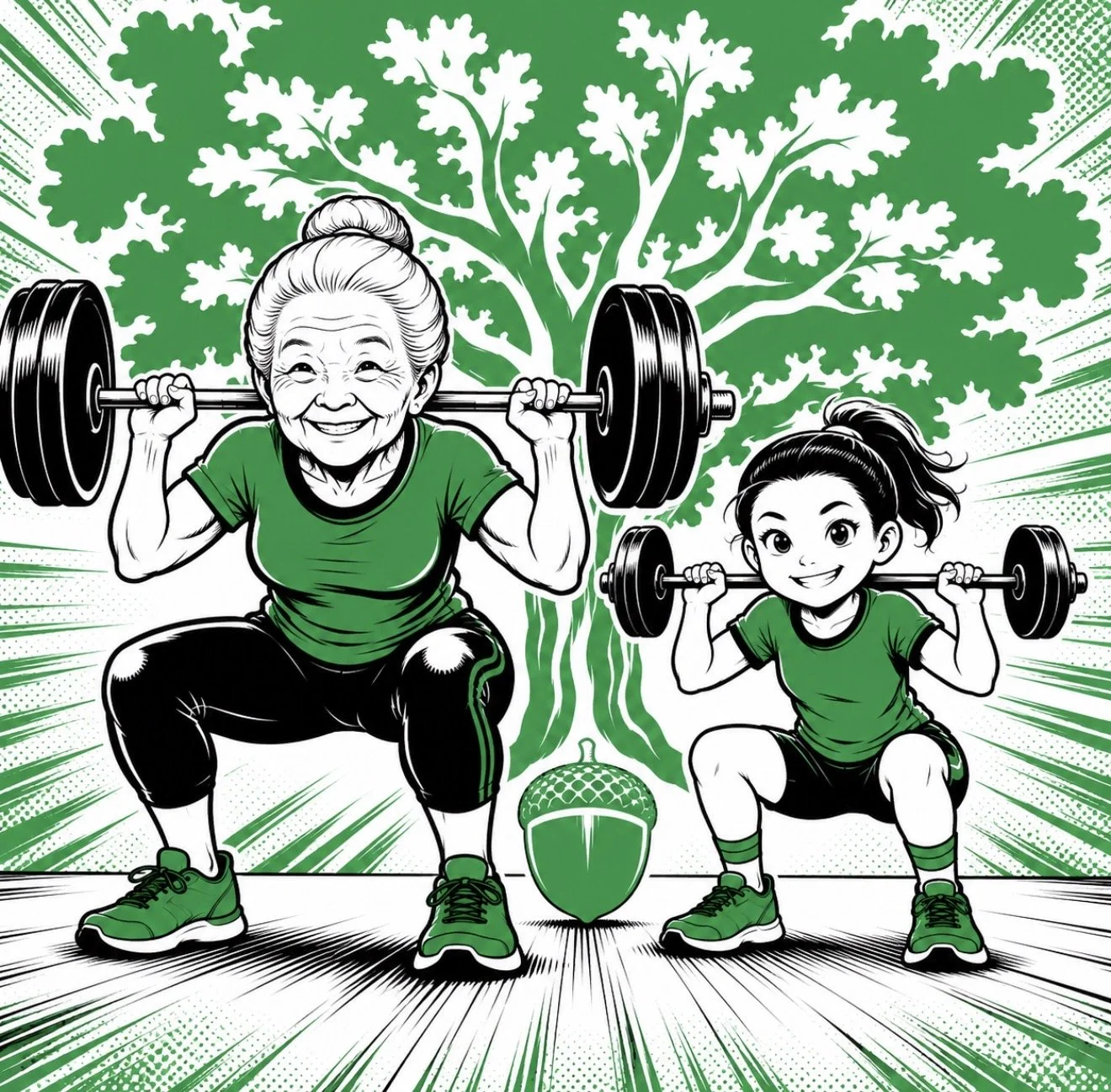
There’s a video from Taiwan making the rounds. Two grandmothers, ages 89 and 91, walk into a gym. They don’t sit on the bench and watch. They train. They lift weights. They move like people who plan to be around for a while.
The Associated Press filmed it in Taipei this month. Taiwan just crossed into “super-aged” territory — a fifth of its people are now 65 or older — and these two are the face of the country’s response. Don’t decay. Don’t accept it. Pick up something heavy. Put it down. Repeat.
Here’s why a strength coach in Westmont is writing about grandmothers in Taipei: what they’re proving on that gym floor is the same thing we’re trying to bake into your kid right now.
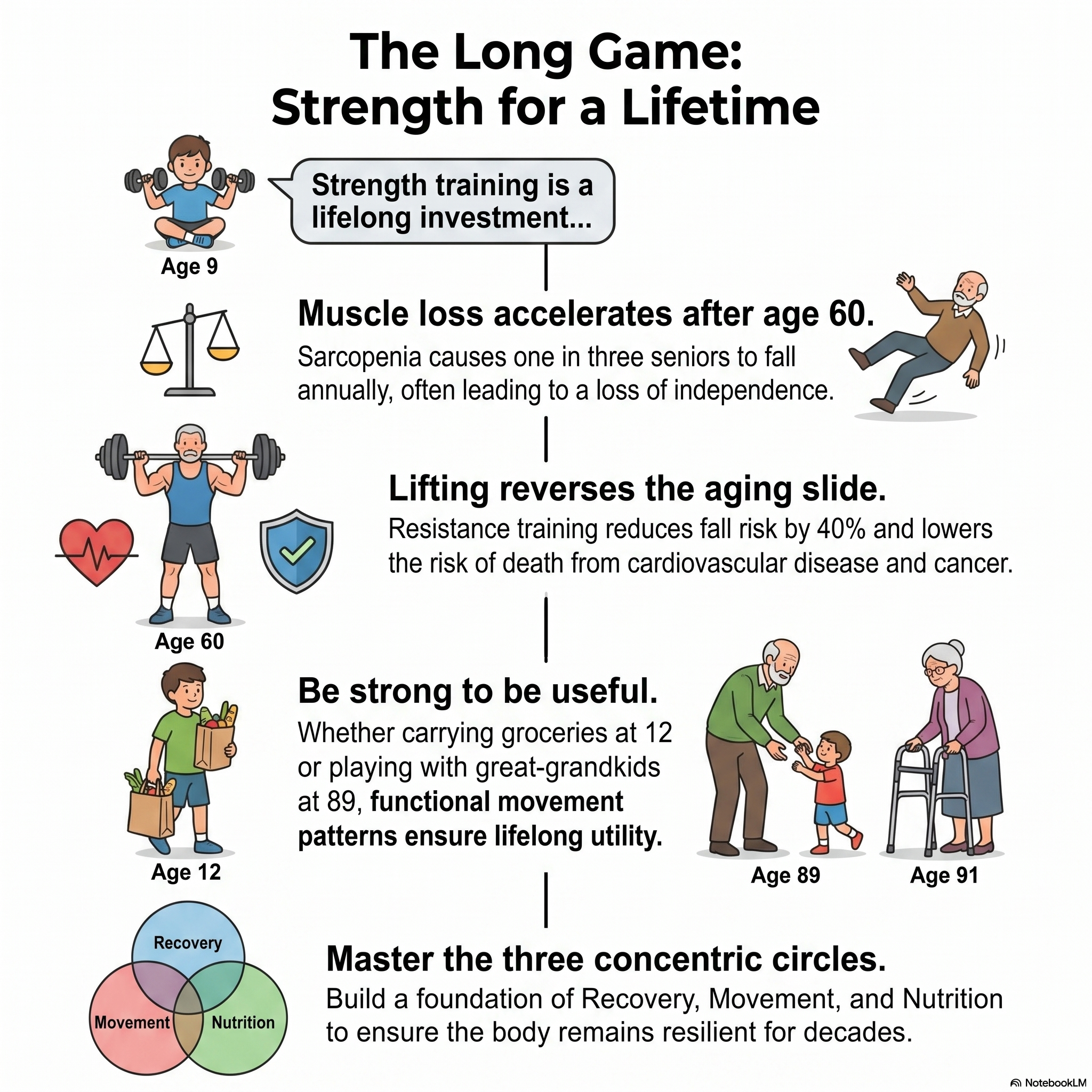
Zoom out for a second. Most people think the human body is on a slow slide after age 30, and there’s nothing you can do but wave goodbye to it. The science says otherwise. Adults lose roughly 3 to 5 percent of their muscle every decade after 30, and the rate accelerates after 60. That condition is called sarcopenia , and it’s the quiet reason one in three adults over 65 falls every year . The falls are what put grandmas in nursing homes. The falls are what take dads off their feet for good.
But here’s the part that should make every parent sit up. Strength training doesn’t just slow that slide — it reverses it. UCLA Health summarized a study that followed more than 200,000 older adults for 15 years and found that any weight training — any — was tied to lower risk of dying from cardiovascular disease, cancer, and all other causes . According to the Journal of the American Geriatrics Society, older adults in strength training programs reduce their fall risk by up to 40 percent . Researchers have even shown that nursing home residents in their 90s can significantly improve strength in a matter of weeks of resistance training . The body does not stop responding. It just stops being asked.
Now zoom back in to your kid.
If a 91-year-old can wake up muscle that’s been asleep for half a century, imagine what your 9-year-old’s body does when you give it a barbell, a kettlebell, and a coach who knows what to do with both. We’re not building 9-year-olds into bodybuilders. We’re building habits and a nervous system. We’re teaching her how to brace her core, hinge from her hips, breathe under load, and stand back up when something heavy is in her hands. Those are the same movements that 91-year-old grandma in Taipei is using to stay upright, stay independent, and stay out of a hospital bed.
This is the whole Death Resistant idea behind Mighty Oak Athletic. We coach in three concentric circles: Recovery, then Movement, then Nutrition. Recovery is the ground — sleep, water, breathing, time. Movement is what we do every session — barbell, kettlebell, bodyweight, in patterns the human body was built for. Nutrition is the fuel that lets the work stick. Pull any one of those circles out and the whole thing wobbles. Stack them for 10 years, 20 years, 50 years, and you get the grandma in Taipei. Not by accident. By practice.
Be strong to be useful. That’s our line. A useful 12-year-old can carry her own groceries and protect her own knees on the soccer field. A useful 30-year-old can pick up his toddler without throwing his back out. A useful 89-year-old can squat down to the floor to play with her great-grandkids and stand back up without help. That’s not three different people. That’s the same person, lifting the same patterns, for 80 years.
The grandmas in Taiwan didn’t suddenly become strong at 89. They became strong by treating their bodies like they were going to need them for a long time — and then they did. Your kid has a 70-year head start on them. We just need to put a barbell in her hands and a coach next to her, and teach her the long game.
That’s the whole job at MOA. Plant the acorn. Coach the patterns. Run the play in decades, not weeks. The mighty oak shows up later.
Born Strong, Raised Soft: The Toddler Screen Crisis No One’s Talking About
Mighty Oak Athletic Podcast S3:E83 - Born Strong, Raised Soft: The Toddler Screen Crisis No One’s Talking About
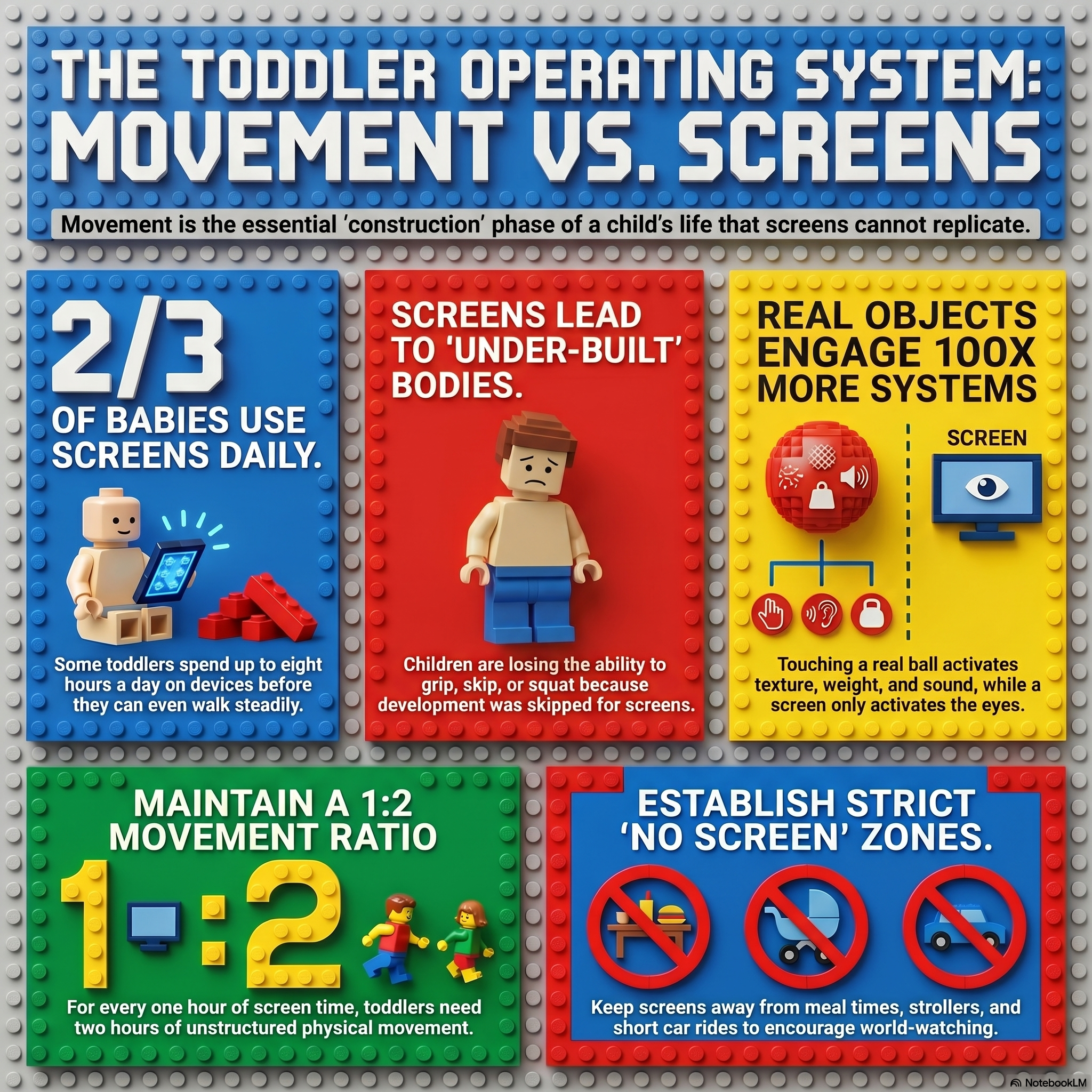
Two-thirds of British babies under two are using screens. Some up to eight hours a day.
Read that again.
Eight hours. On a child who hasn’t learned to walk steady. Whose brain is wiring itself for life. Whose hips, shoulders, and spine are still figuring out what gravity even is.
This isn’t a British problem. American parents aren’t doing better. We’re just less honest about it. Walk into any restaurant in DuPage County and count the toddlers with a phone propped on the table. The screen has replaced the rattle, the picture book, the older sibling, the grandparent.
It is the new pacifier.
What screens steal
A toddler’s job is to move. That’s it. Crawl, climb, grab, drop, fall, get up. Every wobble teaches their inner ear. Every reach builds their grip. Every fall — the small ones — teaches them how to fall safer next time.
Movement isn’t a hobby for a one-year-old. It’s the operating system getting installed.
When you replace movement with a screen, you don’t just lose the activity. You lose the wiring. The eyes never learn to track distance. The neck stays weak from looking down. The fingers learn to swipe before they learn to grip.
We see the result years later at MOA. Eight-year-olds who can’t hang from a bar for ten seconds. Ten-year-olds who can’t skip. Twelve-year-olds whose first deep squat looks like a folding chair collapsing.
These aren’t lazy kids. They’re under-built kids. The construction got skipped.
The other half of the bill
The body is one cost. The brain is the other.
When a baby touches a real ball, a hundred systems light up. Texture, temperature, weight, smell, the sound it makes when it hits the floor. When that same baby taps a glowing ball on a screen, one system lights up: the eyes.
Brains develop the parts they use. The parts they don’t use shrink.
We’re now raising a generation whose hands haven’t done the work their grandparents’ hands had done by age two. The data is starting to show up. Speech delays climbing. Attention spans shortening. Anxiety in elementary schoolers at the highest level on record.
Not all of it is screens. A lot of it is.
What to do
You don’t need to throw the iPad in the lake. You need to flip the ratio.
For every hour of screen time under age five, your kid should get two hours of unstructured movement. Outdoor if possible. Barefoot if possible. With other kids if possible. Boring if possible — boredom is where imagination starts.
A few rules that actually work:
No screens at meals. Ever. The dinner table is where language gets built.
No screens in the stroller. Let them watch the world.
No screens in the car for short trips. Eyes out the window beats eyes on glass.
And the big one — model it. Your toddler is watching how much you stare at your phone. They will copy what they see, not what you say.
Strong from the start
At MOA we train kids from age six. By the time they walk in our door, the foundation is already half-poured. The kids who move well were moved well. The kids who struggle were sat down too early, too often, for too long.
You can’t out-train a toddlerhood spent on a couch. You can repair some of it. We do that work every day. But it’s harder, and slower, and the kid pays for it twice.
The cheapest insurance you can buy your child is a yard, a pair of shoes, and a parent willing to be bored alongside them.
Put the phone down. Get on the floor. Roll the ball.
That’s the workout that matters most. And the only window for it is right now.
A Letter to My Heartbroken Son
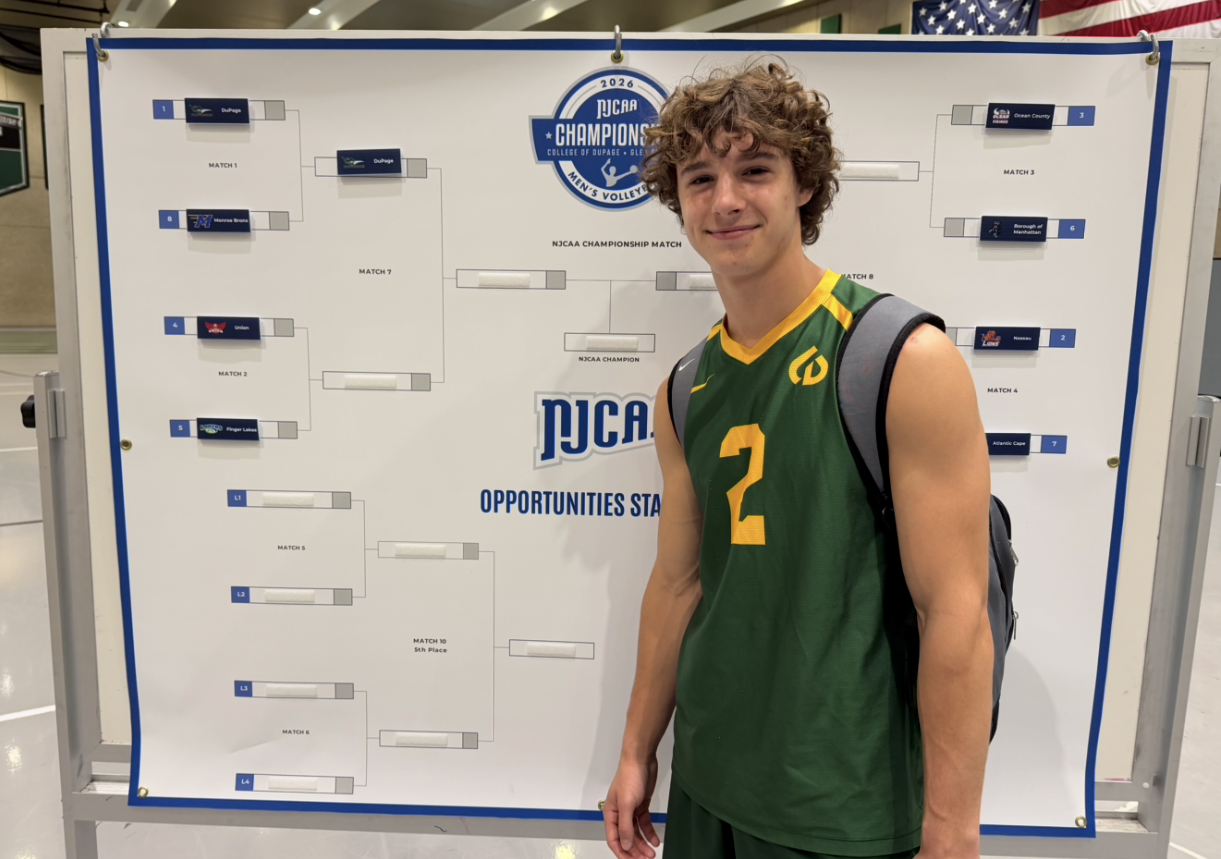
Tonight, for the first time in his life, my son is truly heartbroken.
I've watched him lose a lot of games. Frustration, anger, even tears — I've seen them all. But those were the raw emotions of a competitor who came up short. Tonight was different. Tonight his heart was hurt. He was shocked. And in the quiet moment after, he asked me a question I won't forget.
To understand the weight of it, you have to know a little about Nicholas.
He has grown up on smaller teams in bigger leagues. From Little League through high school, every program he played for seemed to be the underdog in the bracket — the smaller school, the smaller roster, running into the bigger, better-funded squad. Year after year, he walked off the field on the wrong end of the scoreboard.
What was hard to watch wasn't the losing. It was watching him do everything right and still come up short.
Nick has always been the kid who buys in. He's coachable. Yes, Coach. No problem, Coach. Whatever you need, Coach. He puts in the off-season work most kids skip. He puts the team first. He keeps doing it all — even when the wins don't come.
This year was supposed to be different.
He chose volleyball at a junior college with a real shot at a national title. He bypassed other athletic and academic options to be there. He went to summer school early so he could join the team on time. He skipped the parties his friends were going to. He put in the extra workouts and the extra practices. He bought all the way in.
And it worked. The team lost only two matches all season. Heading into the national tournament, they were the number one seed. Every other team in the final eight had either lost to them, or lost to someone they'd beaten. The trophy felt close enough to touch.
Then, in the semifinals, it all fell apart. The five-seed beat them. And they earned it — they played well, they exploited the weak spots, they took the match. No bad calls. No excuses. Just a better team on a better day.
When the dust settled and Nick and I had a quiet moment, he opened up. Not with self-pity. With confusion.
I did everything right. I went to summer school. I did the extra work. I skipped the things my friends were doing. I prepared for this exact moment. So what was it all for?
That's the question. And every man eventually has to answer it.
So before he went to bed, I sent him this:
I know it's easy to be philosophical when I'm not going through it. I've been through tough times, though.
I've put in the effort, did the hard work, made the right choices and the sacrifices — and still lost.
I've also had the good fortune to experience success and victory. The winning was sweet. It felt good.
But the losing. The hard times. The moments when I gave it everything I had and it still wasn't enough — that's when I learned the most.
Those were the experiences that made me a better man. It doesn't mean we should be satisfied with losing or okay with being just okay.
It means there is value in the losing, and that the effort and the sacrifice weren't wasted.
More importantly, it's how we respond to the adversity that defines who we are as men. Our true character comes out when times are toughest.
Show the coaches, show the team, and show yourself who you are. The man you are becoming.
Show up tomorrow and play like an All-American. Play like it does matter. Play like it's the championship match. Give it your all and be the best man you can be.
I love you and look forward to seeing you finish the season strong.
Now turn off the video games and get some rest. You need it, Champ!
Love you
Tomorrow's match is the consolation game. Third place, no trophy, no banner. On paper, it doesn't matter.
But it does matter. It matters because losing is the test no win can administer. The wins make us feel good. The losses make us into something. They show us — and the people watching — who we actually are when the easy story falls apart.
I'll be in the stands tomorrow. I'm not anxious about whether his team wins. I'm anxious about who walks onto that court. The boy who's defeated and going through the motions? Or the man who treats a consolation match like a championship?
That's what I'm going to see tomorrow. And in it, a glimpse of the man my son is becoming for the rest of his life.
If you've ever put in the work and still come up short — and if you're a man worth a damn, you have — you already know how this story ends. The trophy was never the point. It never is.
It's about who you become on the other side of the heartbreak.
The Fitness Lie That's Keeping You Weak (Stop Doing This)
Mighty Oak Athletic Podcast S3:E81 - The Fitness Idea That Quietly Beats Every Workout Plan
Most people think fitness is about looking fit.
It's not. The real goal is moving well. Everything else follows.
For most of human history, people had to move to survive. They crawled, walked, ran, climbed, carried, threw, caught, and defended themselves. Movement wasn't a hobby. It was life. The body responded by becoming strong, coordinated, and useful.
Today, we sit. A lot. We ride in cars, work at desks, relax on couches, sleep in beds. Then we try to fix it with an hour at the gym and wonder why we still feel stiff and tired.
The body wasn't built for that. It was built to move often, in lots of different ways. It was built to play.
A body that works well usually looks great, too
Chase function and appearance takes care of itself. Strong legs, a solid trunk, mobile hips, healthy shoulders, and balanced movement patterns build an athletic body naturally. Nothing forced.
That body also feels better. It gets down to the floor and back up without thinking about it. It handles stairs, sports, yard work, and travel without pain. That's real fitness.
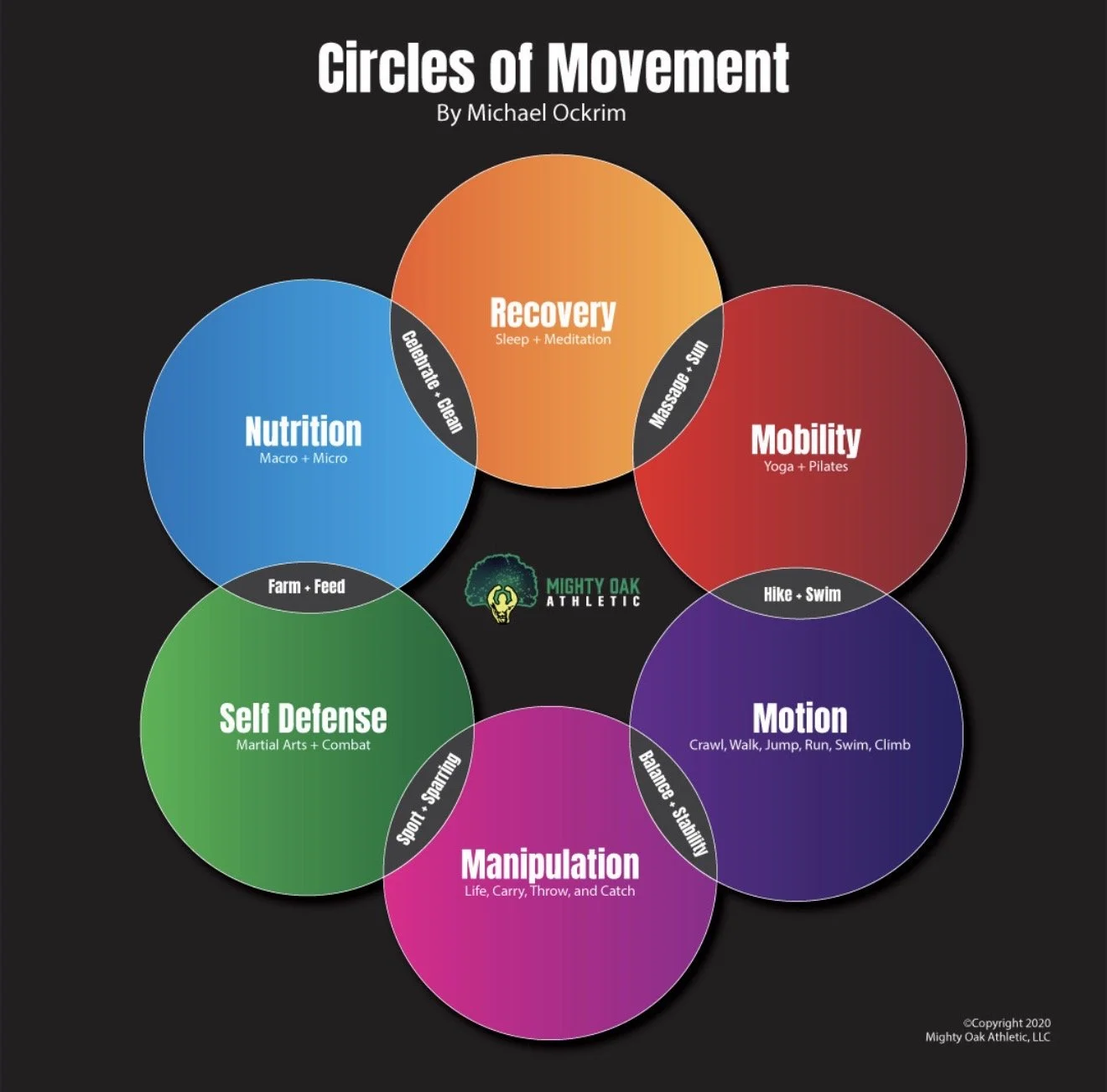
The Circles of Movement
At Mighty Oak Athletic, we think about health in circles. Six of them: Recovery, Nutrition, Mobility, Motion, Manipulation, and Self Defense.
Each one supports the others. When one is weak, the whole thing suffers. When they work together, the body becomes useful, durable, and ready for anything.
Here's how they break down.
Recovery. You can't move well if you never recover. Sleep is where the body rebuilds, the brain resets, and hormones regulate. Tired bodies move sloppy. Sloppy movement leads to injury. Recovery isn't lazy. It's productive.
Nutrition. Movement needs fuel. Underfed, overfed, or poorly fed bodies don't perform. Keep it simple. Eat real food. Eat the rainbow. Consistency beats perfection.
Mobility. If a joint can't move through a healthy range, the body cheats. Over time, that compensation creates pain and injury. Good hips mean better squats. Good shoulders mean better presses and reaches. Good ankles mean better running and landing. Mobility isn't flashy, but it unlocks everything else.
Motion. Stillness is the enemy. The less you move, the faster the body breaks down. Walk. Hike. Swim. Crawl. Climb. Play. Don't save all your movement for the gym. Live an active life.
Manipulation. This is strength in the real world. Lifting, carrying, throwing, catching, handling awkward loads. Can you pick something up off the floor? Carry it a long way? Put it overhead? That's useful strength. At MOA, we build it with barbells because nothing else loads the body as honestly. Strong legs, a strong trunk, and a strong backside make normal life feel easy.
Self Defense. Skipped too often in fitness conversations. Knowing how to protect yourself builds awareness, discipline, and quiet confidence. It's not about aggression. It's about being prepared, grounded, and hard to rattle.
Train like a human, not a machine
A lot of modern fitness disconnects the body from real life. People sit all day, then lock themselves into a machine that moves on one narrow path, then wonder why they still feel beat up.
The body was made to solve problems. Training should look like that.
Carry something heavy. Pull yourself up. Push off the floor. Squat deep. Throw a ball. Catch one. Sprint. Climb. Mix it up. Make it fun.
What this means for young athletes
Young athletes should train to move better, not just look stronger.
Build mobility so they can hit good positions. Build strength so they can produce and absorb force. Build coordination so they can react. Build broad athletic ability instead of narrow sport-specific habits.
The athlete who moves well performs better. Cuts better. Lands better. Handles contact better. Gets hurt less.
What this means for the rest of us
Adults need this too. Plenty of grown-ups are strong enough for the gym but not for life.
Real fitness shows up in small moments. Bending down without pain. Carrying luggage. Playing with your kids. Getting off the floor. Keeping your balance on a slippery sidewalk.
The older you get, the more movement equals freedom.
The bigger point
Movement isn't just exercise. It's a skill, a mindset, and a way of living.
Don't spend 23 hours parked and one hour trying to fix it. Live in motion. Train in ways that make life better.
Build a body that functions well and you don't just get a better body. You get a better life.
Be strong to be useful.
Get up. Walk. Carry. Climb. Crawl. Throw. Catch. Squat. Push. Pull.
Just move.
100 Fun and Easy Ideas to Live Actively as a Family
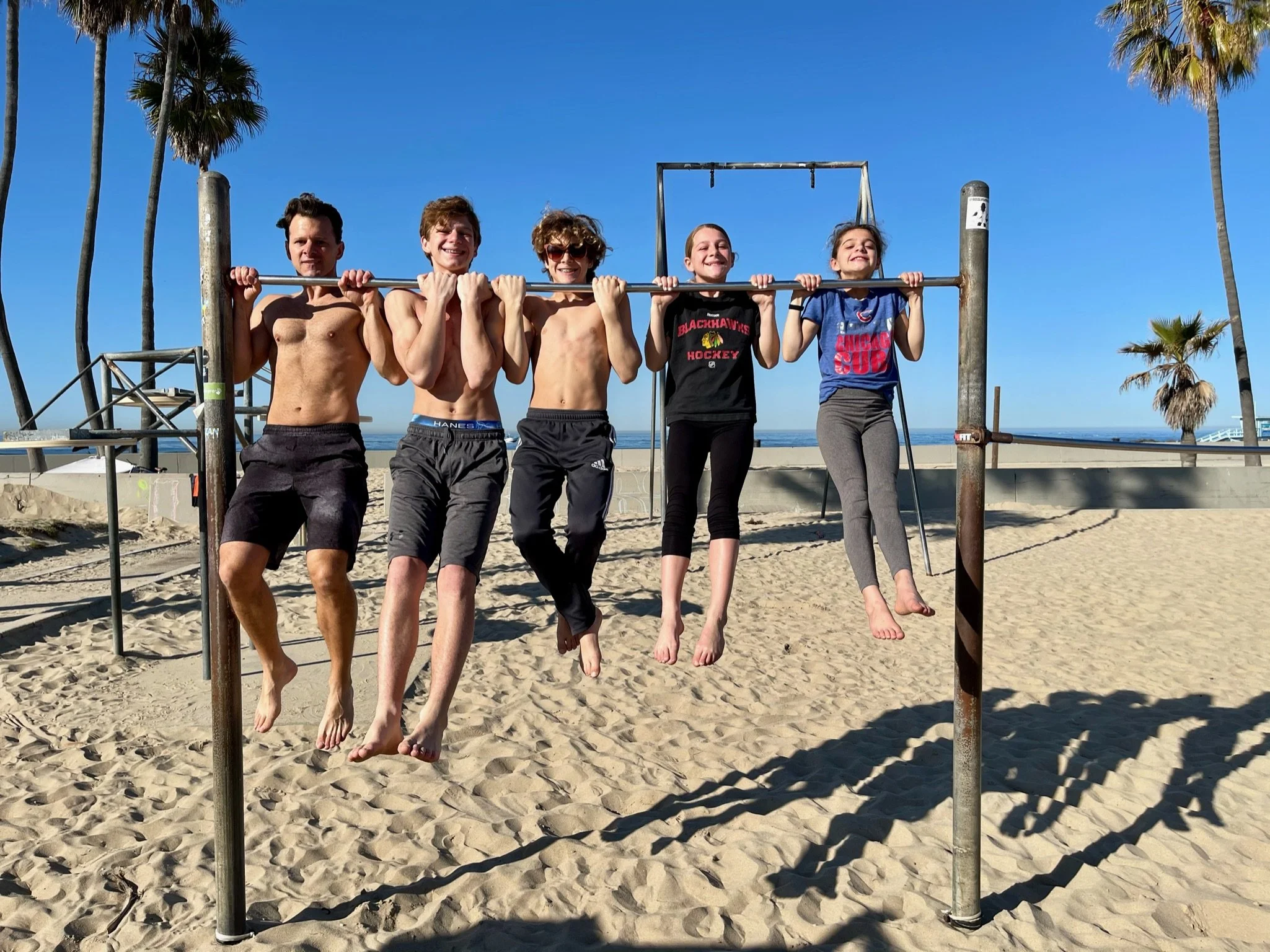
100 Ways to Live Actively as a Family: A Journey from Simple Steps to Big Adventures
Building an active lifestyle as a family is not just about incorporating exercise into your daily routine; it's about embracing a mindset of movement and connection that enriches your relationships, strengthens your bodies, and creates lasting memories. This journey begins with small steps, gradually evolving into bigger, more exciting adventures. Here's how you can embark on this path to live actively together as a family, nurturing not only your physical health but also your bond.
Start with a Spark: Simple Moves for Everyday Fun
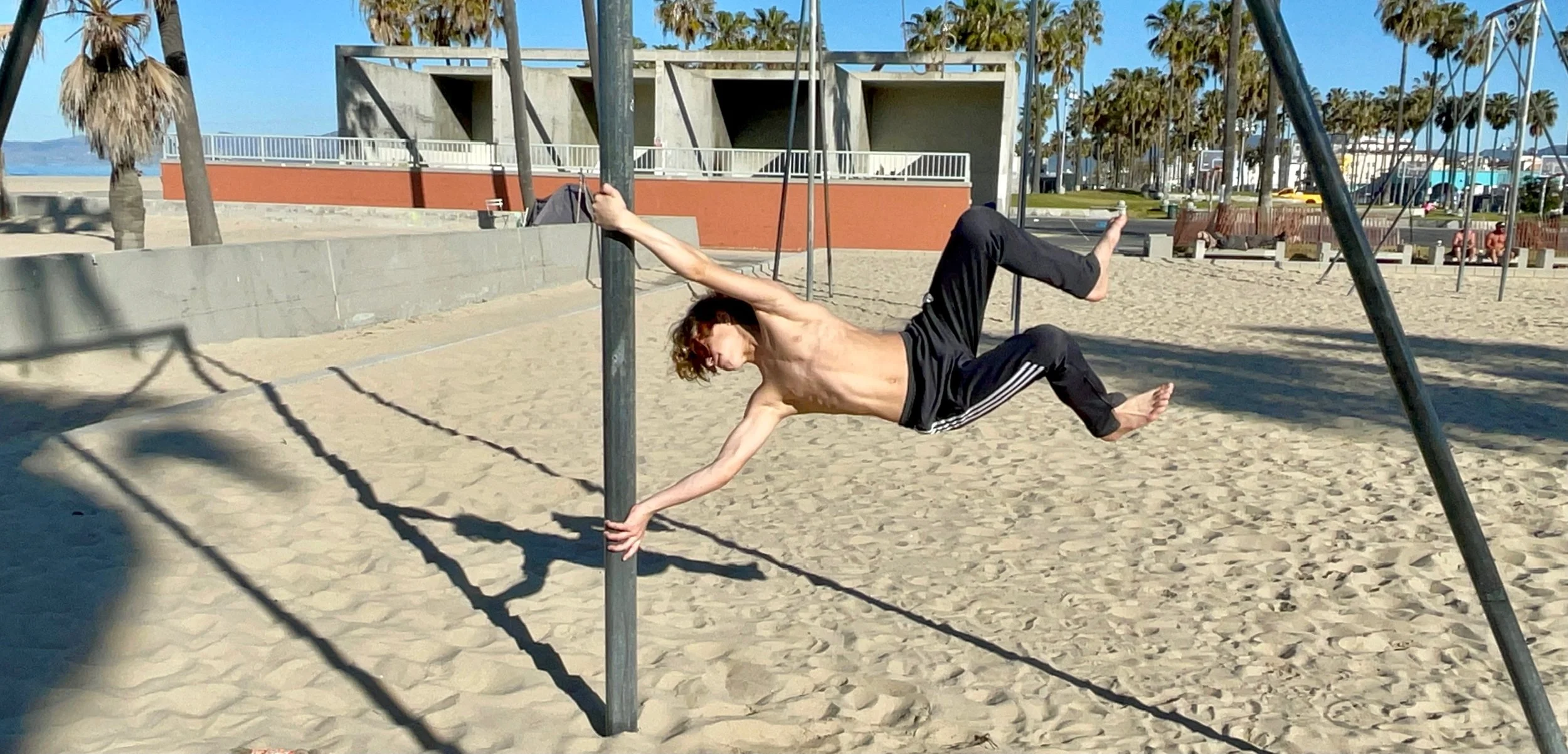
Every great journey begins with a simple step. To start living actively as a family, you don’t need to jump into strenuous activities right away. Begin by integrating small, joyful movements into your daily routine. Start by (1) taking a stroll around your neighborhood. It’s a simple yet effective way to engage in light exercise while having meaningful conversations. Follow this with something fun like (2) dancing in the living room to your favorite tunes. Let each family member choose a song, and let loose to the beat.
Another easy way to add movement is to (3) stretch together in the morning or before bedtime. Simple stretches like reaching for the sky or touching your toes can enhance flexibility and prepare everyone for the day ahead or help wind down for the night. Or try (4) playing a game of catch in the backyard, a fun way to work on hand-eye coordination and enjoy some sunshine.
As you get comfortable with these smaller activities, consider (5) creating a family yoga routine with basic poses like child's pose or downward dog, or (6) setting up a mini obstacle course in your living room or backyard. Keep it simple—use pillows, chairs, or even the garden hose as your course materials. You could also turn your daily life into opportunities for movement by (7) doing a family plank challenge to see who can hold it the longest or by (8) marching in place during commercial breaks.
Transform Your Space: Make Your Home an Activity Playground
Once you’ve made movement a part of your daily routine, it's time to make your home more conducive to an active lifestyle. Transform ordinary spaces into opportunities for movement. Start by (9) turning the hallway into a runway, where everyone can strut like a supermodel or a superhero. Turn chores into challenges—(10) who can vacuum the fastest or (11) fold laundry the quickest?
Create a movement jar filled with ideas like (12) jumping jacks, squats, or even crab walks, and take turns picking from it. Make use of the stairs by (13) running up and down or trying step-ups, and (14) turn screen time into active time by following online workout videos together.
Consider (15) setting up a small corner in your home with a yoga mat, some resistance bands, and light weights to create a mini gym. Or (16) replace the living room chairs with exercise balls to encourage active sitting. Keep it fun by (17) having impromptu dance-offs or (18) trying indoor sports like mini-basketball or foam hockey.
Step Outside: Take Your Fun to the Great Outdoors
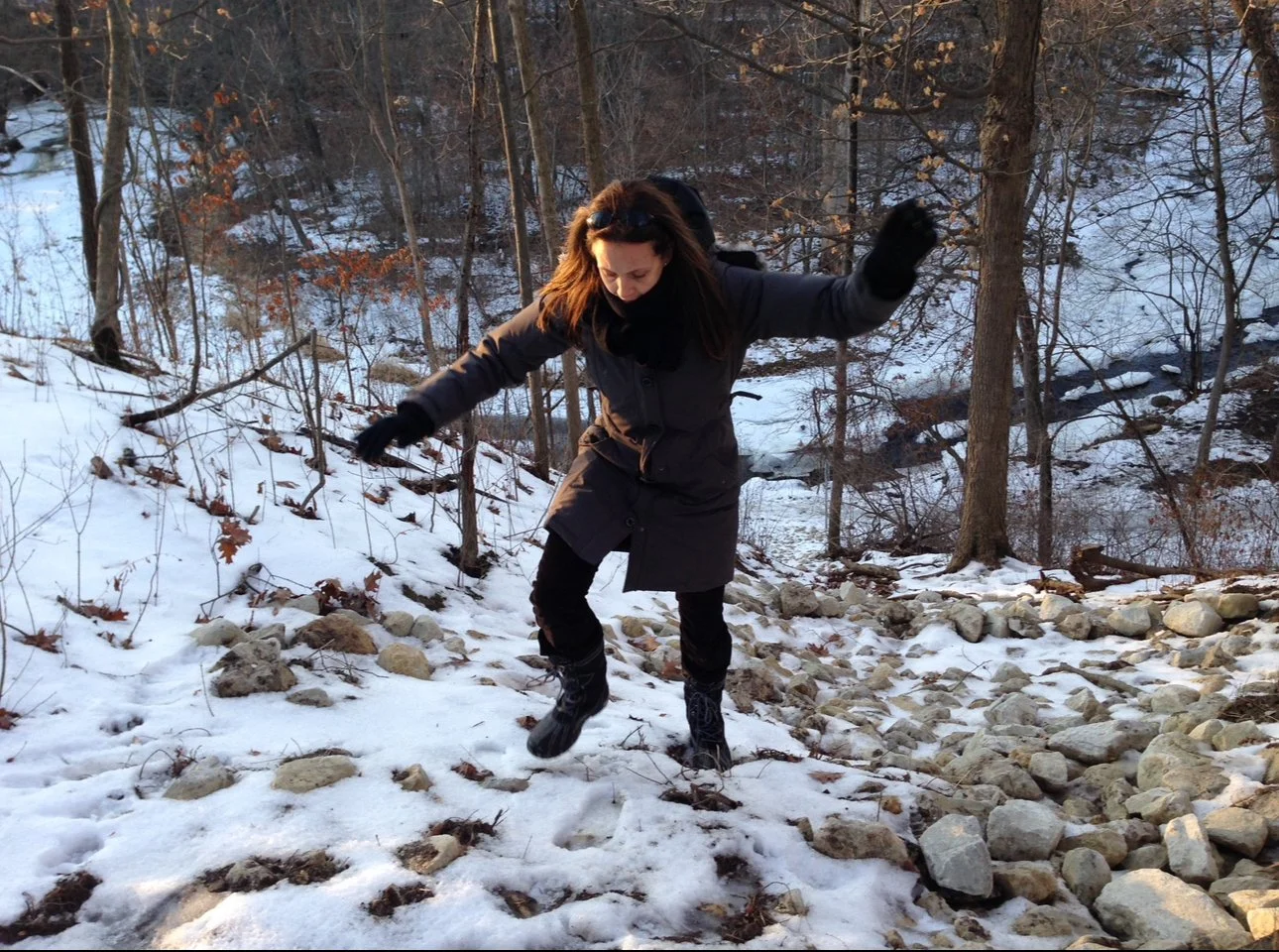
With your home now a hub of activity, take your movement outside to enjoy the fresh air and nature’s beauty. (19) Walk or bike to school or work when possible, or (20) make it a habit to explore local trails and parks on weekends. Plan a family picnic where you (21) play frisbee, soccer, or fly a kite. You can also introduce your family to new sports like (22) tennis or pickleball, or (23) plan a scavenger hunt at a local park to make outdoor movement even more engaging.
Create a (24) ‘Park Day’ where you visit several parks in one day or (25) organize a family relay race with fun activities like skipping, hopping, and crab walks. During winter, embrace the cold with activities like (26) building a snowman or (27) having a snowball fight.
For a creative twist, (28) engage in outdoor art projects using leaves, sticks, and stones or (29) plant a garden together to foster both movement and a deeper connection with nature.
All Together Now: Movement Fun with Family Elders
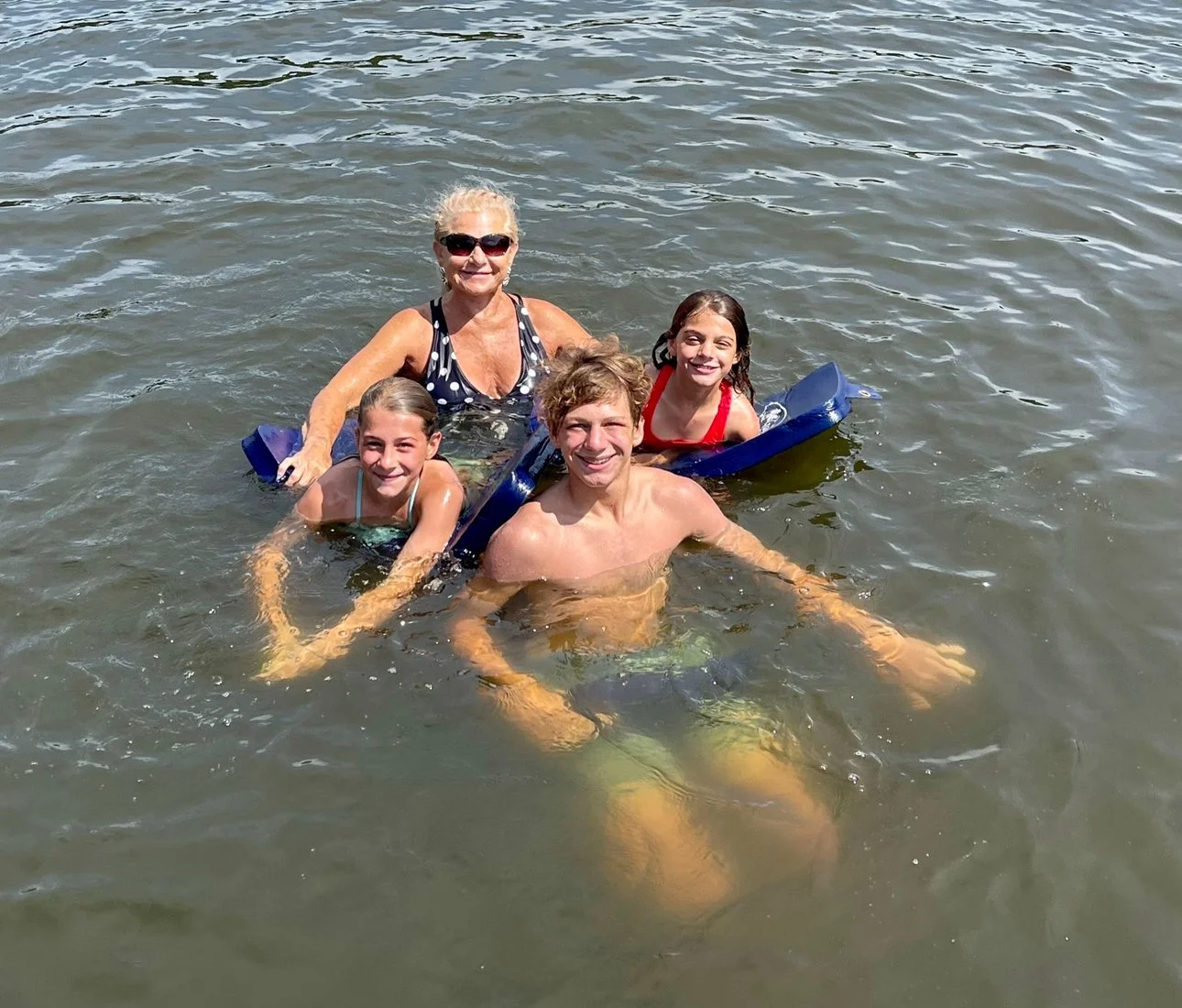
Living actively isn’t just for the younger members of the family. Involve grandparents and older family members to strengthen intergenerational bonds. Simple activities like (30) taking scenic walks and sharing stories can bring joy and exercise together. Gentle games like (31) bocce ball, horseshoes, or cornhole are excellent for engaging all ages, and (32) chair exercises offer a safe way for everyone to stay active.
Encourage (33) dancing to oldies music or (34) participate in light gardening tasks like planting flowers or picking vegetables. Attend community events that require some walking or (35) host an intergenerational game night with active games like charades or Twister. By including everyone, you enrich family time and promote wellness across generations.
Turn Chores into Cheers: Fun with Everyday Tasks
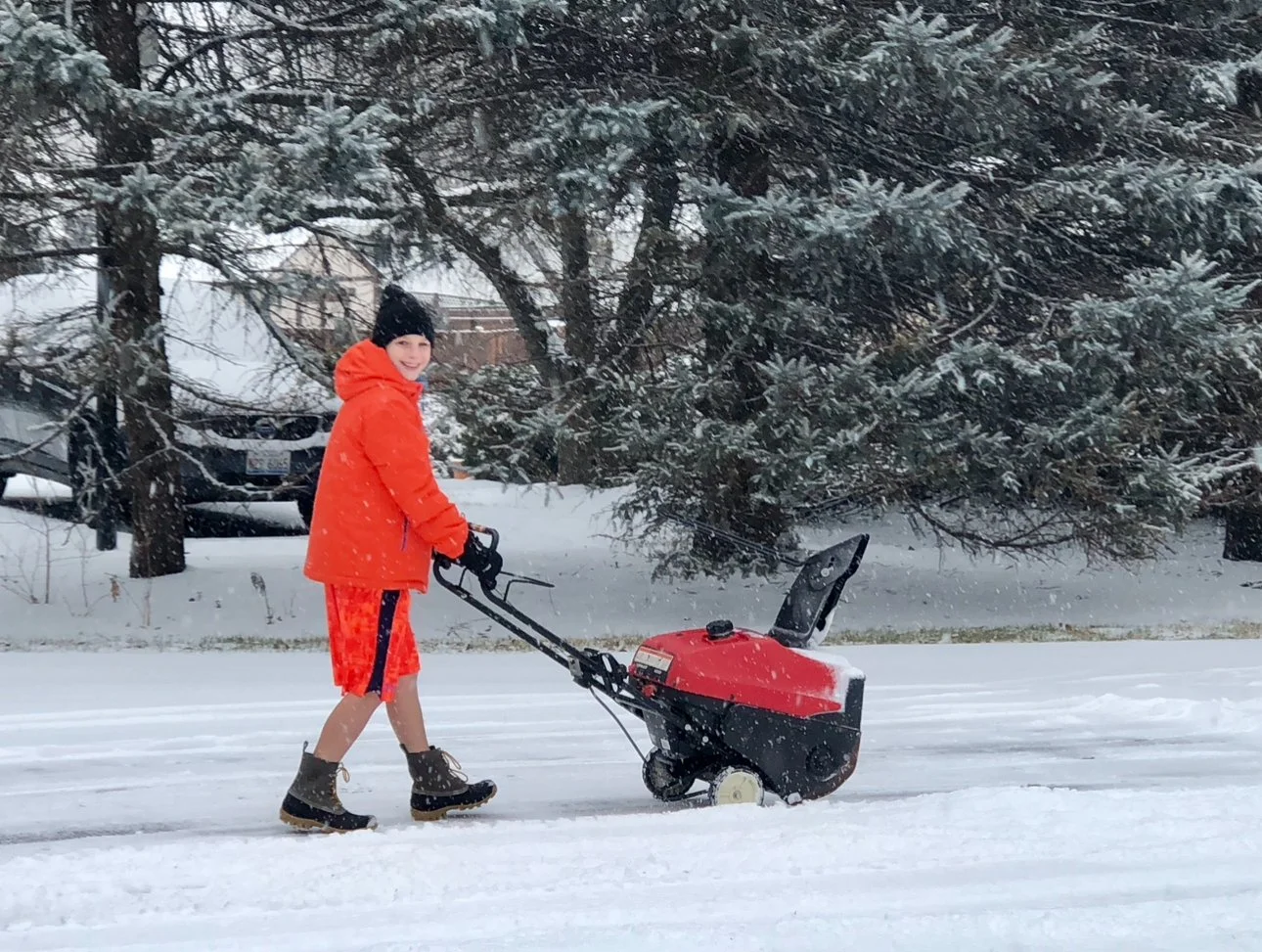
Look for opportunities to add movement to your daily chores. (36) Turn mundane tasks into fun challenges, like racing to finish vacuuming or folding laundry. (37) Make car-washing a team activity with a splash, and (38) rake leaves or shovel snow together while having fun. (39) Build a birdhouse or a garden box to encourage woodworking skills and creativity while staying active. Even (40) cooking dinner together can become an active time—chopping, mixing, and stirring all involve movement.
Get Moving Together: Join a Family Fitness Class
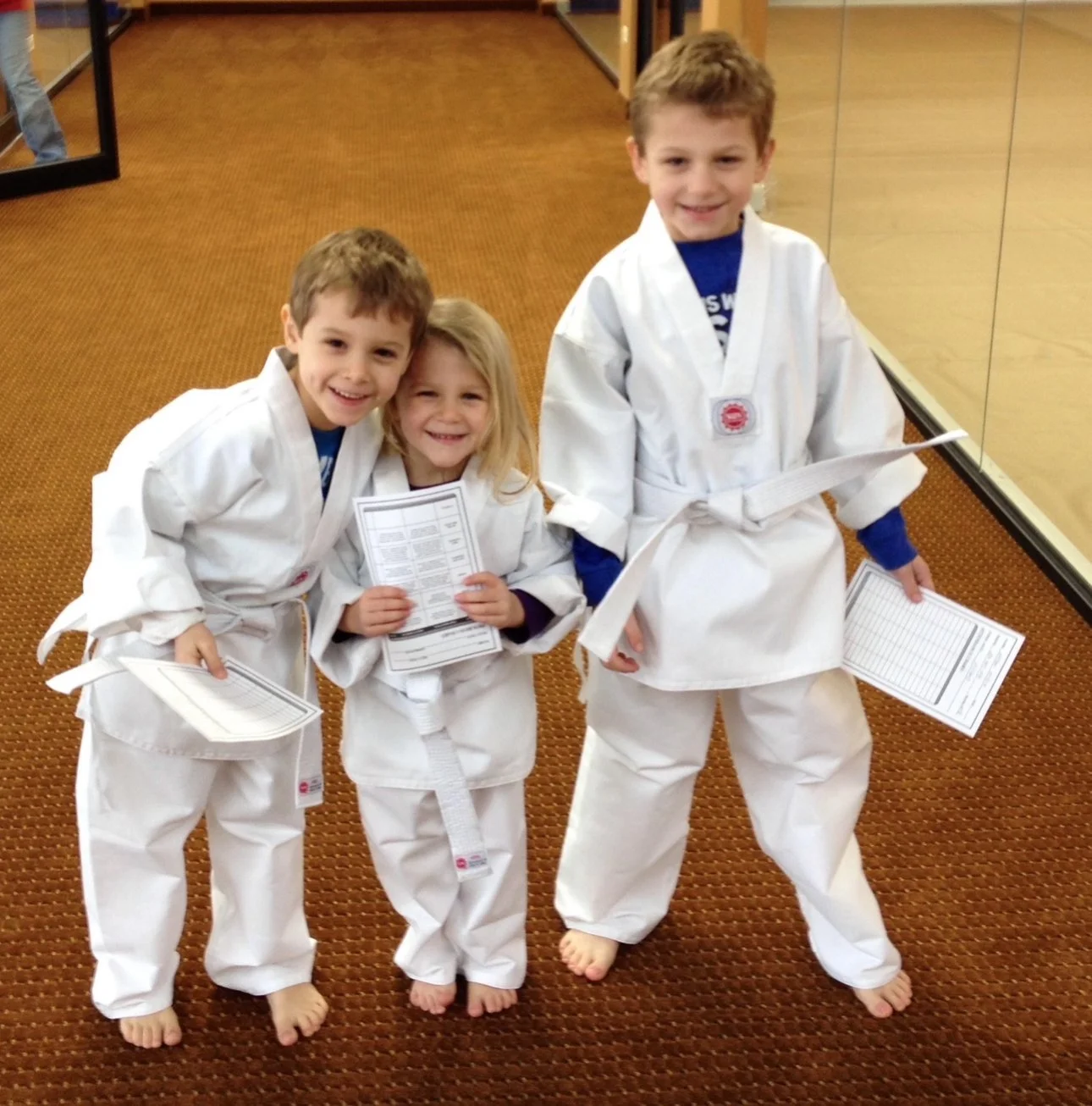
To keep the momentum going, consider (41) taking fitness classes together. Sign up for a (42) family yoga class or (43) join a family-friendly 5K run or walk. Try martial arts like (44) karate or taekwondo, or (45) attend a dance class like Zumba, hip-hop, or ballroom. (46) Participate in a family swim class offers low-impact exercise for all, and you can even (47) explore more adventurous activities like rock climbing or paddleboarding. Family fitness classes provide a structured environment to learn new skills while fostering teamwork and support.
Aim High: Train for a Common Goal
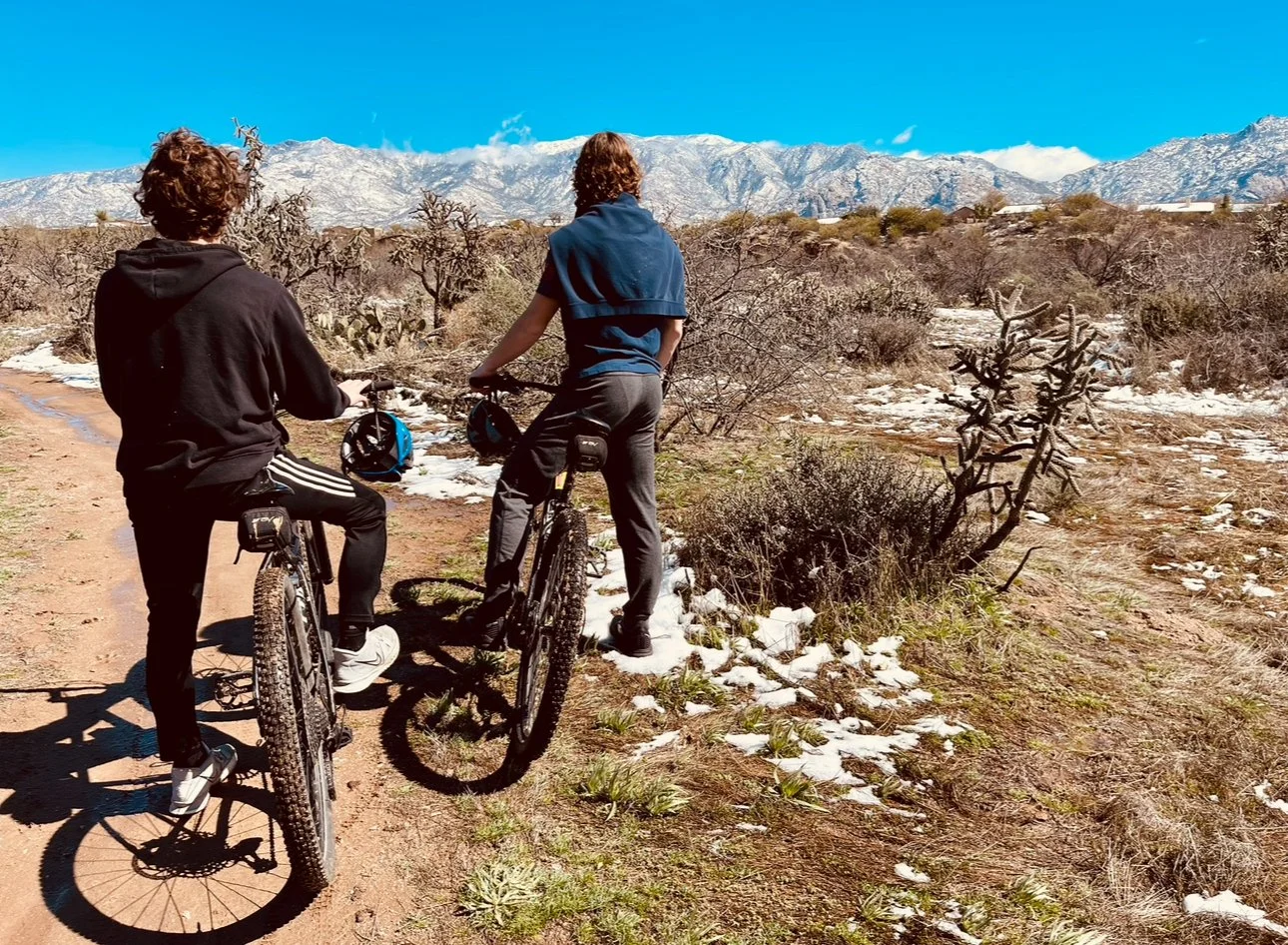
As you progress, set a common goal to train for together. (48) Prepare for a charity run or (49) learn to swim laps as a family. Challenge yourselves by (50) completing a hiking series or (51) planning a multi-day biking trip. (52) Set personal fitness goals for each member and check in regularly to celebrate milestones. Training together for events like (53) a triathlon or sports tournament builds resilience and a strong family spirit.
Seek Adventure: Make Big Outdoor Plans
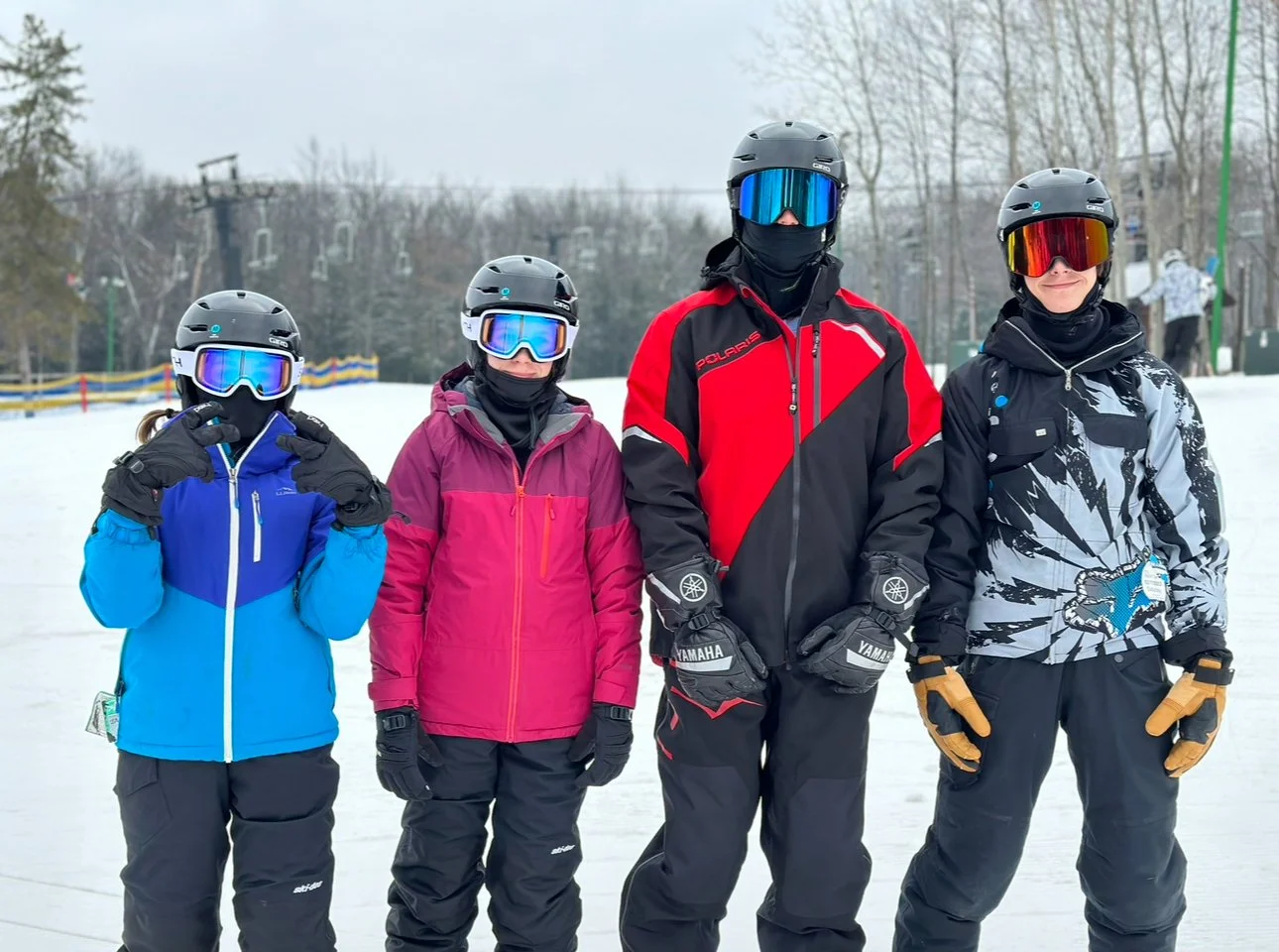
When your family is ready for bigger adventures, plan more extensive outdoor activities. (54) Go on a weekend camping trip with hiking, swimming, and outdoor games, or (55) organize a family bike tour of your city or state. (56) Try geocaching to discover hidden treasures or (57) participate in a themed fun run like a color run or mud race. Take on new challenges like (58) surfing, skiing, or snowboarding as a family or (59) build a treehouse together.
Make It a Habit: Build a Lifestyle of Movement
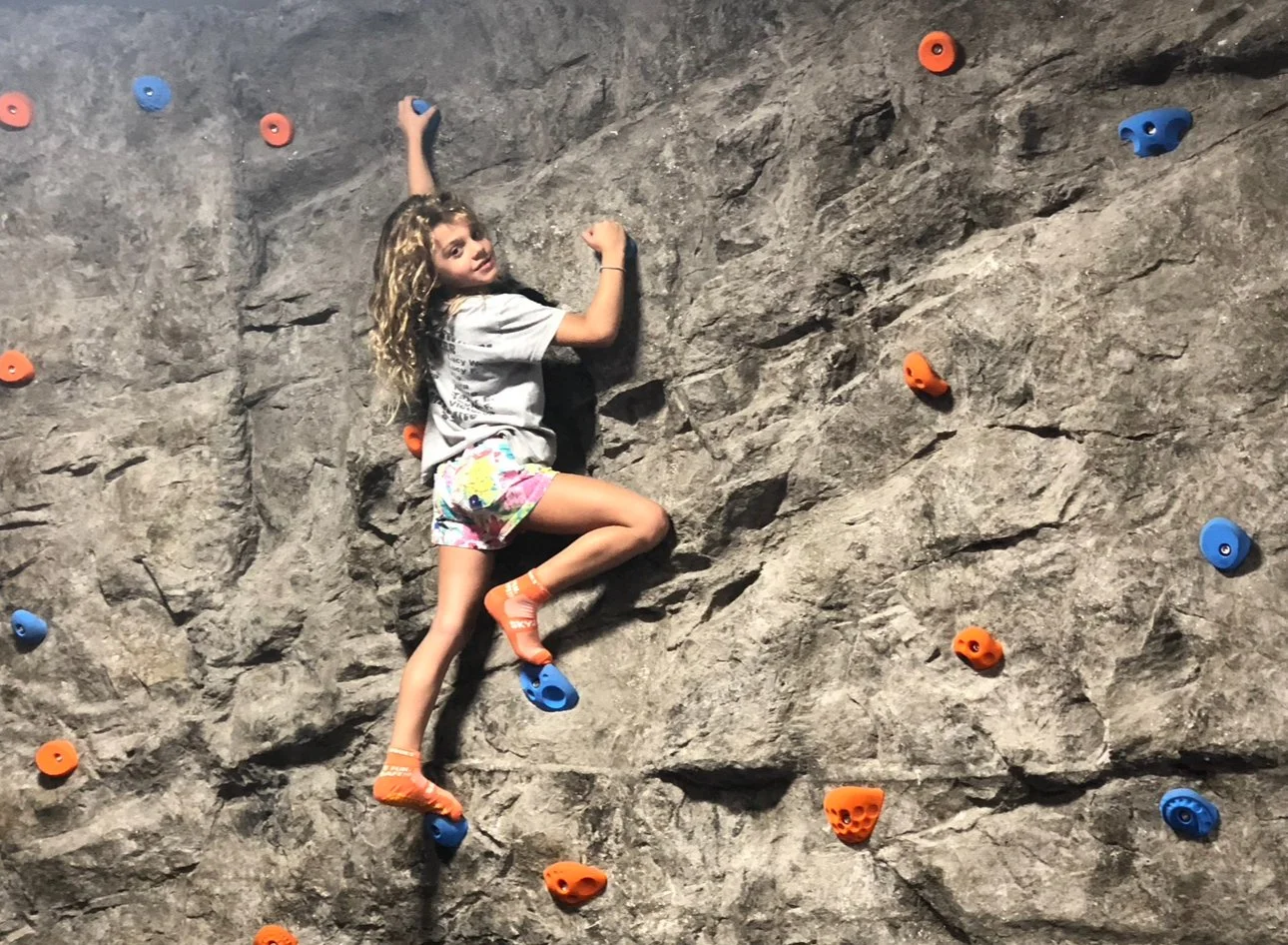
To integrate movement into every aspect of life, (60) commit to regular activities. (61) Set monthly ‘move challenges’ where you try new sports, explore different parks, or engage in unique activities. (62) Encourage everyone to track their steps and celebrate reaching daily goals. (63) Join local sports clubs or community centers that offer family memberships and (64) participate in events like ‘No Car Days’ or community tournaments.
(65) Plan annual vacations that involve hiking, biking, or exploring, and (66) rotate activities regularly to keep everyone engaged and challenged. Finally, (67) set your sights on ultimate goals that require dedication, like (68) training for an endurance event, (69) attempting an indoor climb, or (70) planning a cross-country cycling trip.
Reach for the Stars: Ultimate Family Goals
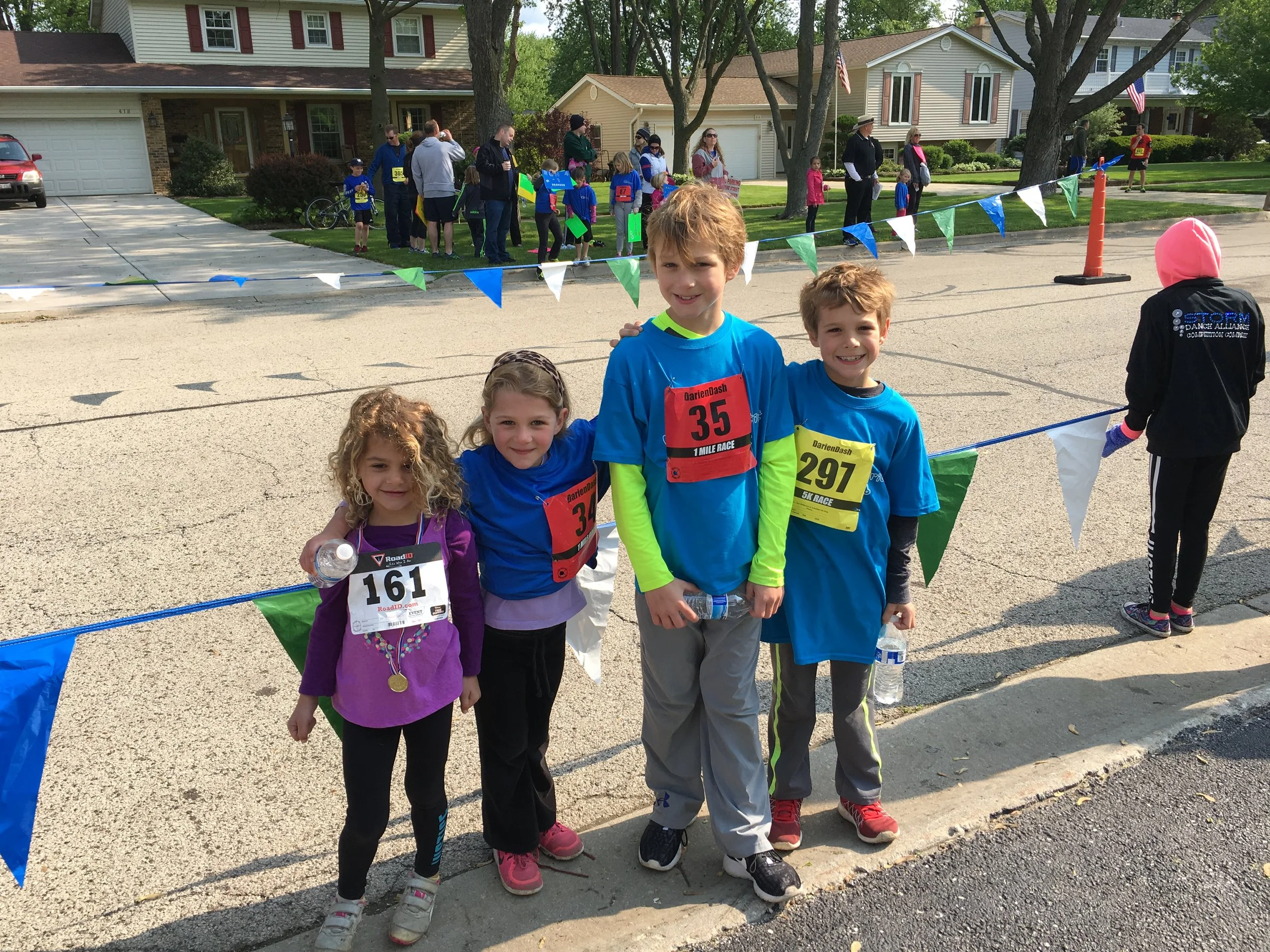
To truly live as an active family, (76) live each day with a commitment to movement, health, and connection. (77) Embark on a fitness tour around the world, trying different sports and activities in each country. (78) Attempt a high-altitude climb such as Mount Kilimanjaro to challenge your strength and resilience as a family. (79) Take on an extended walking pilgrimage like the Camino de Santiago, experiencing different cultures and environments while staying active. (80) Plan a cross-country cycling trip, discovering new places together while keeping fit. (81) Participate in a family adventure race, combining multiple disciplines like running, cycling, and paddling.
(82) Set a Guinness World Record for a unique family activity, turning your journey into something extraordinary. (83) Train for a triathlon relay where each family member completes a different segment, fostering teamwork and mutual support. (84) Try a new adventure sport like paragliding or bungee jumping to add excitement to your active lifestyle. (85) Organize a fitness-themed vacation where your days are filled with hiking, snorkeling, or skiing. (86) Host a family sports tournament involving friends and neighbors, building community bonds along with family fitness. (87) Design a family obstacle race in your neighborhood or backyard, encouraging creativity and collaboration.
(88) Create a family fitness blog or vlog, documenting your active adventures and inspiring others. (89) Host regular active game nights with sports-based board games or virtual reality sports. (90) Participate in a community marathon or charity event to promote both fitness and philanthropy. (91) Encourage family members to become fitness ambassadors in their schools or workplaces. (92) Create a reward system for achieving fitness milestones, celebrating with fun activities like a movie night or a day trip. (93) Incorporate fitness challenges like "no elevator week" or "daily squat goals" into your daily life. (94) Plan a family fitness expo to share knowledge, gear, and fun activities with other families.
(95) Create a family movement mission statement that reflects your shared goals and values for health and fitness. (96) Explore new forms of exercise together like acro-yoga, circus skills, or dancing. (97) Host an annual family reunion with a fitness focus—relay races, tug-of-war, or fun runs. (98) Organize a fitness treasure hunt around your city or neighborhood, solving clues and completing challenges. (99) Participate in themed fitness events like Zombie Runs, Color Runs, or Warrior Dash events for a mix of fun and exercise. (100) Make movement a celebration—always find reasons to dance, play, and stay active together, no matter where life takes you.
By embracing these 100 ways to live actively, your family will build not only stronger bodies but also deeper bonds, creating a legacy of health, happiness, and togetherness. So lace up those sneakers, grab your loved ones, and take that first step toward a lifetime of active adventures—together.
Jack’s Arm Hurt. Mia’s Knee Hurt. Here’s What Fixed Both.
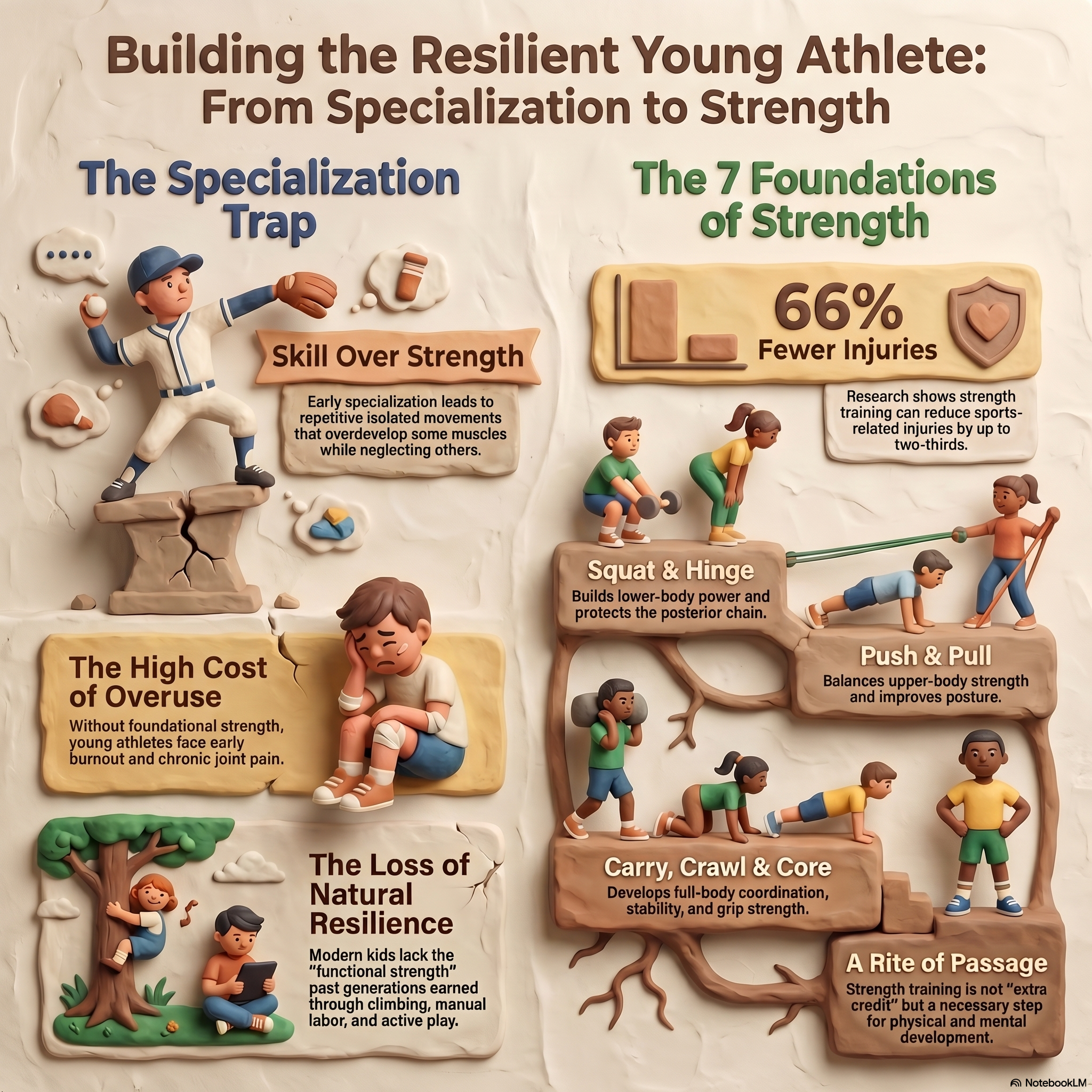
Mighty Oak Athletic Podcast S3:E80 - Jack’s Arm Hurt. Mia’s Knee Hurt. Here’s What Fixed Both.
By Michael Ockrim | Mighty Oak Athletic | Westmont, IL
There was a time when kids didn’t have to be told to get strong.
Strength was part of life — climbing trees, hauling buckets, playing rough-and-tumble games that built real-world resilience. Before year-round organized sports, kids developed natural strength through play, manual labor, and daily movement.
Fast forward to today, and the landscape has shifted. Young athletes are more specialized than ever — yet physically weaker than past generations. Instead of well-rounded movement, they grind year-round in a single sport, repeating the same motions over and over. A 10-year-old pitcher throws thousands of reps but never strengthens his legs or back. A young soccer player sprints and cuts for hours but never builds the foundational strength to absorb impact.
The result? Injuries, burnout, and kids walking away from sports long before they reach their potential.
What if we reframed strength training — not as an optional extra — but as a rite of passage?
Where We Went Wrong
Jack is 10. He’s a pitcher. A talented one. Spring, summer, and fall baseball. Winter in the cages. His dad tells me, “His velocity is down and his arm is always sore.”
Jack has been playing more than ever. But he’s getting weaker.
Mia is 11. She plays soccer year-round — outdoor leagues, indoor leagues, extra skills sessions. She’s had knee pain for months, but no one wants her to take time off. “She’s afraid she’ll fall behind,” her mom tells me.
Jack and Mia aren’t unique. Across the country, kids are playing sports harder than ever while training their bodies less than ever. Their overuse injuries aren’t random bad luck. They’re the predictable result of a culture that prioritizes skill work over fundamental strength.
We wouldn’t build a house on a cracked foundation. Yet we expect young athletes to perform at high levels without first fortifying their bodies.
The Strength That Used to Be Built Naturally
Our grandparents didn’t need structured strength training because life made them strong. They walked everywhere, carried heavy loads, climbed, ran, and played hard. Their strength was functional — earned through necessity.
Today’s kids train differently. Single-sport specialization has robbed them of natural movement variety. Instead of playing different games, running, climbing, and lifting, they spend their time in repetitive, isolated movements that overdevelop some muscles while neglecting others.
The science backs this up. A 2016 study found that strength training reduced sports injuries by up to 66%. The NSCA confirms that strength training improves movement mechanics and helps young athletes tolerate the demands of sport. The American Academy of Pediatrics is clear: there is no evidence that strength training stunts growth or harms development.
Strength training doesn’t damage young athletes. It protects them.
The Movements Every Young Athlete Needs
Building a resilient young athlete doesn’t require a complicated program. It requires mastering a handful of fundamental movement patterns — the same ones humans have used to build strong bodies for centuries.
Squat. The foundation of lower-body power. Before a young athlete ever touches a barbell, they need to own their squat. Hips back, chest up, knees tracking over toes. This single pattern builds the leg strength that makes every sport safer and more explosive.
Hinge. The hip hinge — deadlifts, Romanian deadlifts — is the most neglected movement in youth training and the most important. The posterior chain (hamstrings, glutes, low back) is the engine of every sprint, jump, and change of direction. A weak posterior chain is an injury waiting to happen.
Push. Push-ups first, then overhead pressing once the body is ready. Upper body pressing builds the shoulder stability that protects young throwers, swimmers, and volleyball players from the chronic overuse injuries that end careers early.
Pull. Every push needs a pull. Rows — floor rows, barbell rows — build the back strength that balances all the forward motion in sports. This is the movement most young athletes are missing entirely.
Core Stability. Not crunches. True midsection control. Planks, hollow holds, and anti-rotation work teach a young athlete to transfer force efficiently and protect their spine under load.
Carry. Walking with weight builds grip strength, posture, and full-body resilience in a way that nothing else replicates. It’s simple, low-tech, and brutally effective.
What Happened to Jack and Mia
Jack’s program focused on posterior chain work and pulling movements — the exact opposites of what his throwing arm demanded all year. Within weeks, his arm felt stronger. His velocity came back.
Mia built single-leg strength and hip stability. Her knee pain disappeared.
Neither stopped playing their sport. They just got strong enough to handle it.
Strength Is a Rite of Passage
For centuries, strength wasn’t about aesthetics. It was about functionality, resilience, and self-sufficiency. It proved you could handle what life threw at you.
We don’t live in a world where physical capability is required for daily survival anymore. But that doesn’t mean we should discard it. Strength still matters. And for young athletes, learning to build and use their strength is a lesson that reaches far beyond the playing field.
Strength teaches discipline. Progress isn’t instant — it’s earned through consistency.
Strength builds resilience. Fewer injuries, and a better ability to bounce back when setbacks come.
Strength develops mental toughness. Pushing through discomfort to accomplish something hard changes how a kid sees themselves.
This is why strength training isn’t optional at Mighty Oak Athletic. It’s the foundation — the thing everything else is built on.
Start Now
If your child is playing sports year-round, they need to be strength training. Not for bulk. Not for aesthetics. For longevity, performance, and durability.
The window to build this foundation doesn’t stay open forever. Every year of specialization without strength work is another year of compounding risk.
Jack still plays baseball. Mia still plays soccer. But now they have the strength to handle their sport — instead of being broken by it.
Every young athlete faces a choice: build strength now, or pay for its absence later.
Better to build it.
The One Skill Every Parent Should Help Their Athlete Build
Mighty Oak Athletic Podcast S3:E79 - The One Skill Every Parent Should Help Their Athlete Build
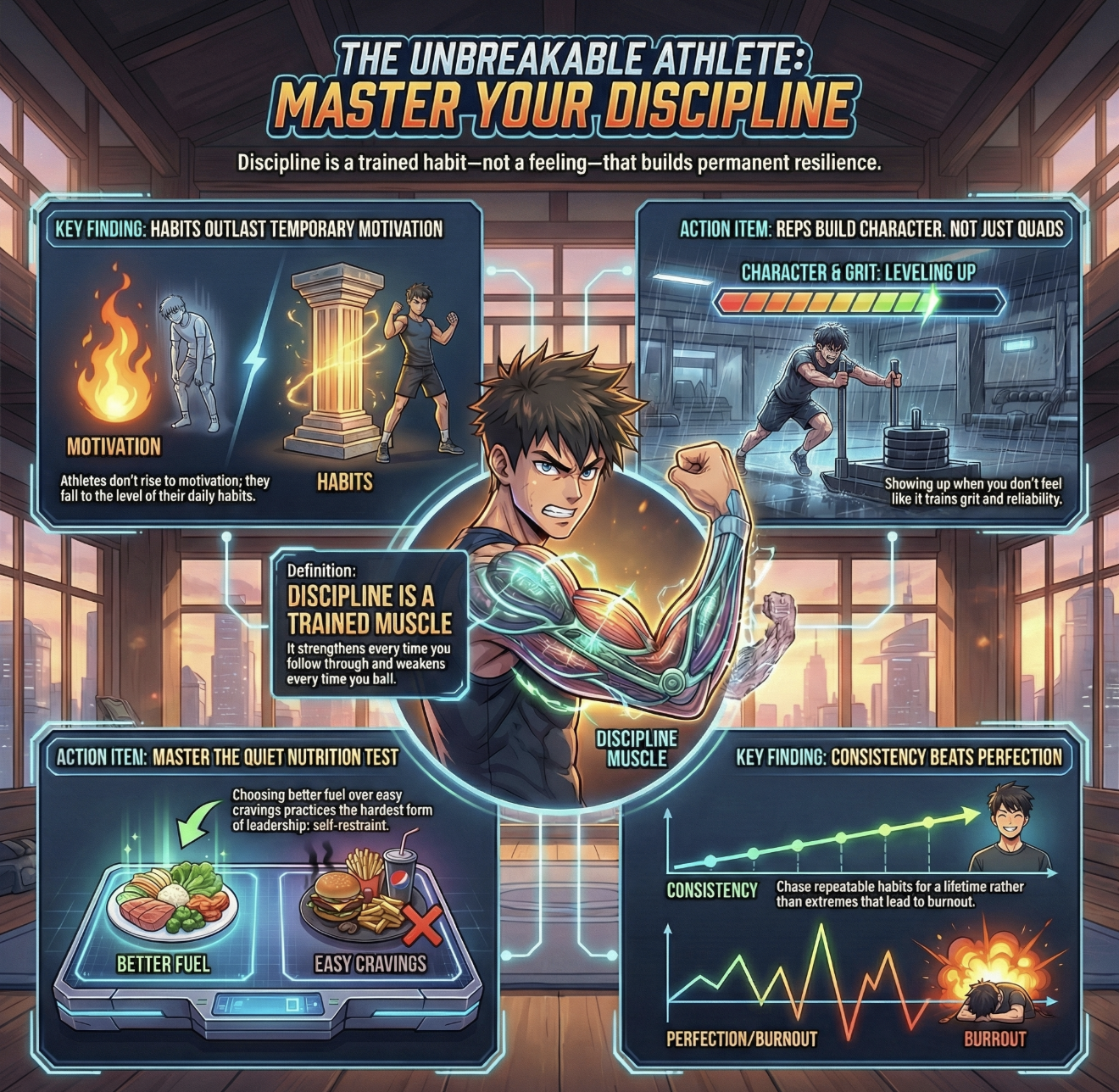
Discipline is not about weight on the bar. It never was. Discipline is about showing up — day after day, rep after rep, meal after meal — even when nobody is watching and nothing inside you feels like doing it. Every successful person you admire shares this one trait. They do the work when they don’t feel like it. They wake up, they prepare, and they follow through. There are rare exceptions in the world, people who seem to coast on raw talent, but even those exceptions had discipline first. No one becomes great by accident.
Discipline Comes Before Freedom
People love the idea of freedom. Freedom sounds fun and effortless, like some finish line you cross and then coast forever. But freedom is earned. Before freedom comes discipline. Before confidence comes consistency. Even the people who look carefree and relaxed at the top of their game trained relentlessly before they got there. They practiced when no one was watching. They repeated boring fundamentals until those fundamentals became automatic. That early discipline is what allows later freedom. You earn the right to improvise by first mastering the basics.
This applies to everything — school, sports, careers, relationships. The kid who builds discipline in a strength facility at fourteen carries that skill into a college dorm room at eighteen and a boardroom at thirty. It compounds. It transfers. And it never expires.
Training Builds More Than Muscles
Walk into Mighty Oak Athletic on any given afternoon and you will see young athletes grinding through barbell squats, deadlifts, overhead presses, power cleans from the floor, and floor rows. None of it is glamorous. None of it goes viral. But every single rep is building something deeper than muscle.
Training on a consistent schedule teaches reliability. When you commit to three sessions a week and you actually show up for all three — even the one on a rainy Tuesday when your friends are on the couch — you are training your character just as much as your quads. When you push through discomfort on a heavy set of squats instead of bailing early, you are learning grit in real time. Strength training rewards effort over time. It does not reward shortcuts. You cannot cram for a deadlift PR the night before. You earn it across weeks and months of showing up and doing the work.
This is exactly why training carries over into school, work, and life. You are learning to keep promises to yourself. That is a skill most adults still struggle with, and you are practicing it now.
Nutrition Is the Daily Discipline Test
If training is the big, obvious discipline challenge, nutrition is the quiet one that tests you every single day. Nutrition is not dramatic. It is repetitive. Every morning, every lunch break, every late-night craving — you face small choices that feel insignificant in the moment. But those small choices add up faster than you think.
Nutrition teaches delayed gratification better than almost anything else. You want the easy thing now. You choose the better thing for later. That one decision, repeated hundreds of times, strengthens your discipline just like adding five pounds to the bar strengthens your back. You are practicing restraint. You are practicing awareness. You are practicing leadership over yourself — and that is the hardest kind of leadership there is.
Nobody is asking you to be perfect. Eat real food. Drink water. Fuel your training. Skip the garbage most of the time. That is the whole plan. It is simple, but simple is not the same as easy, and the gap between those two words is where discipline lives.
Discipline Is a Muscle
Here is the part most people miss: discipline is not a personality trait you either have or you don’t. Discipline is a muscle. It grows with use and it weakens when you ignore it. Every time you follow through on a commitment, your discipline gets a little stronger. Every time you bail, it gets a little weaker.
You do not need perfection. You need consistency. One missed training session does not matter. Quitting does. One imperfect meal does not matter. Giving up does. The goal is never extremes. The goal is repeatable habits you can sustain for years. Chase perfection and you burn out in a month. Chase consistency and you build something that lasts a lifetime.
Why This Matters for Young Athletes
Athletes do not rise to the level of their motivation. They fall to the level of their habits. Read that again. Motivation is temporary. It spikes after a big win and disappears after a bad practice. Habits are permanent infrastructure. They hold you up when motivation checks out.
Discipline protects athletes from burnout because it removes emotion from the equation. You don’t train because you feel inspired. You train because it is Tuesday and Tuesday is a training day. Consistent training reduces injury risk. Consistent nutrition supports recovery. These are not opinions — they are observable, repeatable outcomes that play out in every serious strength facility in the country.
More importantly, these habits build confidence that carries into adulthood. The young athlete who learns discipline at fifteen does not suddenly lose it at twenty-five. It becomes part of who they are. This is how athletes become resilient people — not through motivation posters, but through thousands of reps and thousands of meals done right.
The Mighty Oak Way
At Mighty Oak Athletic, we do not chase quick results. We build strong roots. We focus on habits that last decades, not weeks. We train the body and the mind together because you cannot separate the two and expect either one to hold up.
Discipline is not punishment. Discipline is freedom in disguise. And the athletes who figure that out early have an advantage that no amount of talent can replace.
What High-Level Athletes Do Early That Others Don’t
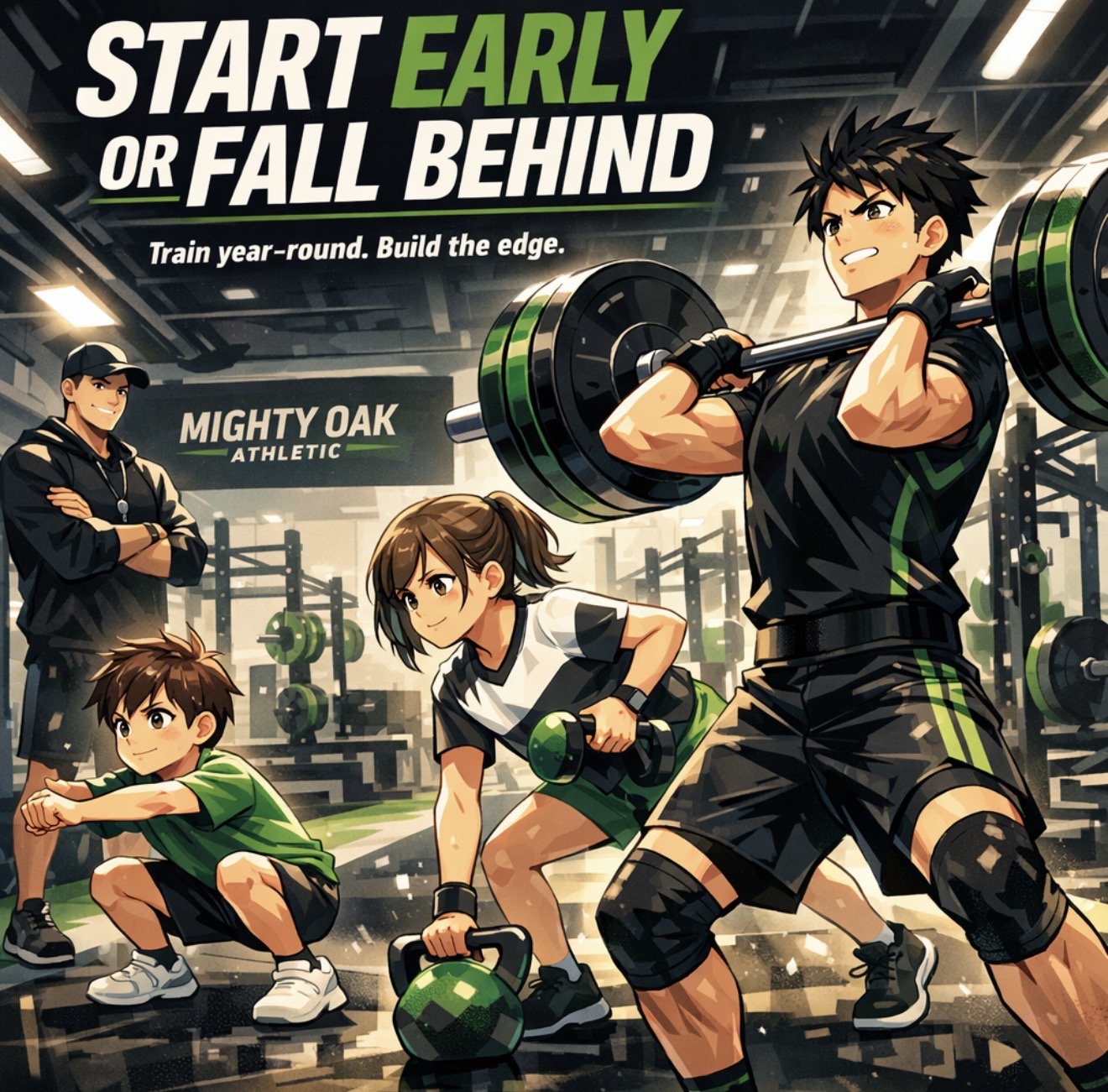
Start Early or Fall Behind
Here is a hard truth that a lot of families do not hear soon enough: if an athlete wants to stand out, they cannot treat strength training like a last-minute fix. They need to train year-round. They need a plan. And they need to start early.
By the time most athletes get serious about training in junior year, they are already trying to make up for years they cannot get back. That is usually the moment scouts start paying attention, so the urgency finally hits. But strength and power do not appear overnight. They take years to build. That is why more athletes are starting in seventh or eighth grade now, and in many cases, even earlier with simple, safe, age-appropriate training and good coaching. The key is not rushing kids into heavy lifting. The key is building the foundation early.
Stronger Earlier Changes Everything
When a young athlete starts training the right way, they gain a huge advantage over the athlete who waits. They learn how to move. They build body control, posture, and coordination. They develop confidence. And they get stronger year by year instead of trying to cram progress into one season.
That is how you get a 12-year-old who can squat impressive weight with great technique and total control. That is how that same athlete walks into freshman year already moving like an upperclassman. Meanwhile, other kids are just getting started. That gap matters. And in competitive sports, the gap usually gets bigger, not smaller.
High-Level Sports Require High-Level Strength
At the higher levels of sports, strength is not a bonus. It is the baseline. Powerful cleans, strong squats, explosive jumps, and the ability to absorb contact are common traits in college athletes. Even positions people think of as skill positions require real strength and power.
The mistake many athletes make is assuming they can turn it on later. They think they will get serious next summer or catch up once recruiting starts. But it takes years to build strength, power, and durability. There is no shortcut for that kind of development.
The Clock Is Always Ticking
Here is what athletes and parents often miss: there is very little true development time in a year. During the season, athletes are practicing and playing games. That is great for competition, but it is not the best window for major strength gains. Then preseason, spring sports, travel seasons, camps, and tournaments fill whatever is left.
When you really look at it, there is often less than half the year available for focused strength and power work. Every post-season window matters. If an athlete does not start a structured plan right after their season ends, they lose one of the best chances they had to improve.
And here is the part most people miss: every other athlete in their grade is also getting older, maturing, and getting stronger. So the real question is not whether your athlete improved. The real question is whether they improved faster than the athletes they are competing against. Waiting to start is not neutral. Training inconsistently is not neutral. Those things cost time. And in youth sports, time is one of the biggest advantages an athlete can have.
Early Start Does Not Mean Extreme Training
Starting early does not mean turning a 7-year-old into a powerlifter. It means teaching kids how to move well and train smart. For younger athletes, that might mean squatting and hinging with bodyweight, pushing and pulling with control, learning how to land and jump, basic medicine ball work, and light resistance with excellent form. The goal is fun, structured training that builds confidence.
As they grow, the plan grows with them. The best long-term athletes are not built with random hard sessions. They are built with years of smart progress. That is what good coaching does.
Year-Round Training Wins
A well-planned year-round program is how athletes keep moving forward, even when the sports calendar gets crowded. Post-season is for building strength and fixing weaknesses. Preseason is for maintaining strength while adding speed and conditioning. In-season is about staying strong, staying fresh, and reducing injury risk. Off-season is where you push progress again.
When training is planned this way, athletes stop starting over every few months. They keep building. That is the real goal. Not just having a good month or maxing out once in a while. The goal is stacking years of progress on top of each other.
The Time to Start
If your athlete is in high school and has not started a serious strength training plan yet, start now. If your athlete is in middle school, this is the perfect time to begin with proper coaching and a clear plan. If your athlete is younger, the focus should be movement, coordination, and fun, but yes, they can absolutely start building a foundation now.
The athletes who separate themselves are usually not the ones who suddenly get motivated late. They are the ones who started early, trained consistently, and followed a plan. That is how athletes stand out, build confidence, and give themselves a real chance to play at a higher level.
At Mighty Oak Athletic, we believe in year-round training, smart progression, and starting before everyone else thinks it matters. Because by the time everyone else realizes it matters, the leaders are already gone.
Soccer Parents: Ask Your Coach This One Question
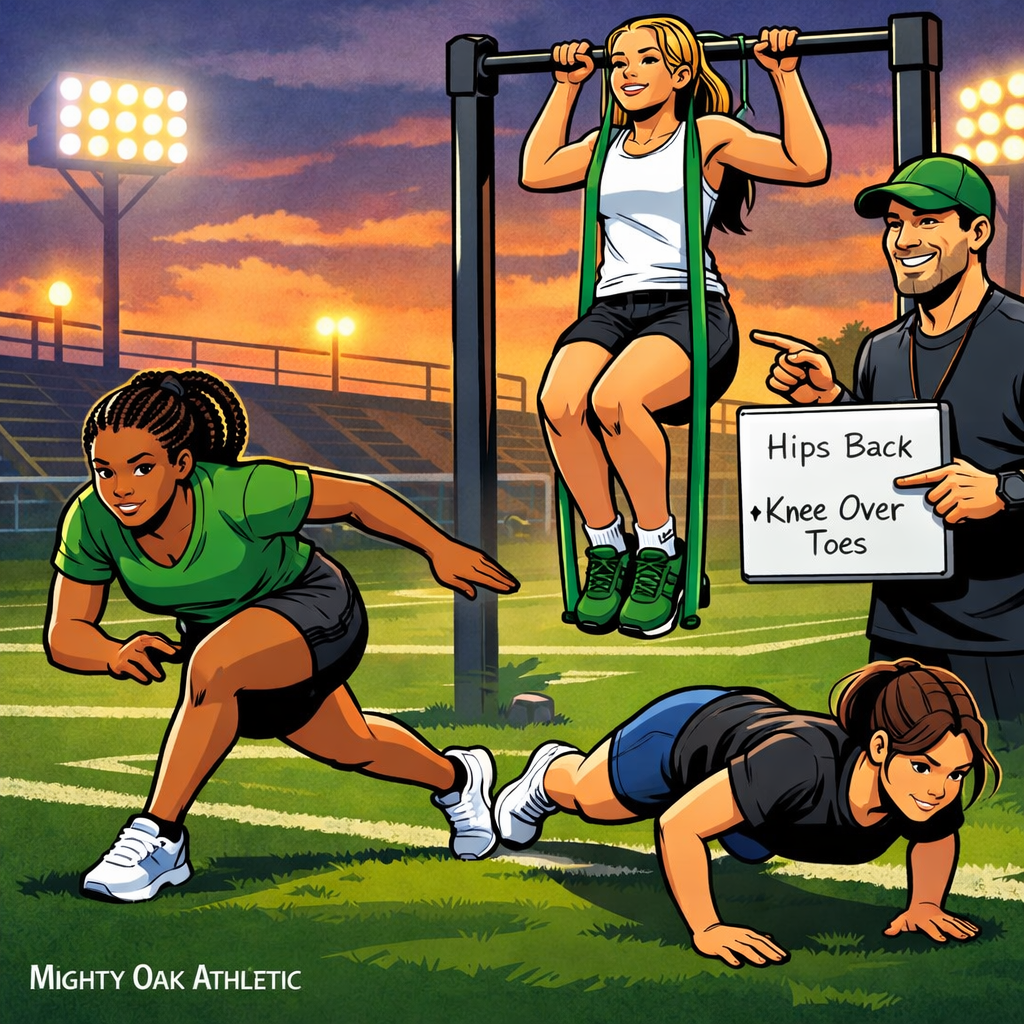
A New York Times Magazine story followed a teen soccer player who tore her ACL at 12, rehabbed for a year, came back… and then tore the ACL in her other knee. It also followed a second girl who tore her ACL, returned, and tore it again. The most shocking part wasn’t the injuries.
It was how normal the adults around them said it has become.
If you’re a sports parent or coach, you’ve probably felt that same dread: one wrong cut, one awkward landing, one “I just stepped funny”… and suddenly a season becomes a year of surgery and rehab
Here’s the good news: a lot of ACL tears—especially the non-contact ones—are modifiable. We can’t control everything. But we can control the biggest “low-hanging fruit”: how athletes warm up, decelerate, land, cut, and build strength.
What an ACL tear really costs
An ACL injury isn’t like a broken wrist.
It’s usually surgery, months of rehab, and a long return-to-play timeline. It can also come with a higher chance of future knee issues like osteoarthritis. And for teenagers, it can hit identity hard: “Who am I if I can’t play?”
That’s why this matters: teen girls have a higher ACL injury rate than boys in several cutting and jumping sports, including soccer and basketball. Some sources describe the gap as multiple times higher depending on the sport and study.
Why this is happening more now
The article points to a pattern I see in youth sports every week:
1) Kids aren’t learning movement basics early enough
Less free play means fewer reps of climbing, landing, scrambling, decelerating, and regaining balance. That matters because ACL tears often happen during a millisecond of “the knee didn’t know where to go.”
Research is increasingly linking poor foundational movement skills with riskier landing mechanics—especially in girls.
2) Early specialization (one sport, all year) adds wear and tear
Soccer 12 months a year is common now. That means a lot of cutting on tired legs, with the same patterns repeated over and over.
3) Strength training has lagged for girls
Many boys get introduced to weight rooms earlier. Many girls don’t—sometimes because the environment feels unwelcoming, sometimes because coaches just don’t prioritize it.
But stronger hips, hamstrings, and trunk control are exactly what help keep the knee from collapsing inward when an athlete cuts or lands.
4) Return-to-play risk is real
Young athletes who return to sport after ACL reconstruction have a meaningful risk of a second ACL injury (either the same knee or the other one).
That doesn’t mean “don’t come back.” It means “come back smarter.”
The biggest win: prevention warm-ups actually work
This is the part that should make every coach pause.
Neuromuscular warm-up programs (think: FIFA 11+ style) have repeatedly shown substantial reductions in ACL injuries and overall injuries when teams do them consistently and correctly.
So why don’t more teams do them?
Because youth sports is busy. Coaches feel pressure to “get to the ball.” Parents assume practice is enough. And nobody hands people a simple plan.
Let’s fix that.
The Mighty Oak ACL Plan (simple, realistic, and repeatable)
Part 1: The 12-minute warm-up you do before every practice and game
You can use FIFA 11+ directly, or use a shortened version that keeps the key ideas: balance, deceleration, landing, hip control.
Do 1 round each:
Jog + skip (2 minutes total)
Easy pace. Wake up the body.
Leg prep (2 minutes)
Walking lunges x 10 steps
High knees x 20 yards
Butt kicks x 20 yards
Single-leg balance + reach (2 minutes)
Stand on one leg, reach the other foot forward/side/back x 3 each direction
Switch legs.
Landing mechanics (2 minutes)
“Snap down” to athletic position x 5
Small pogo jumps x 15
Stick a two-foot landing x 5
Coaching cue: “Land quiet. Knees over toes. Hips back.”
Deceleration + cut (4 minutes)
Sprint 10 yards → hard stop in athletic position x 4
Shuffle 5 yards → plant → shuffle back x 4
Coaching cue: “Drop your hips. Don’t stay tall.”
If you only do one thing from this whole essay, do this warm-up.
Part 2: Two strength sessions per week (the knee armor)
This is the “bulletproof the kids” part.
Two days a week. 35–45 minutes. Simple lifts. Perfect technique.
Day A
Goblet squat or front squat: 3 x 5–8
Romanian deadlift (RDL): 3 x 6–10
Split squat: 2 x 8/leg
Side plank: 2 x 20–40 seconds/side
Day B
Trap bar deadlift or hinge variation: 3 x 5
Step-ups: 2 x 8/leg
Hamstring curls (ball or sliders): 3 x 8–12
Calf raises: 2 x 12–20
Carry (farmer carry): 4 x 20–30 yards
Why these? Because the ACL usually loses when:
hips are weak,
hamstrings aren’t doing their job,
the athlete can’t control deceleration,
or the trunk collapses and the knee caves inward.
Part 3: The coaching cues that save knees
If you’re a coach, say these a lot:
“Hips back when you stop.”
“Don’t be tall—get low.”
“Knee tracks over the middle toes.”
“Land quiet.”
“Control first, speed second.”
And here’s the sneaky one:
“Show me the same perfect stop even when you’re tired.”
Because most injuries don’t happen in the first 5 minutes. They happen when fatigue and focus drop.
What parents can do (without becoming the bad guy)
If you’re a parent, you don’t need to be the strength coach.
You just need to be the person who asks one question:
“Coach, what’s your knee warm-up plan?”
If they don’t have one, offer this:
“We’ll support you. Can we do a 10–12 minute warm-up like FIFA 11+ before every session?”
This isn’t overstepping. This is seatbelts.
The International Olympic Committee has encouraged neuromuscular warm-ups like FIFA 11+ for youth athletes to build safer movement habits.
The Mighty Oak message
Girls’ sports are booming. That’s a great thing.
But we can’t celebrate opportunity while accepting a system where torn ACLs feel “normal.”
The next wave of great female athletes won’t just be skilled.
They’ll be strong, coordinated, and trained to decelerate like pros.
That’s how we keep them on the field—and keep sports fun.
In an AI World, Strong Kids Still Win
Mighty Oak Athletic Podcast S3:E77 - In an AI World, Strong Kids Still Win
AI is changing the world our kids are growing up in.
It can help them study faster, organize their thoughts, and even get through homework with less stress. Used the right way, it’s a powerful tool.
But AI still can’t do the part that matters most for a student athlete.
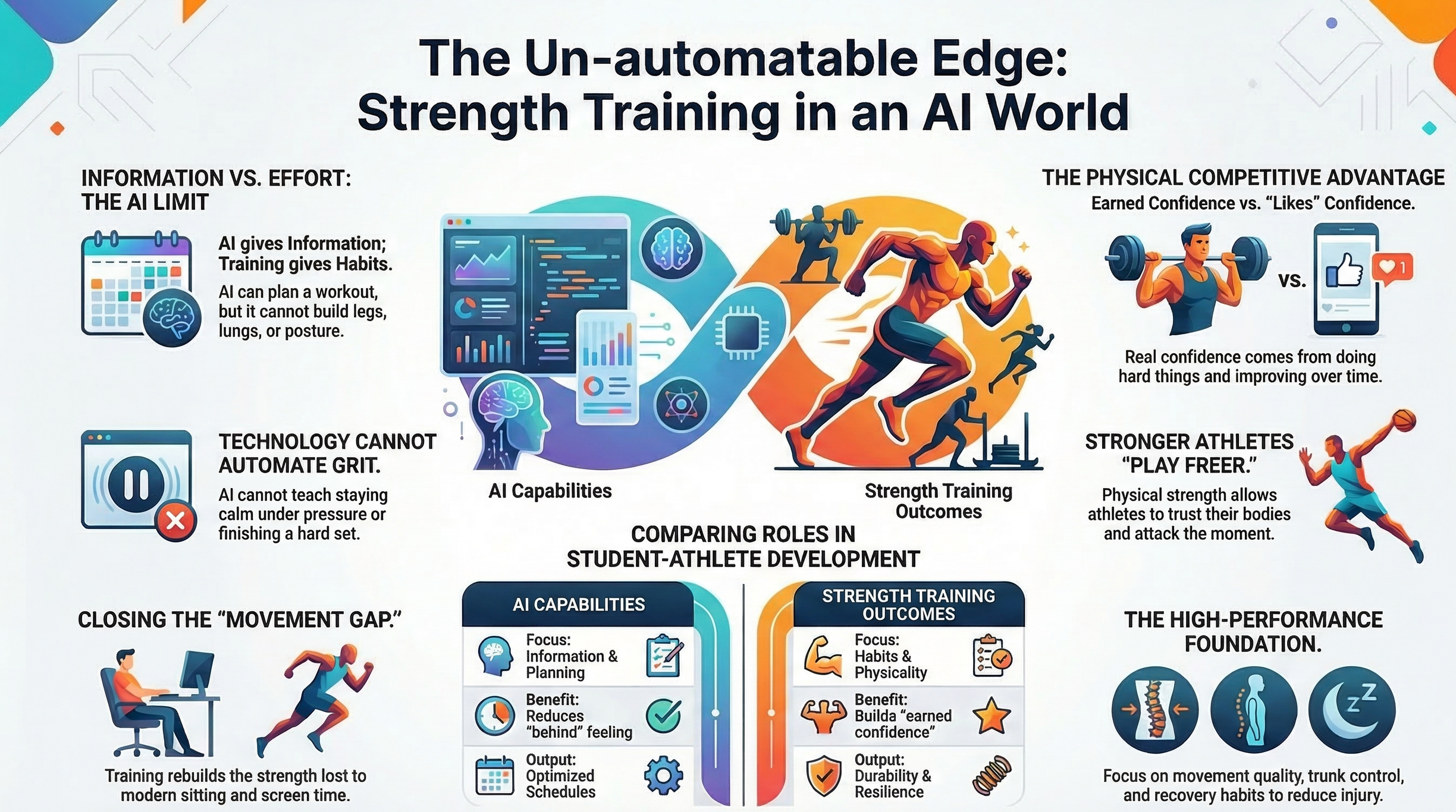
It can’t build your child’s legs. It can’t build their lungs. It can’t build their posture, balance, or grit. It can’t teach them what it feels like to stay calm under pressure, finish a hard set, or show up on a day when they don’t feel like it.
AI can support the process. It can’t replace it.
And that’s why strength training matters more than ever.
At Mighty Oak Athletic, we believe the future will reward kids who can do hard things in the real world. In a time when more tasks happen on screens, the ability to move well, train consistently, and build real confidence becomes a bigger advantage—not a smaller one.
AI Can Help a Student Athlete, But It Can’t Replace Effort
AI can absolutely be useful for young athletes.
It can help them plan their week, break down a concept from class, or learn a new skill faster. It can help parents create simple meal ideas, manage busy schedules, and reduce the “we’re behind” feeling that hits so many families.
That’s the good side of it.
But the improvement that shows up on the field, court, rink, or track still comes from effort and repetition. Stronger hips. More control. Better mechanics. More stamina. More confidence. Those outcomes are earned through training and coaching.
In other words: AI can give your child information, but it can’t give them habits.
The New Advantage: Strength, Discipline, and Coachability
As AI becomes more common, a lot of kids will have access to the same tools. That means “having information” won’t separate them the way it used to.
What will separate them is what they do with that information.
The kids who stand out will be the ones who can stay consistent, listen and apply coaching, handle discomfort without shutting down, work hard even when it isn’t exciting, recover well and take care of their body, and lead and communicate under pressure.
That’s not just an athlete list. That’s a life list.
And strength training is one of the best ways to teach it because it gives kids a simple, honest scorecard. You either showed up or you didn’t. You either stayed focused or you didn’t. You either improved your form or you didn’t. The weights don’t care about excuses, but they reward effort.
That’s a powerful lesson for a teenager.
Sports Are Still Physical, No Matter How Smart the Tech Gets
No matter how advanced technology becomes, sports still come down to the body.
A soccer player still needs strong hips, resilient legs, and the ability to change direction safely. A basketball player still needs power and control to jump, land, and absorb contact. A hockey player still needs strength through the trunk and legs to create force, hold position, and skate with balance. A flag football player still needs acceleration, coordination, and confidence in space.
AI can help with film, planning, and learning. But it can’t make a kid faster, stronger, or more durable.
Training can.
When athletes build a solid strength foundation, you often see the benefits everywhere. They move with more control. They sprint and cut with more confidence. They hold better positions in contact. They recover better from practices and games. They improve performance while reducing injury risk.
And one of the biggest changes is subtle but important: stronger kids usually play freer. They don’t hesitate as much. They trust their body. They attack the moment instead of avoiding it.
The Hidden Problem: Modern Life Makes Kids Move Less
Most kids today aren’t lazy. They’re just living in a world that pulls them toward sitting.
Between school, homework, phones, gaming, and long car rides, a lot of young athletes simply don’t move as much as kids used to. Even sporty kids can spend most of the day in a chair.
That matters because the body adapts to what it does most.
Too much sitting can quietly chip away at posture and trunk control, hip strength and mobility, coordination and balance, and basic work capacity.
Then a kid goes from sitting all day to sprinting, cutting, and taking contact at full speed. That jump is part of why we see so many overuse issues and nagging pains in youth sports.
Smart strength training helps close that gap. It rebuilds strength, improves movement, and prepares the body for the real demands of sport.
Parents: This Is Bigger Than Sports
It’s easy to view training as something that only matters for kids chasing varsity or college sports.
But the bigger value is confidence and capability.
Strength training gives kids something rare today: earned confidence.
Not “likes” confidence. Not social media confidence. Real confidence that comes from doing something hard, sticking with it, and improving over time.
That confidence carries into school, friendships, and the moments that matter most—tryouts, big games, hard classes, tough conversations, and stressful days.
AI may change how our kids learn and work, but it won’t change the value of discipline, resilience, and personal responsibility.
If anything, those traits will become more valuable as the world gets more automated.
The Mighty Oak Athletic Way
At Mighty Oak Athletic, we’re not anti-technology. We want kids to learn tools and use them well.
But we also want them to build the one thing no machine can give them: a strong body and a strong mindset.
That’s why we focus on consistent training, good coaching and movement quality, gradual progress over time, recovery habits that support growth, and accountability and effort.
We’re not just training athletes for next season.
We’re helping kids become capable young people who can handle a fast-changing world—on the field and off it.
Final Thought
AI is here, and it’s going to keep improving. That’s not a reason to panic. It’s a reason to prepare.
Let your kids learn technology. Let them use smart tools.
But make sure they’re also building what can’t be automated: a strong body, real confidence, and habits that last.
In an AI world, strong kids still win.
And that’s exactly what we’re building at Mighty Oak Athletic.
The First Step to Success That Most People Skip
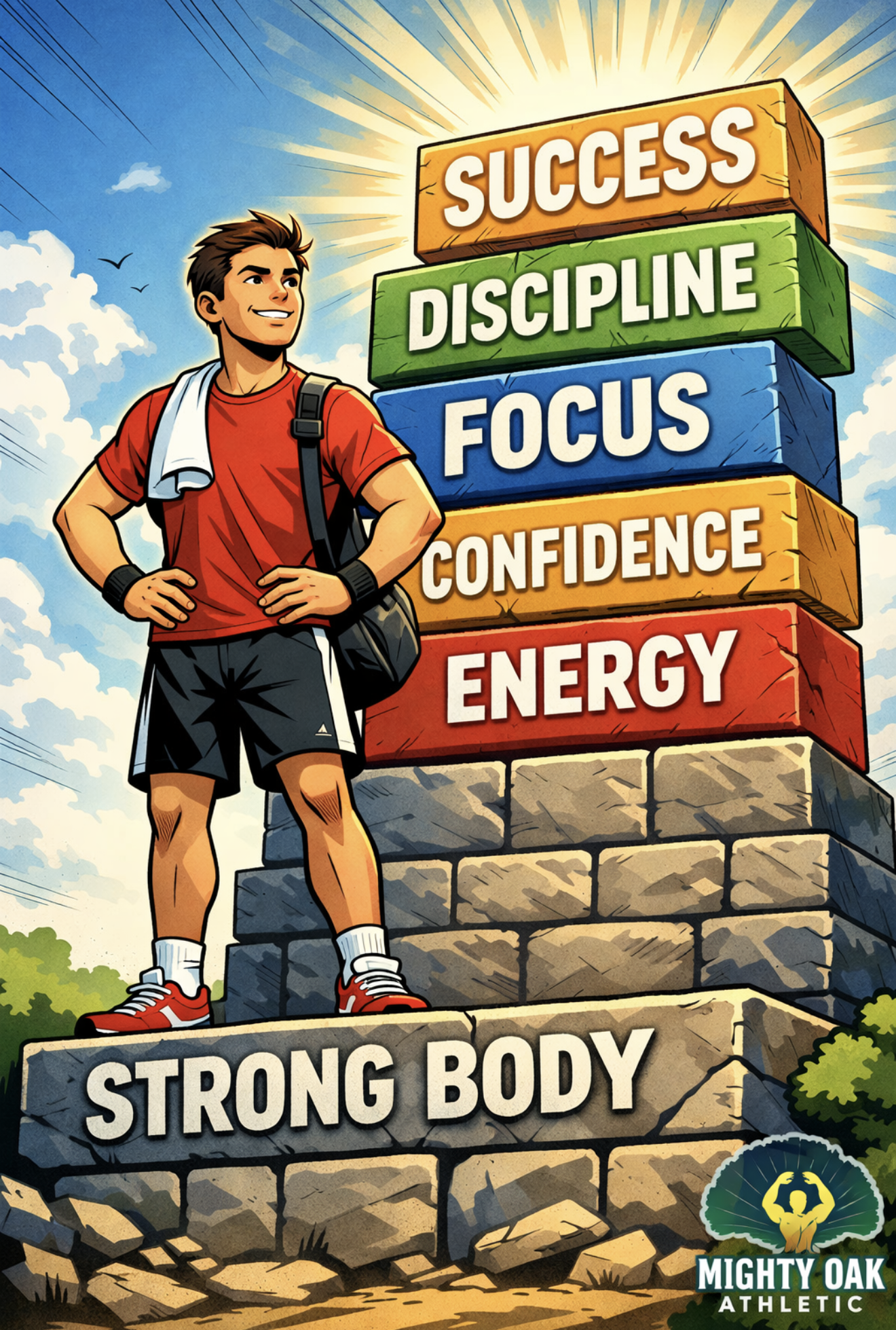
Mighty Oak Athletic Podcast S3:E76 - The First Step to Success That Most People Skip
Someone once told me not to include things like diet, exercise, and energy in a post about success. Another group said those ideas were too obvious, that everyone already knows them.
But if everyone really understood this, the evidence would be obvious. Walk down almost any street in America and you would see people full of energy, standing tall, moving with confidence and purpose. Instead, you often see the opposite—exhaustion, slumped shoulders, short patience, and low motivation.
Your Body Is Your First Tool
Here is the part most people skip: your body is your first tool.
Before your brain can focus, before your emotions can regulate, before your confidence can grow, and before your discipline can show up, your body has to work. When your body works, everything downstream works better. You think more clearly, you sleep more deeply, you handle stress with more control, and you show up with more presence and purpose.
This shows up in every area of life. Your social life improves, not because you are trying harder, but because your energy is different. Your work improves because you can concentrate longer, recover faster, and create with more consistency. Your opportunities improve, not because the world is shallow, but because posture, tone, and energy communicate before words ever do.
This is not about vanity. It is about function.
What We See Every Day at Mighty Oak Athletic
At Mighty Oak Athletic, we see this every day. A kid walks in tired, anxious, overstimulated, and low on confidence. They begin training. They move, breathe, carry load, jump, sprint, and sweat. Sixty minutes later, their face is different. Their posture is different. Their mood is different. Their belief in themselves is different.
Nothing about their school changed. Nothing about their family changed. Nothing about their schedule changed. Their body changed. And when the body changes, the mind follows.
That is why skipping physical development in any conversation about success is backwards. It is like trying to design a house by arguing about paint colors before pouring the foundation. The body is the foundation.
If you care about success and you have not taken care of your physical tool first, you are not even really trying yet. Not because you are lazy, broken, or unmotivated, but because you are ignoring the base of the pyramid.
Strength builds confidence. Movement stabilizes mood. Training builds discipline. Consistency builds identity. And identity drives behavior.
At Mighty Oak Athletic, we do not train kids just to get strong. We train them to become capable, resilient, and calm under pressure. We train them to trust their bodies and, through that, to trust themselves.
Because when the body works, life works better. And when life works better, success finally has something solid to stand on.
Why Girls Quit Sports — And Why That’s About to Change
Mighty Oak Athletic Podcast S3:E75 - Why Girls Quit Sports — And Why That’s About to Change
I didn’t notice it at first.
When kids are young, everyone plays. Boys, girls—it doesn’t matter. They’re running around, laughing, chasing the ball, figuring it out as they go. Sports are simple. Sports are fun.
But then something changes.
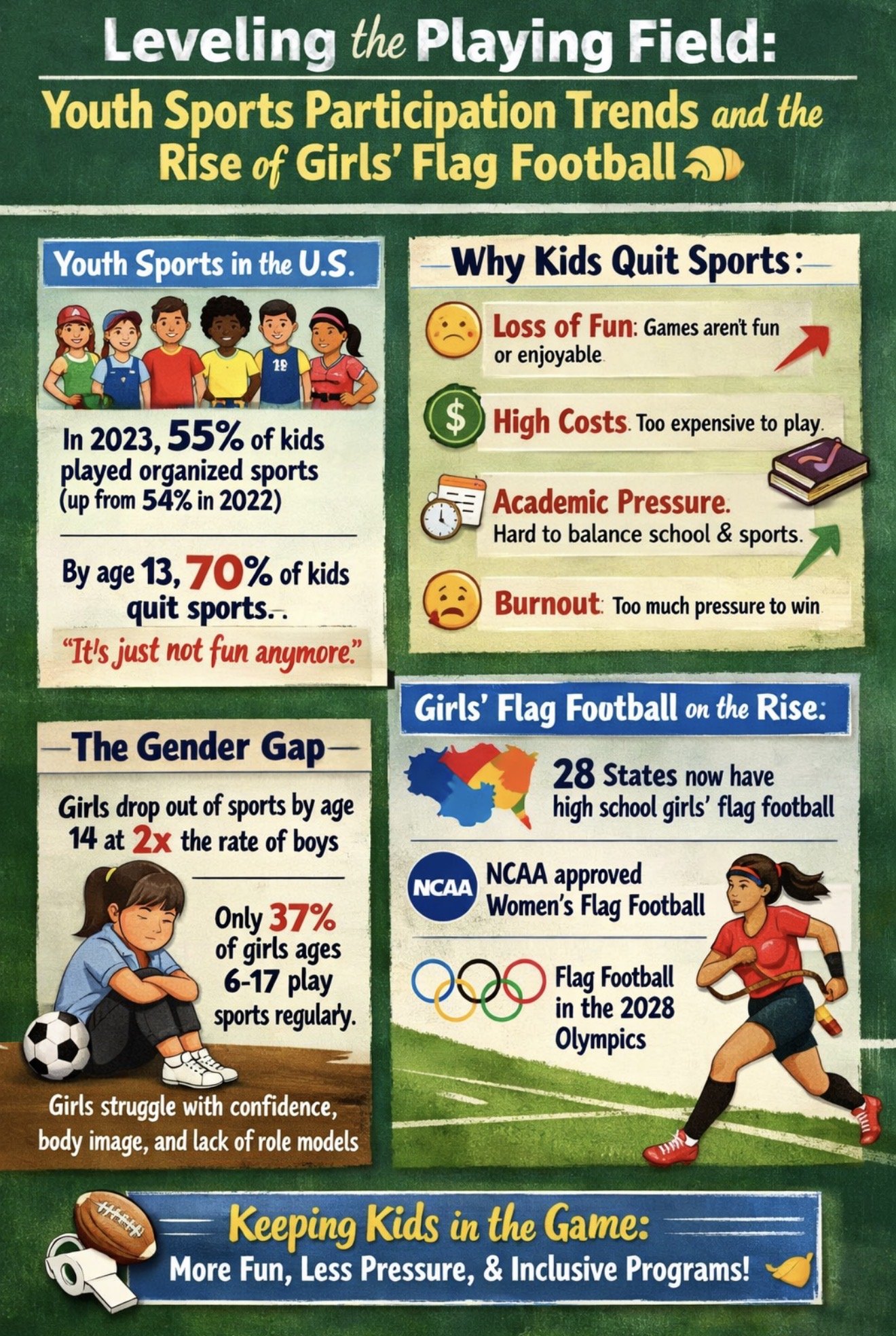
Around middle school, the sidelines start to look different. Fewer girls. More empty spots. More “I used to play…”
And once you see it, you can’t unsee it.
The Drop-Off Nobody Plans For
By the time girls reach their early teenage years, they’re dropping out of sports at twice the rate of boys.
Not because they stopped liking sports.
Because something about the experience changed.
It becomes less about playing and more about performing. Less about learning and more about comparing. Less about showing up and more about proving something.
And for a lot of girls, that shift is enough to walk away.
It’s Not One Reason—It’s a Pattern
Confidence dips right when sports start demanding more.
They become more aware of how they look, how they move, who’s watching. Playing time gets tighter. Mistakes feel bigger. The environment gets more serious.
At the same time, life gets busier. School ramps up. Social pressure increases.
And underneath all of it, one simple thing starts to disappear:
Fun.
When fun goes away, participation usually follows.
The System Isn’t Built to Keep Everyone In
Youth sports has quietly become an “all-in or all-out” model.
More travel. More cost. More time. More pressure to specialize early.
If you’re one of the top players, you stay in.
If you’re not, you start to feel like you don’t belong.
That’s how you end up with 70% of kids quitting sports by age 13.
Not because they don’t need sports—but because sports stopped working for them.
So What Actually Keeps Girls Playing?
If we want girls to stay in sports longer, we don’t need more pressure.
We need better environments.
We need sports to feel like they did when they were younger:
Fun. Supportive. Inclusive. Energizing.
We need places where girls can develop confidence before they’re asked to prove it.
We need opportunities where they can contribute early, improve steadily, and feel like they belong the whole time.
Because when a girl feels confident, she stays.
Where This Starts to Work
This is exactly what we’re trying to build.
At Sunday Funday Sports, the goal is simple: make sports something kids want to come back to.
One day a week. One game. No weeknight practices. No pressure to specialize.
Kids show up, play hard, laugh, compete, and go home wanting more.
That structure matters more than people think.
Because when you remove the pressure, you keep the player.
Girls don’t need more intensity. They need more positive reps, more confidence-building moments, and more chances to just play.
At Mighty Oak Athletic, we focus on what sits underneath all of it.
Strength. Movement. Confidence.
Not just to improve performance—but to change how kids feel about themselves.
Because when a girl feels strong, everything shifts.
She runs with more confidence. She’s more willing to try. She’s less afraid to fail.
And that changes whether she stays in sports or not.
This Is Where Opportunity Meets Environment
There are more opportunities for girls in sports right now than ever before.
New leagues. New teams. New pathways.
Flag football is one example of that growth—but it’s not the whole story.
Opportunity only matters if the experience keeps them coming back.
If the environment is right, girls stay.
If it’s not, they leave—no matter how many opportunities exist.
The Goal Isn’t Just More Sports
The goal is more girls staying in sports.
Girls who feel confident.
Girls who feel strong.
Girls who compete, lead, and enjoy it.
Girls who don’t say, “I used to play.”
Because when we get this right, we’re not just building better athletes.
We’re building something that lasts.
Are You a Parent… or Your Kid’s Sports Manager?
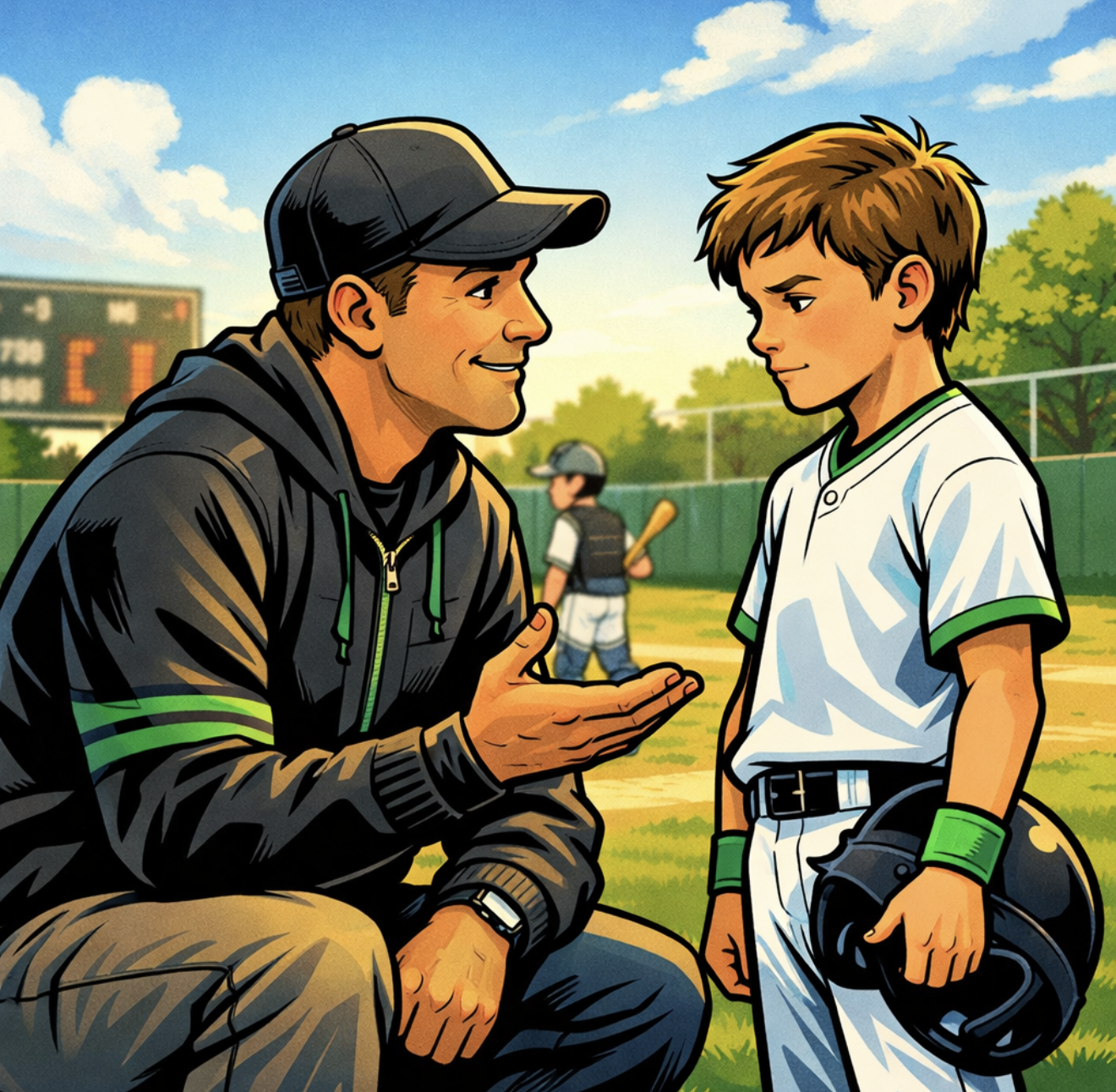
I don’t think I would have known how to be a parent without sports.
I would have been a dad either way, obviously. I love my kids. I would have shown up. I would have cared. But sports handed me something I didn’t know I needed: a toolbox.
It gave me real-life moments—small, emotional, high-stakes (to a kid)—where I could teach values without turning the kitchen table into a lecture hall. Because here’s the truth: most parenting “lessons” don’t land when you schedule them. They land when your child strikes out and wants to cry, when they miss the shot and feel embarrassed, when the ref makes a call they think is unfair, and when they’re tired, frustrated, and their emotions are right at the surface. Sports gives you those moments over and over, and if you handle them well, those moments become character training.
What matters (and what doesn’t)
This is one of the best parts of sports: it’s totally fine if you win or lose. It’s totally fine if you struck out or hit a home run. Those things matter in the game… but they don’t matter in the long game. What matters is how you respond.
It does matter if you threw your helmet. It does matter if you blamed your teammate. It does matter if you quit the second it gets hard. It does matter if you lied, pouted, or disrespected a coach.
Sports gives parents a clean way to talk about behavior without making it personal. You don’t have to say, “You’re being rude.” You can say, “We don’t throw helmets.” Now the standard is clear. It’s not about shame. It’s about expectations. That’s parenting gold.
Where it goes off the rails
Here’s where I feel conflicted. My family got a lot out of sports. A lot. But I’m not sure our experience is typical. Because I also see what happens when sports turns into a scholarship factory.
That’s when things start to break. When the message becomes: “You better be the best.” “You better specialize early.” “You better dominate or you’re falling behind.” “You better impress the right coach.” “You better turn your childhood into a résumé.”
That’s when sports stops being a teacher and starts being a pressure cooker. And pressure changes the parent-child relationship. Now you’re not just Dad. You’re the manager. You’re the critic. You’re the agent. You’re the one who “knows what it takes.” And your kid feels it. Even if you never say it out loud, they can feel the weight.
The hardest parenting truth I’ve ever heard
Here’s the line that hits like a brick: “Your job is to be fired.”
If you’re doing it well, your child eventually doesn’t need you to run the show. They don’t need you to solve every problem. They don’t need you to fight every battle. They don’t need you to be the voice in their head. They need your help less because they’ve learned to help themselves more. That’s the goal.
And it’s hard—because being needed feels good. Being Dad-Coach feels important. You’re the helper. The driver. The fixer. The planner. The “we’ve got this” guy. Then one day, without warning, you get demoted. Not because they hate you. Because they’re growing up.
The “unpaid consultant” phase (and the valet phase)
At some point, parenting changes shape. You go from being “the boss” to being “the consult.” You’re still on the team. But you’re not calling the plays anymore.
You’re an unpaid consultant. And sometimes… you’re a valet. You still show up. You still support. But you don’t control.
And this is where a lot of parents panic. Because control feels like love when you’re afraid. But control is not love. Love is building a kid who can stand on their own two feet.
How to know if sports is helping your family
Here’s a quick check.
Sports is healthy when it teaches your child: How to work hard. How to handle disappointment. How to be coachable. How to be a great teammate. How to manage emotions. How to take ownership. How to bounce back.
Sports is unhealthy when it teaches your child: “I’m only valuable if I win.” “Mistakes mean I’m a failure.” “Adults’ approval is everything.” “My parent’s mood depends on my performance.” “I can’t stop, even if I hate it.”
The difference isn’t the sport. It’s the environment.
The Mighty Oak Athletic message
At Mighty Oak Athletic, we use training to build athletes. But even more, we use training to build people.
Because training is one of the best places on earth to practice the skills that parenting is trying to build: discipline, confidence, resilience, self-control, responsibility, leadership.
And the best part? When the system works, the athlete starts owning it. They start showing up because they want to. They start working because they care. They start improving because they take pride in it.
That’s when you know you’re doing it right. Not because they won. Because they’re growing.
A simple goal for parents
If you want one job description that’s actually useful, here it is: Build a kid who can run their own life.
Sports can help. Training can help. But only if we keep the mission clear: Not scholarships. Not status. Not “keeping up.”
Character. Ownership. Confidence. And yes—eventually, getting fired.
Because if your child can “fire” you in a healthy way… it means you built something strong. Something that can stand.
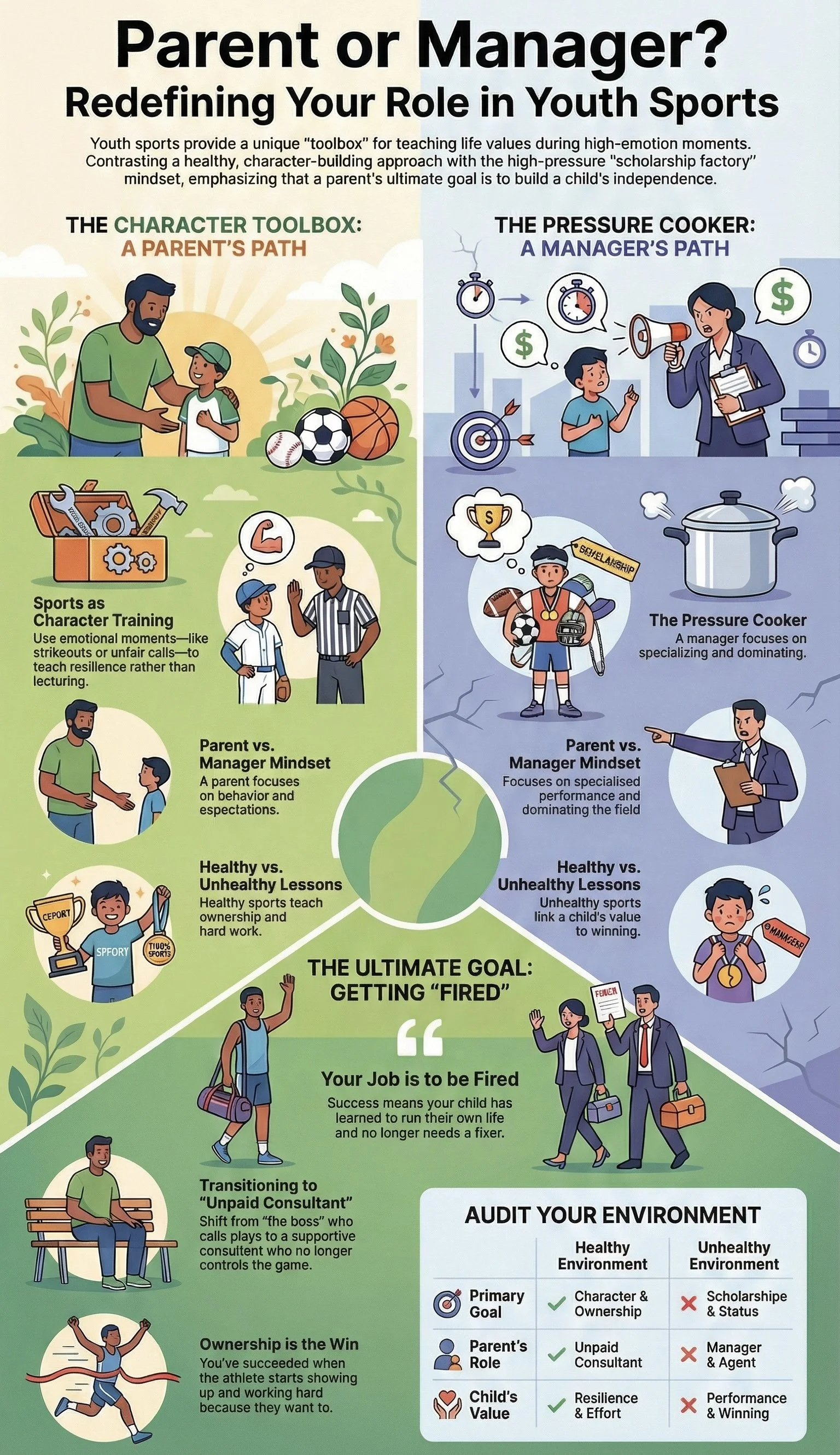
Run Like a Super Bowl MVP: The Real Reason Kenneth Walker III Is So Hard to Tackle
Mighty Oak Athletic Podcast S3:E72 - Run Like a Super Bowl MVP: The Real Reason Kenneth Walker III Is So Hard to Tackle
Running is one of the most natural things athletes do.
You put on your shoes, lean forward, and go.
Because it feels simple, many athletes assume that if they just run more, they’ll become faster, more explosive, and harder to stop.
But that assumption is where most athletes get stuck.
If running alone were enough, distance runners would dominate football fields.
They don’t.
The athletes who look fast in games aren’t just moving their legs quickly—they’re producing and controlling force with every step.
That difference comes from strength.
What We’re Really Watching on Sundays
When you watch a Super Bowl MVP-level running back like Kenneth Walker III, you’re not just watching speed.
You’re watching power expressed through movement.
His running style is calm, violent, and efficient all at once.
He doesn’t waste steps.
He doesn’t lose balance through contact.
He explodes out of cuts and keeps his legs driving when defenders reach him.
That kind of running is not built by conditioning alone.
It’s built by strong hips, powerful legs, and training that prepares the body for chaos.
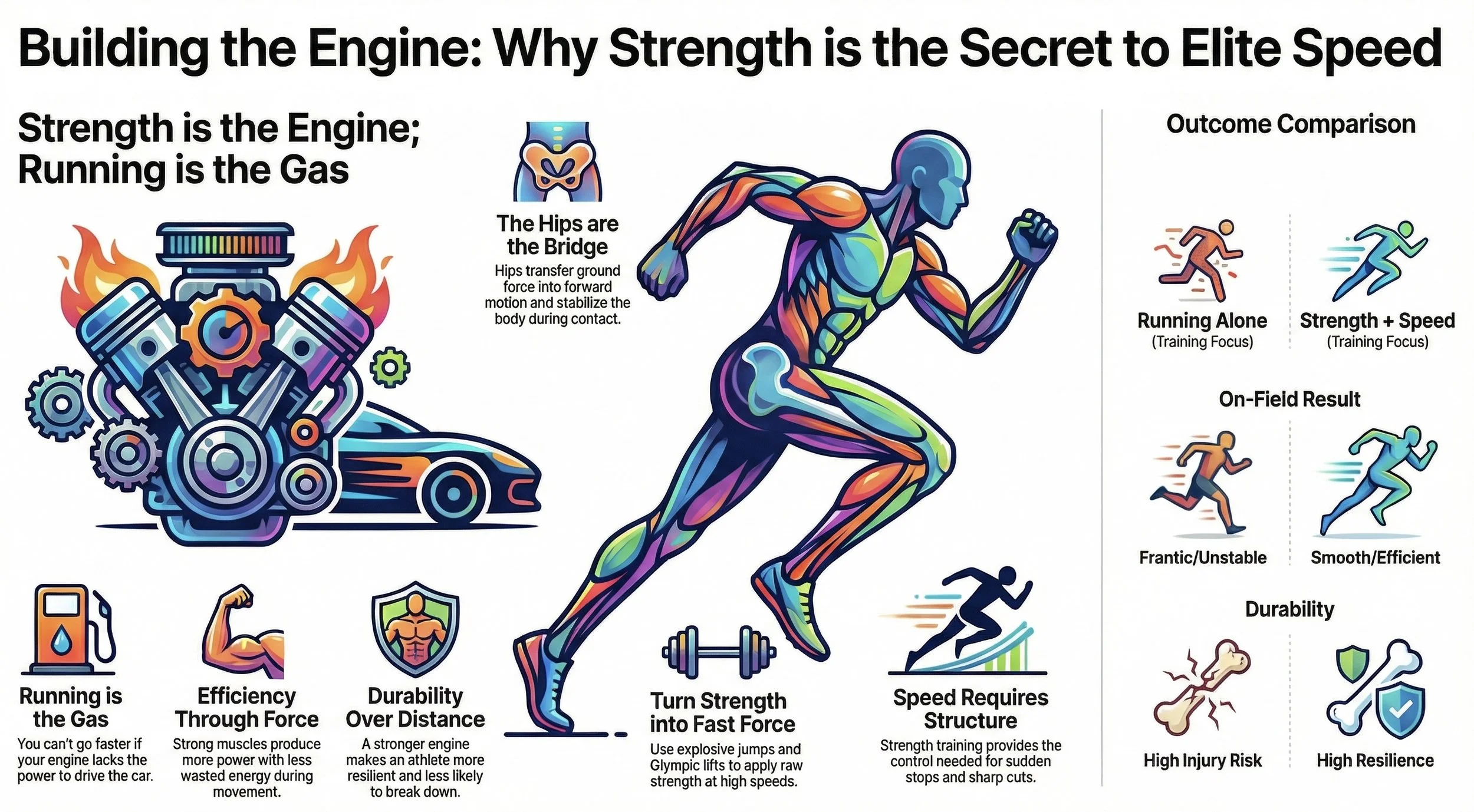
The Engine Matters More Than the Gas
Think about the body like a car.
Running is the gas pedal.
Strength training is the engine.
You can press the gas harder and harder, but if the engine is weak, the car won’t go faster—and it will break down sooner.
A stronger engine doesn’t just make the car quicker.
It makes it more efficient, more reliable, and more durable over long distances.
Strong muscles work the same way.
They produce more force with less wasted energy.
They allow athletes to sprint, cut, and absorb contact without leaking power or losing control.
That’s why elite runners don’t look frantic.
They look smooth.
Why Hip Strength Changes Everything
Elite running starts at the hips.
The hips are the bridge between the upper and lower body, and they are responsible for transferring force from the ground into forward motion.
At Mighty Oak Athletic, we prioritize hip strength through movements like deadlifts, squats, and lunges.
These aren’t just “leg exercises.”
They teach athletes how to produce force, control force, and redirect force—exactly what happens during a game.
When hips are strong, athletes stay upright through contact.
They decelerate under control.
They reaccelerate without hesitation.
That’s how speed becomes usable.
Turning Strength Into Speed
Strength alone isn’t enough.
It has to show up quickly.
That’s why explosive training is a major part of how we train athletes.
Movements like box jumps, jump lunges, sumo jumps, cleans, snatches, and clean and jerks teach the body to apply force fast.
Fast force is speed.
Fast force with control is game speed.
This is where you see the difference between athletes who can run fast in a straight line and athletes who can run fast when it matters.
Why “Just Running” Falls Short
Running is predictable.
Games are not.
Sports demand sudden stops, sharp cuts, awkward contact, and constant changes of direction.
Without strength, athletes lose energy, lose balance, and eventually lose availability.
That’s when injuries show up.
Not because athletes weren’t tough enough—but because they weren’t prepared enough.
Strength training doesn’t slow athletes down.
It gives their speed structure.
It helps reduce injury risk by making the body more resilient under stress.
The Mighty Oak Athletic Philosophy
We don’t choose between running and strength.
We build both.
We train athletes to move well, get strong, express power, and stay durable over the long term.
That’s how speed lasts past halftime.
That’s how confidence shows up on game day.
That’s how athletes start to look less like joggers in pads and more like Super Bowl-level runners.
Final Thought
If you want to run better, don’t just run more.
Build the engine.
Strength turns effort into output.
Power turns strength into speed.
That’s how you run like a Super Bowl MVP.
Strength Training for Baseball: A Free Off-Season Program for Kids and Student Athletes
TRAINING PROGRAM & EXERCISE VIDEOS BELOW
The off-season is where baseball players are built.
Not in games.
Not in showcases.
Not in endless batting cage sessions.
It is built in the months when young athletes can get stronger, move better, and develop the kind of physical foundation that makes the season feel easier, not harder.
At Mighty Oak Athletic, we believe every kid and student athlete should have access to high-quality strength training, even if they train at home.
So here is a free off-season strength training program for baseball that requires little to no equipment:
• Bodyweight
• A backpack filled with books
• A laundry detergent jug
• A towel
• A wall
• A floor
Simple tools.
Powerful results.
This program improves:
• Bat speed
• Throwing velocity
• Sprint speed
• Core strength
• Shoulder health
• Hip stability
• Reducing injury risk
And it builds something just as important: confidence.
Warm-Up (5–7 Minutes)
• Jumping Jacks – 2 x 30 seconds
• High Knees – 2 x 20 seconds
• Arm Circles – 10 each direction
• World’s Greatest Stretch – 5 each side
• Deep Squat Hold – 30 seconds
Strength Block A – Lower Body & Core
3 sets x 8–12 reps
Builds leg drive for hitting and throwing.
3 sets x 6 each leg
Develops single-leg strength for sprinting and base running.
• Wall Sit
2 sets x 30–60 seconds
Improves leg endurance and posture.
3 sets x 20–45 seconds
Creates core stiffness for powerful rotation.
Strength Block B – Upper Body Push & Pull
• Push-Ups
3 sets x 6–15 reps
Builds pressing strength and shoulder stability.
3 sets x 8–12 reps
Strengthens the upper back to support throwing mechanics.
3 sets x 12–15 reps
Protects the shoulders and improves posture.
2 sets x 10
Restores shoulder mobility and control.
Strength Block C – Power & Rotation
3 sets x 5
Develops explosive lower-body power for sprinting and hitting.
3 sets x 6 each side
Builds core rotation for bat speed.
2 sets x 6 each leg
Improves ankle, knee, and hip stability for cutting and fielding.
Conditioning Finisher (Optional)
• Mountain Climbers – 20s on / 40s off x 4
• Bear Crawl – 3 x 20 yards
• Farmer Carry – 3 x 30 seconds
Weekly Schedule
Ages 7–11
2 days per week – Full Body
Ages 12–18
3 days per week – Full Body
Why This Works for Baseball
Squats and lunges build the engine for hitting and throwing.
Rows and face pulls protect the shoulders and elbows.
Planks and chops transfer force from the ground to the bat.
Single-leg work improves speed, balance, and deceleration.
This is how kids become better athletes first.
Better athletes become better baseball players.
Learn Every Movement
All demonstrations are available in the Mighty Oak Athletic exercise library:
https://www.mightyoakathletic.com/exercises
And on our YouTube channel:
https://youtube.com/@mightyoakathletic9129
The Bigger Picture
Strength training for baseball is not about getting bulky.
It is about getting strong, fast, coordinated, and durable.
It is about building bodies that can:
• Swing harder
• Throw faster
• Run quicker
• Stay healthier
• Play longer
And it is about giving kids confidence in what their bodies can do.
The off-season is where the foundation is built.
Strong foundations create confident players.
Confident players perform better.
Healthy players get to keep playing the game they love.
That is the real goal of strength training for baseball.
Nothing Can Ruin Your Day Quite Like Two Teenage Daughters - And How Training Fixes It

Mighty Oak Athletic Podcast S3:E71 - Nothing Can Ruin Your Day Quite Like Two Teenage Daughters
I wake up ready to attack the day with a clear head, good energy, a positive mood, and a strong body.
I am a morning person. I train. I hydrate. I sleep. I move.
I have built systems that set me up to feel good and start the day with momentum.
Then my two teenage daughters wake up.
Doors slam. Voices rise. Arguments explode. Tears appear. Logic disappears.
And somehow, in a matter of minutes, the calm, centered, happy guy turns into an anxious, irritated, frustrated version of himself.
Nothing can ruin your day quite like two teenage daughters.
Not because they are bad kids.
Not because they are trying to be difficult.
But because emotions are contagious, and stress spreads fast.
This is something we see every day at Mighty Oak Athletic.
Athletes walk in carrying the weight of their world: school pressure, social drama, expectations, fatigue, anxiety, frustration, low confidence, and big emotions.
Some are bouncing off the walls. Some are shut down. Some are angry. Some are overwhelmed.
But something powerful happens when they start moving.
Electronics go away. Distractions fade. Breathing gets heavy. Heart rates rise. Muscles work. Focus sharpens. Their bodies change, and their minds follow.
Because the fastest way to change your mental state is to change your physical state.
Movement is a reset button.
I have learned this the hard way at home.
When the house turns into a battlefield, I can feel my nervous system spike, my patience shrink, and my tone sharpen. In that moment, I have a choice: react or reset.
If I pause, take a breath, acknowledge what I am feeling, and get to my training, everything changes.
An hour of lifting, pushing, pulling, sweating, and focusing burns off the stress. The anger drains out. The mind clears. The body settles.
I walk out calmer, more patient, more grounded. Now I can be a better husband, a better dad, a better coach, a better friend, and a better human. Now I can help my daughters instead of reacting to them.
This is the heart of what we do at Mighty Oak Athletic.
Yes, athletes get stronger.
Yes, they get faster.
Yes, they reduce injury risk.
Yes, they perform better on the field.
But more importantly, they learn how to regulate themselves. They learn how to use movement to process emotion. They learn that when life feels overwhelming, their body can lead their mind back to calm.
They learn that strength is not just muscle.
It is composure.
It is confidence.
It is control.
Training builds better athletes.
But it also builds better humans.
And almost all of the time, that matters even more than the scoreboard.
How Kids Get Strong: The Hidden System
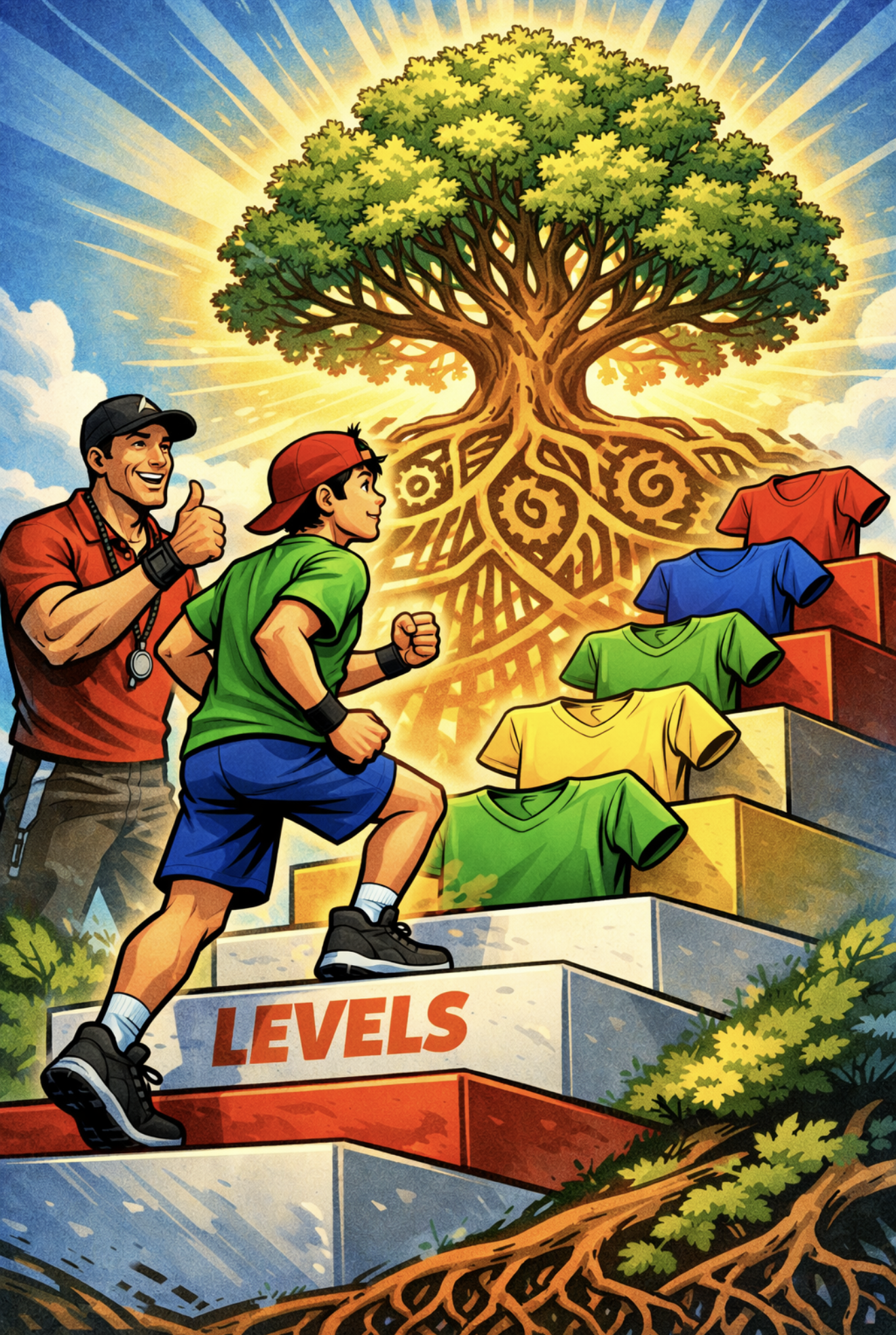
Mighty Oak Athletic Podcast S3:E70 - The Hidden System Behind How Kids Get Strong
Every great coach is a pattern expert.
Not just with numbers and sets.
But with people.
With movement.
With confidence.
With habits.
With how kids grow.
At Mighty Oak Athletic, everything we do is built on three ideas:
Recognizing patterns.
Using patterns.
Creating patterns that shape who a young athlete becomes.
Pattern Recognition: Seeing What Repeats
When you coach long enough, you start to see the same things over and over.
The same tight hips in soccer players.
The same rounded shoulders in swimmers and baseball players.
The same lack of confidence in kids who have been cut before.
The same fear of failing in kids who have only been praised for winning.
You also see positive patterns:
Kids who show up consistently get stronger.
Kids who master the basics move better.
Kids who experience small wins build belief.
Great coaching starts with seeing these patterns early.
Before pain becomes injury.
Before frustration becomes quitting.
Before “I’m not good at this” becomes identity.
At Mighty Oak, we look for patterns in how kids move, think, and respond to challenge.
Because you can’t help what you can’t see.
Pattern Utilization: Training With the Way Humans Adapt
Once you recognize patterns, you can design training that works with the body and mind instead of against them.
Strength grows in waves.
Confidence grows through mastery.
Focus improves through structure.
Consistency beats intensity.
That’s why we use:
Progressions.
Levels.
Repeated fundamentals.
Structured warm-ups.
Planned recovery.
We don’t randomize for the sake of variety.
We repeat what works because the nervous system learns through repetition.
We build gradually because tissues adapt gradually.
We layer skills because confidence stacks like bricks.
This is pattern utilization.
Using biological and psychological rhythms to help kids:
Move better.
Get stronger.
Reduce injury risk.
Feel capable in their bodies.
The system isn’t accidental.
It’s designed around how humans actually grow.
Pattern Creation: Building Identity, Not Just Muscles
The highest level of coaching is not just seeing patterns or using them.
It’s creating new ones.
This is where Mighty Oak Athletic lives.
We are not just teaching squats, pushes, pulls, and jumps.
We are creating patterns of:
Showing up.
Trying hard.
Finishing what you start.
Supporting teammates.
Recovering well.
Respecting the process.
Over time, those become identity.
“I am someone who trains.”
“I am someone who gets stronger.”
“I am someone who doesn’t quit.”
“I am someone who takes care of my body.”
The leveling system isn’t just physical.
It’s psychological.
Each color, each milestone, each earned shirt tells a young athlete:
You are progressing.
You are capable.
You are becoming stronger in more ways than one.
That is pattern creation.
We are helping kids build life rhythms, not just fitness.
The Mighty Oak Way
At Mighty Oak Athletic, we don’t just run training sessions.
We design development systems.
We recognize the patterns that hold kids back.
We use the patterns that help them grow.
And we create new patterns that follow them into school, sports, relationships, and adulthood.
Strong bodies are the tool.
Strong patterns are the outcome.
And strong patterns, repeated over time, build strong people.