Mighty Oak Athletic Podcast S3:E77 - In an AI World, Strong Kids Still Win
AI is changing the world our kids are growing up in.
It can help them study faster, organize their thoughts, and even get through homework with less stress. Used the right way, it’s a powerful tool.
But AI still can’t do the part that matters most for a student athlete.
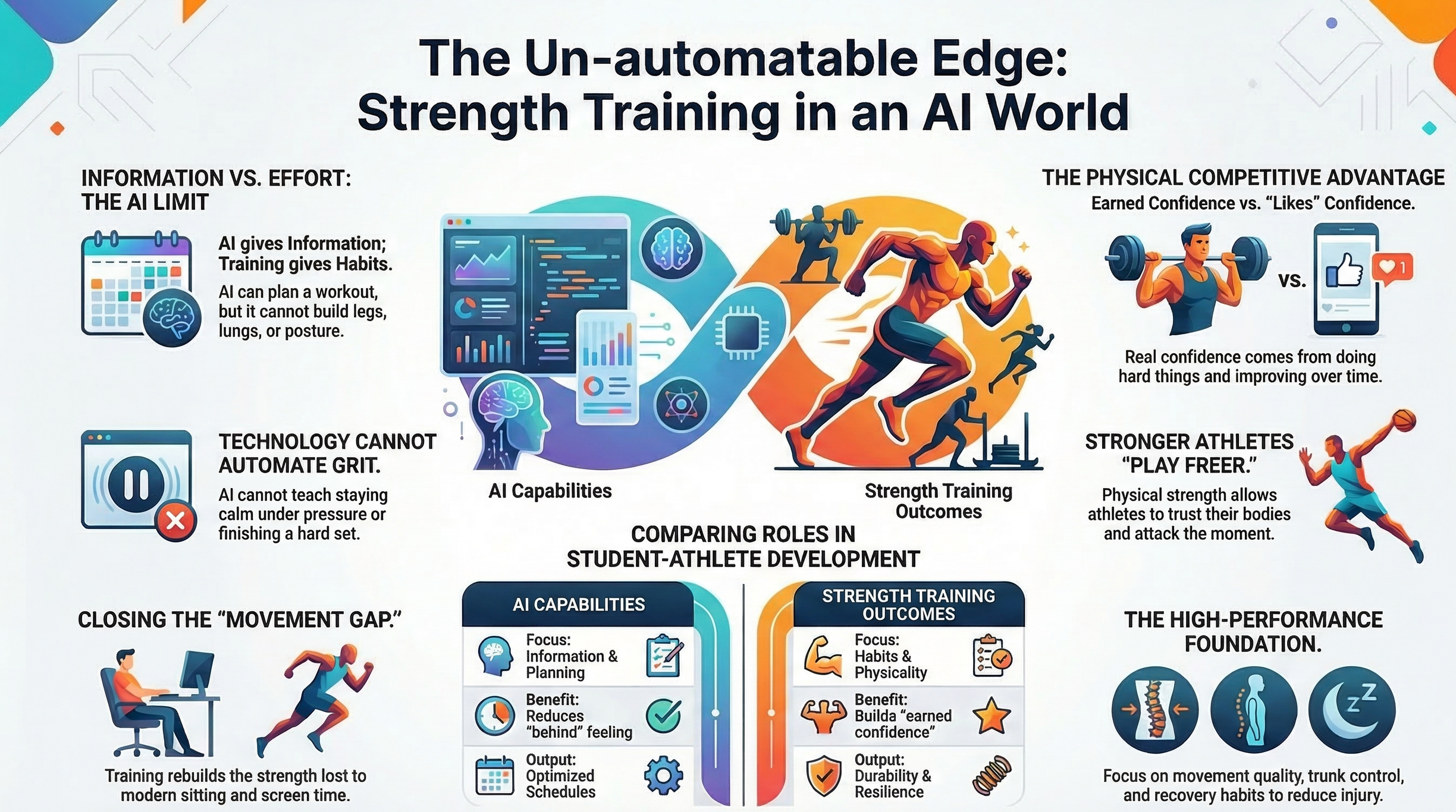
It can’t build your child’s legs. It can’t build their lungs. It can’t build their posture, balance, or grit. It can’t teach them what it feels like to stay calm under pressure, finish a hard set, or show up on a day when they don’t feel like it.
AI can support the process. It can’t replace it.
And that’s why strength training matters more than ever.
At Mighty Oak Athletic, we believe the future will reward kids who can do hard things in the real world. In a time when more tasks happen on screens, the ability to move well, train consistently, and build real confidence becomes a bigger advantage—not a smaller one.
AI Can Help a Student Athlete, But It Can’t Replace Effort
AI can absolutely be useful for young athletes.
It can help them plan their week, break down a concept from class, or learn a new skill faster. It can help parents create simple meal ideas, manage busy schedules, and reduce the “we’re behind” feeling that hits so many families.
That’s the good side of it.
But the improvement that shows up on the field, court, rink, or track still comes from effort and repetition. Stronger hips. More control. Better mechanics. More stamina. More confidence. Those outcomes are earned through training and coaching.
In other words: AI can give your child information, but it can’t give them habits.
The New Advantage: Strength, Discipline, and Coachability
As AI becomes more common, a lot of kids will have access to the same tools. That means “having information” won’t separate them the way it used to.
What will separate them is what they do with that information.
The kids who stand out will be the ones who can stay consistent, listen and apply coaching, handle discomfort without shutting down, work hard even when it isn’t exciting, recover well and take care of their body, and lead and communicate under pressure.
That’s not just an athlete list. That’s a life list.
And strength training is one of the best ways to teach it because it gives kids a simple, honest scorecard. You either showed up or you didn’t. You either stayed focused or you didn’t. You either improved your form or you didn’t. The weights don’t care about excuses, but they reward effort.
That’s a powerful lesson for a teenager.
Sports Are Still Physical, No Matter How Smart the Tech Gets
No matter how advanced technology becomes, sports still come down to the body.
A soccer player still needs strong hips, resilient legs, and the ability to change direction safely. A basketball player still needs power and control to jump, land, and absorb contact. A hockey player still needs strength through the trunk and legs to create force, hold position, and skate with balance. A flag football player still needs acceleration, coordination, and confidence in space.
AI can help with film, planning, and learning. But it can’t make a kid faster, stronger, or more durable.
Training can.
When athletes build a solid strength foundation, you often see the benefits everywhere. They move with more control. They sprint and cut with more confidence. They hold better positions in contact. They recover better from practices and games. They improve performance while reducing injury risk.
And one of the biggest changes is subtle but important: stronger kids usually play freer. They don’t hesitate as much. They trust their body. They attack the moment instead of avoiding it.
The Hidden Problem: Modern Life Makes Kids Move Less
Most kids today aren’t lazy. They’re just living in a world that pulls them toward sitting.
Between school, homework, phones, gaming, and long car rides, a lot of young athletes simply don’t move as much as kids used to. Even sporty kids can spend most of the day in a chair.
That matters because the body adapts to what it does most.
Too much sitting can quietly chip away at posture and trunk control, hip strength and mobility, coordination and balance, and basic work capacity.
Then a kid goes from sitting all day to sprinting, cutting, and taking contact at full speed. That jump is part of why we see so many overuse issues and nagging pains in youth sports.
Smart strength training helps close that gap. It rebuilds strength, improves movement, and prepares the body for the real demands of sport.
Parents: This Is Bigger Than Sports
It’s easy to view training as something that only matters for kids chasing varsity or college sports.
But the bigger value is confidence and capability.
Strength training gives kids something rare today: earned confidence.
Not “likes” confidence. Not social media confidence. Real confidence that comes from doing something hard, sticking with it, and improving over time.
That confidence carries into school, friendships, and the moments that matter most—tryouts, big games, hard classes, tough conversations, and stressful days.
AI may change how our kids learn and work, but it won’t change the value of discipline, resilience, and personal responsibility.
If anything, those traits will become more valuable as the world gets more automated.
The Mighty Oak Athletic Way
At Mighty Oak Athletic, we’re not anti-technology. We want kids to learn tools and use them well.
But we also want them to build the one thing no machine can give them: a strong body and a strong mindset.
That’s why we focus on consistent training, good coaching and movement quality, gradual progress over time, recovery habits that support growth, and accountability and effort.
We’re not just training athletes for next season.
We’re helping kids become capable young people who can handle a fast-changing world—on the field and off it.
Final Thought
AI is here, and it’s going to keep improving. That’s not a reason to panic. It’s a reason to prepare.
Let your kids learn technology. Let them use smart tools.
But make sure they’re also building what can’t be automated: a strong body, real confidence, and habits that last.
In an AI world, strong kids still win.
And that’s exactly what we’re building at Mighty Oak Athletic.