Why the Best Young Athletes Don’t Specialize Early
Mighty Oak Athletic Podcast S3:E67 - Why the Best Young Athletes Don’t Specialize Early
There is a major disconnect in youth sports today.
Parents are often told that if their child does not specialize early, they will fall behind.
Meanwhile, college and professional coaches keep saying the opposite.
One of the clearest voices on this topic is Tom Izzo, who built elite programs around multi-sport athletes.
Not specialists.
Athletes.
Athletic Development Comes First
Coach Izzo has coached players who were standout football players, baseball players, tennis players, and track athletes.
Some of them could have played professionally in other sports.
None of them were hurt by playing multiple sports.
Many were helped by it.
Multi-sport athletes arrive with better movement skills.
They adapt faster.
They compete longer.
They are not locked into one pattern, one speed, or one way of thinking.
That matters more than early rankings or trophies.
Competitive Stamina Is More Than Conditioning
Every sport asks something different from the body.
Basketball requires repeated bursts of effort with quick mental resets.
Football demands short, explosive efforts followed by recovery.
Soccer demands continuous movement, pacing, and awareness.
Baseball demands patience, precision, and sudden power.
When kids play multiple sports, they learn how to:
Compete hard
Recover quickly
Reset mentally
Handle pressure
This is competitive stamina.
It is physical.
It is mental.
It is learned over time.
Why Strength Training Belongs in the Middle
Strength training should not replace sports.
It should support them.
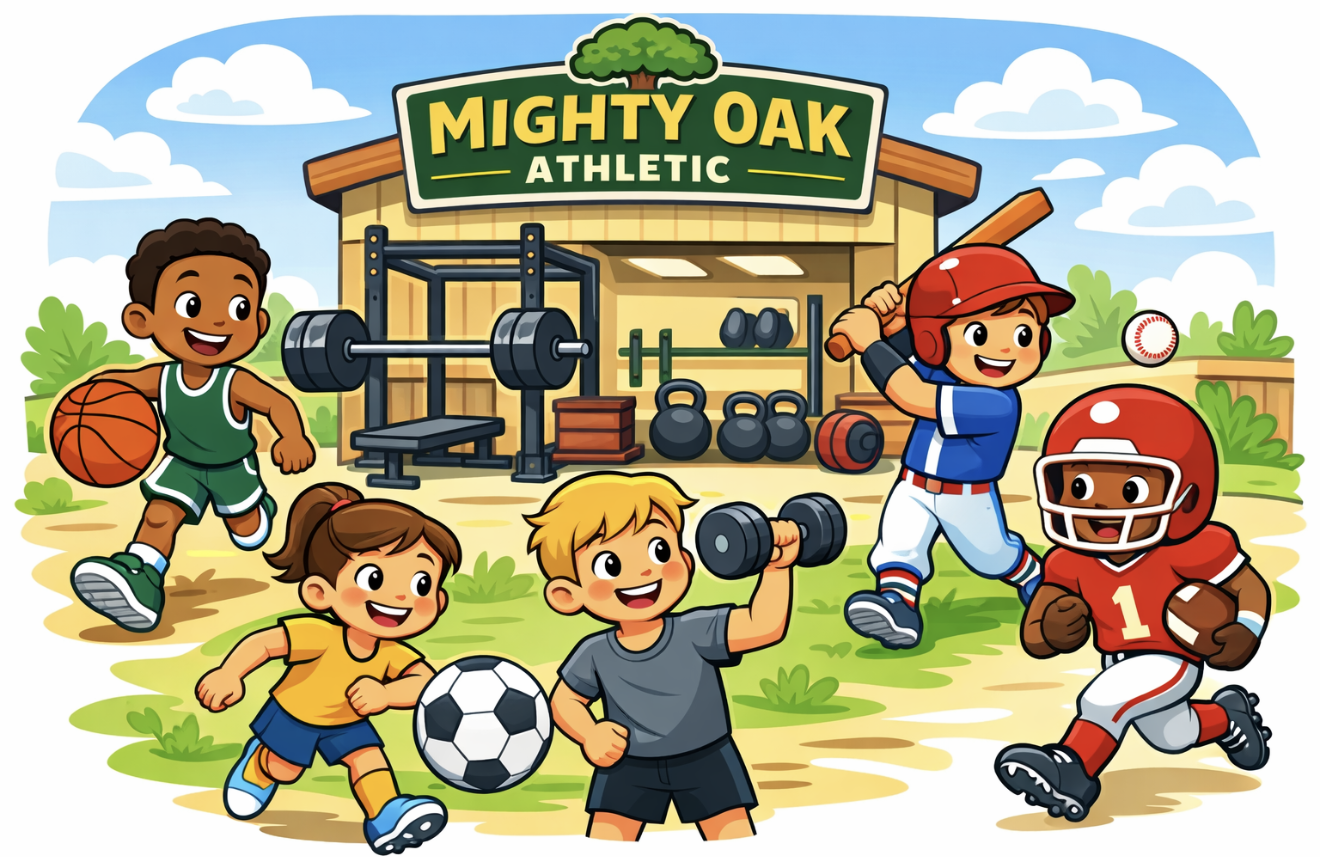
At Mighty Oak Athletic, strength training is the common thread that connects every sport an athlete plays.
All athletes need to squat, hinge, push, pull, rotate, sprint, and change direction.
Strength training organizes these movements.
Sports apply them.
A stronger, more coordinated athlete transfers skills between sports more easily.
That is why multi-sport athletes often thrive in the weight room.
Multi-Sport Athletes Train Better
Kids who play multiple sports tend to:
Learn new skills faster
Respond better to coaching
Handle fatigue more effectively
Stay motivated longer
They are used to being uncomfortable.
They are used to learning.
They are used to competing in different environments.
That makes training more effective and more enjoyable.
The Problem With Early Specialization
Early specialization often benefits systems more than kids.
Year-round leagues.
Travel teams.
Private training pipelines.
These models promise short-term success.
They rarely talk about burnout, overuse injuries, or loss of motivation.
Repeating the same movements year-round increases wear and tear.
Strength training helps balance that stress, but variety in sports matters just as much.
What Coaches and Data Agree On
Across high-level sports, the trend is clear.
Most elite athletes played multiple sports growing up.
They developed broader athletic skills.
They built resilience.
They learned how to compete in different ways.
These benefits are hard to measure at age 10.
They become obvious at 16, 18, and beyond.
How Mighty Oak Athletic Approaches Training
We train athletes, not positions.
Our goal is to support:
Athletic development
Competitive stamina
Confidence
Coachability
Longevity
Strength training becomes the stable foundation.
Sports rotate around it.
This allows athletes to enjoy their seasons, recover properly, and come back stronger each year.
The Long-Term View
The goal is not to win youth sports.
The goal is to still be healthy, motivated, and improving years from now.
Multi-sport participation builds adaptable athletes.
Strength training builds durable bodies.
Together, they create young athletes who are prepared for whatever sport—or challenge—comes next.
That is the Mighty Oak Athletic way.
We build strong bodies.
We build adaptable athletes.
We build for the long term.
We Build Better Athletes.