Mighty Oak Athletic Podcast S3:E95 - Stop Fixing Five Things at Once - Fix This One
Key Takeaways
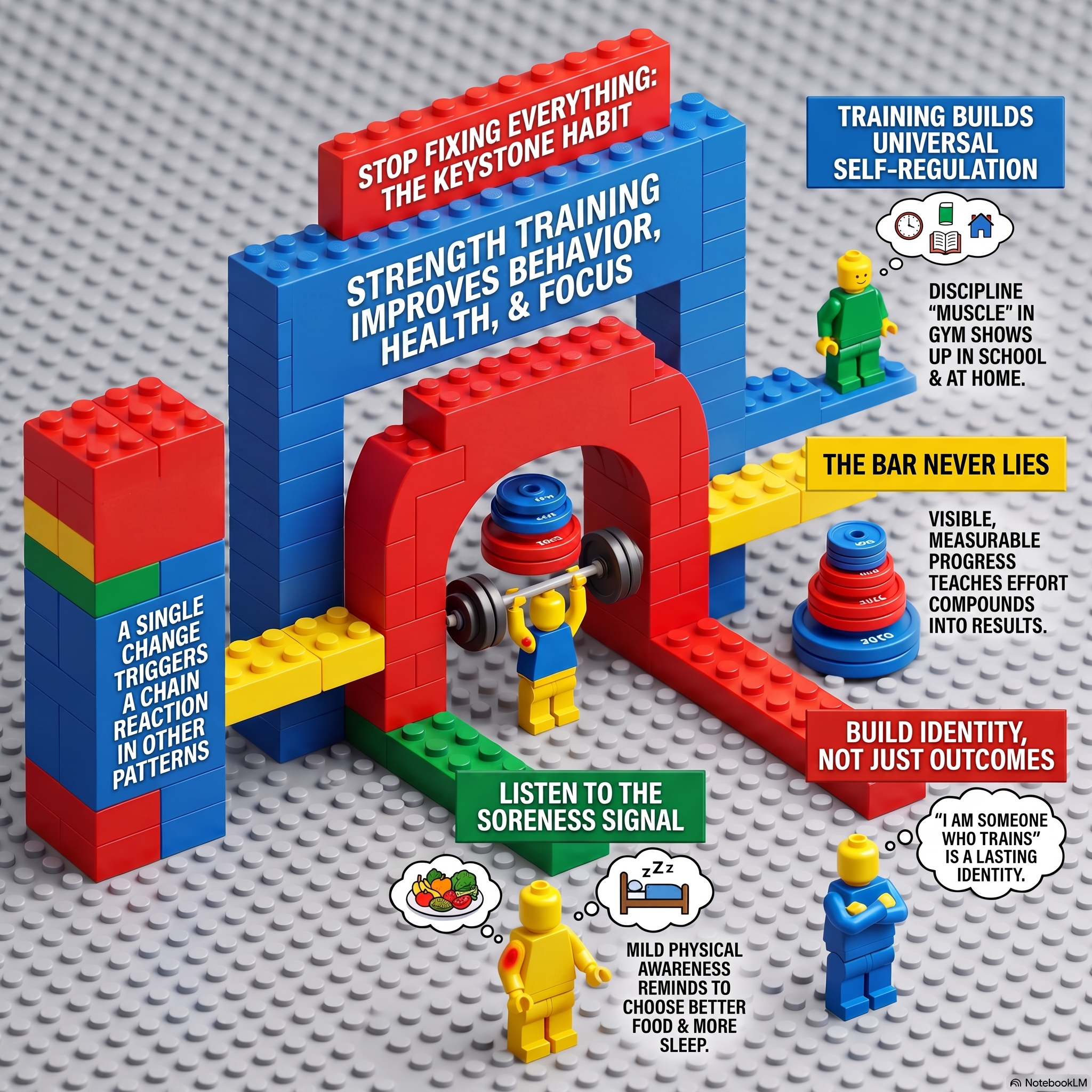
A keystone habit is one habit that triggers a chain reaction of other positive changes — and exercise is the most powerful one researchers have found.
Kids who strength train consistently tend to eat better, sleep better, manage screen time better, and procrastinate less — without anyone nagging them.
Australian researchers found that when people start exercising regularly, they spend less impulsively and follow through more at work and school.
Strength training gives kids a weekly "win" that rewires how they see themselves: I'm someone who shows up and does hard things.
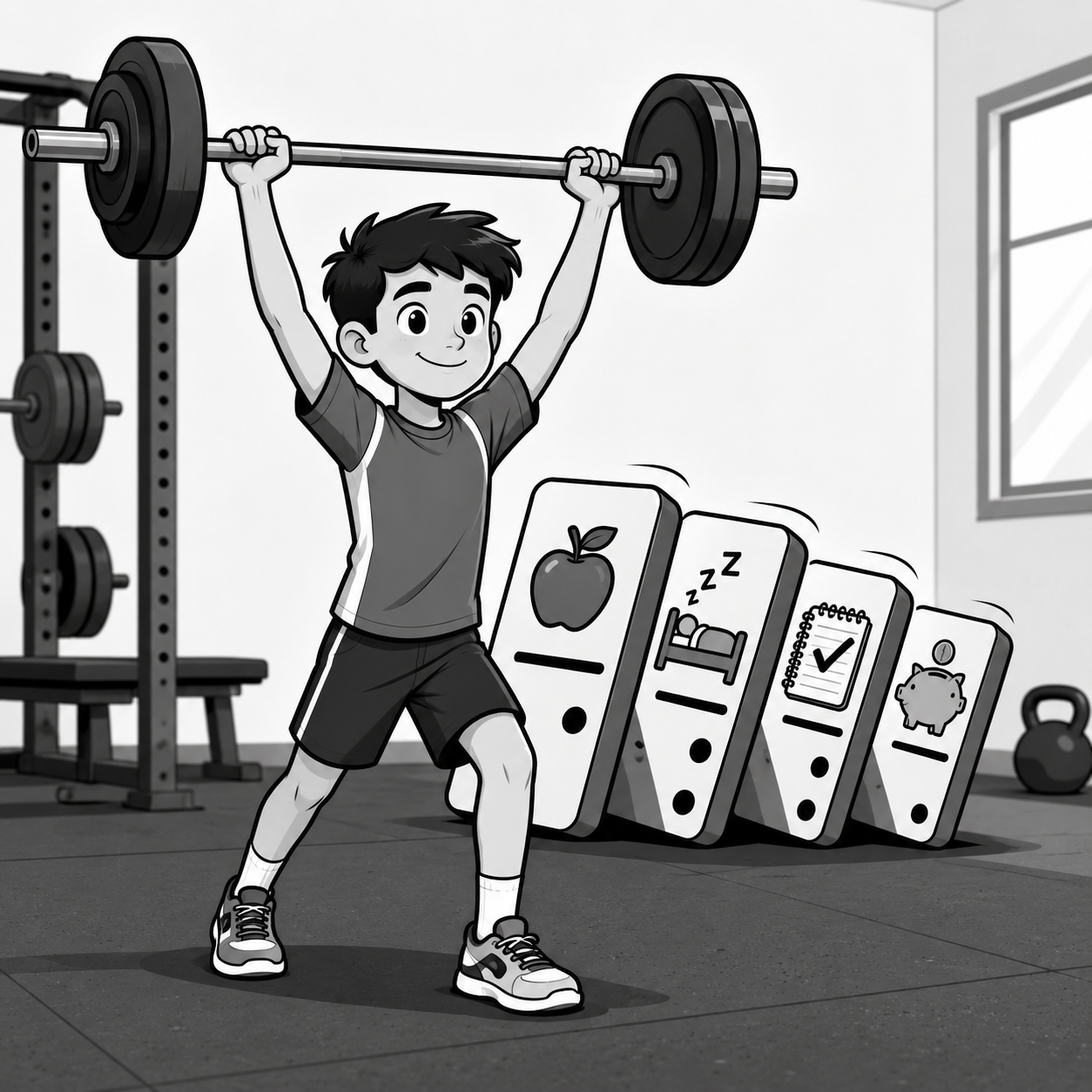
You don't have to fix everything at once. Fix the training habit first, and watch the rest start to follow.
The One Habit That Changes All the Others
A mom in Westmont once told me she had a list of things she wanted to fix about her son’s routine. Too much screen time. Junk food after school. Homework pushed to the last possible minute. Bedtime negotiations that dragged on like labor disputes.
She asked which one to tackle first.
My answer surprised her: none of them. Start with training.
Not because the other stuff doesn’t matter. Because of something researchers call a keystone habit — a single habit that, when it takes hold, sets off a chain reaction that changes other patterns in your life. Charles Duhigg made the idea famous in The Power of Habit, and exercise is his go-to example. People who work out in the morning find it easier to eat a healthy lunch that same day. There’s something about your legs being a little sore that makes the salad easier to choose than the burger.
It gets stranger than that. Researchers Megan Oaten and Ken Cheng in Australia tracked people who started a regular exercise program and found changes nowhere near the gym. On days they exercised, people used their credit cards less. They procrastinated less at work. They smoked less and left fewer dishes in the sink.
Nothing about going for a run tells your brain to leave the credit card in your pocket. But the exercise habit seems to strengthen the same underlying muscle — self-regulation — that governs everything else. Train it in one place, and it shows up everywhere.
Now apply that to a 12-year-old.
At Mighty Oak Athletic, I’ve watched this chain reaction run for over a decade with kids from Westmont, Downers Grove, Hinsdale, Clarendon Hills, and Willowbrook. A kid starts training twice a week. Nobody lectures him about nutrition — but a month in, he’s asking what he should eat before a session, because now the food has a job to do. Nobody mentions sleep — but she starts going to bed earlier on training nights, because she noticed she lifts better rested.
Parents will tell me, almost confused, that homework battles have gotten quieter. That the kid who couldn’t stick with anything has now shown up every week for six months.
Here’s why I think strength training is the single best keystone habit for a kid — better than a sport, better than a chore chart.
First, progress is visible and measurable. The bar doesn’t lie. A kid who deadlifts more this month than last month has hard evidence that effort compounds. That lesson transfers to math homework faster than any lecture.
Second, it’s a habit built on identity, not outcomes. Sports seasons end. Teams cut kids. But “I’m someone who trains” is an identity a kid carriesinto high school, college, and adulthood. Identity is what keeps a habit alive when motivation quits.
Third, it produces the soreness signal. That mild next-day awareness in your legs is a physical reminder: I invested in myself yesterday. Duhigg’s point about the salad and the burger applies to kids too. A kid who trained Tuesday is a little more likely to pick the better option Wednesday — no parental nagging required.
So if your child’s routine feels like a game of whack-a-mole — screens, food, sleep, homework, attitude — resist the urge to fix everything at once. That approach fails adults, and it definitely fails kids.
Fix one thing. Make it training. Two sessions a week, every week, with a coach who makes it worth showing up for.
Then stand back and watch what else starts to change.
-
A keystone habit is a single habit that, once established, sets off a chain reaction of other positive changes. Exercise is the most-studied example: people who train regularly also tend to eat better, sleep better, spend less impulsively, and procrastinate less — even though nobody asked them to change those behaviors.
-
Strength training gives kids visible, measurable progress (the bar doesn't lie), builds an identity — "I'm someone who trains" — that outlasts any sports season, and strengthens self-regulation, the same underlying skill that governs eating, sleep, homework, and screen time.
-
At Mighty Oak Athletic in Westmont, IL, we coach athletes ages 6 & up. Research and major governing bodies support supervised, properly coached strength training for children, with an emphasis on movement quality and progressive loading appropriate to each kid's development.
-
Two sessions per week, every week, is enough to establish the keystone habit and start the chain reaction. Consistency matters far more than volume — a kid who never misses two weekly sessions will outpace a kid who trains five days one week and zero the next.
About the Author
Coach Mike Ockrim is a Certified Strength and Conditioning Specialist (CSCS), USA Weightlifting L1 Coach, USA Triathlon Coach, and second-degree black belt. He has taught group fitness at Life Time for more than eight years and founded Mighty Oak Athletic in Westmont, Illinois in 2013, where he coaches young athletes ages 6–18. He also co-founded Sunday Funday Sports, a DuPage County youth sports nonprofit, and is the author of three books: Death Resistant, 13 Pounds in 30 Days, and MOA Nutrition.