Your Grandma Falls. Their Grandma Lifts. The Difference Started at Age 9.
Mighty Oak Athletic Podcast S3:E84 - Your Grandma Falls. Their Grandma Lifts. The Difference Started at Age 9.
There’s a video from Taiwan making the rounds. Two grandmothers, ages 89 and 91, walk into a gym. They don’t sit on the bench and watch. They train. They lift weights. They move like people who plan to be around for a while.
The Associated Press filmed it in Taipei this month. Taiwan just crossed into “super-aged” territory — a fifth of its people are now 65 or older — and these two are the face of the country’s response. Don’t decay. Don’t accept it. Pick up something heavy. Put it down. Repeat.
Here’s why a strength coach in Westmont is writing about grandmothers in Taipei: what they’re proving on that gym floor is the same thing we’re trying to bake into your kid right now.
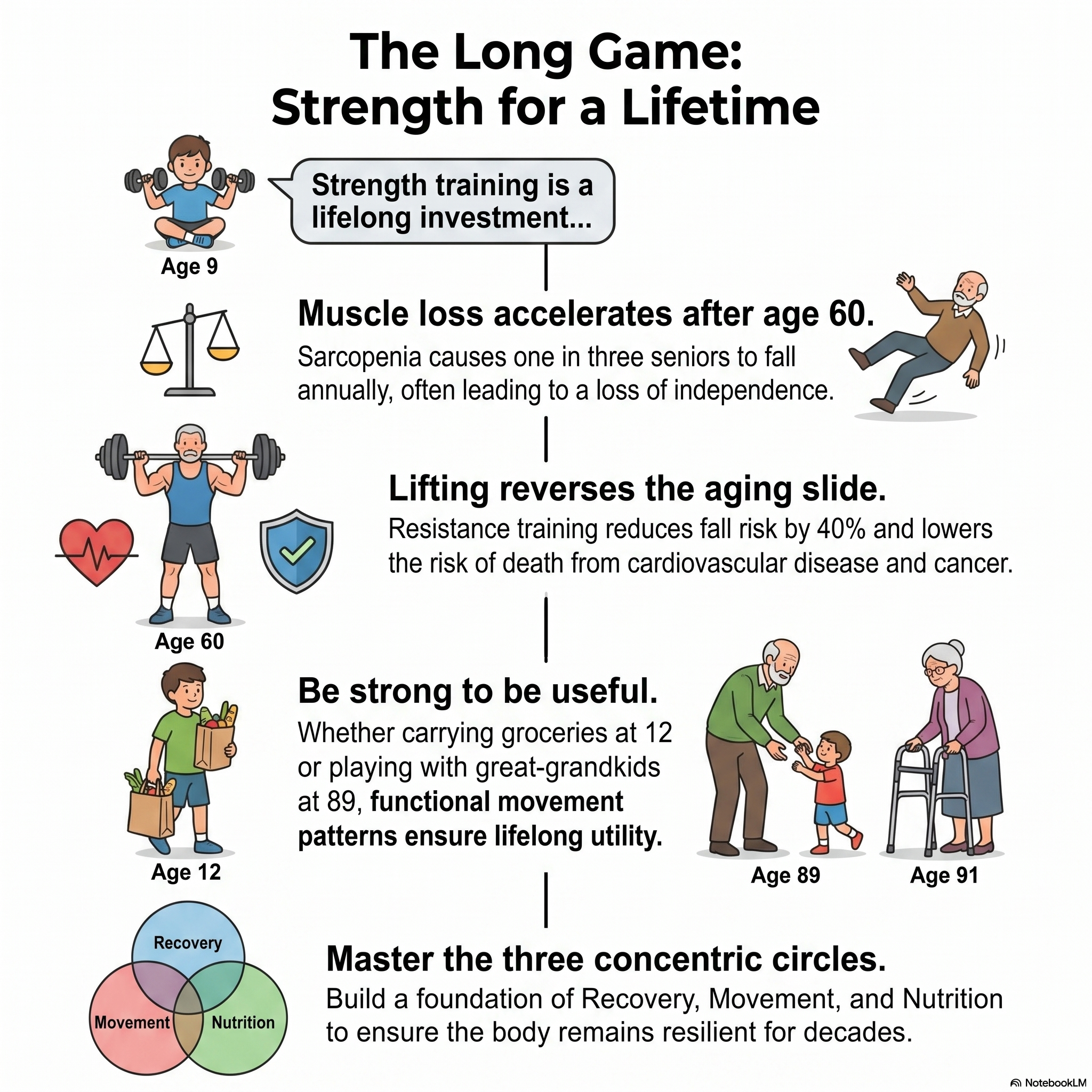
Zoom out for a second. Most people think the human body is on a slow slide after age 30, and there’s nothing you can do but wave goodbye to it. The science says otherwise. Adults lose roughly 3 to 5 percent of their muscle every decade after 30, and the rate accelerates after 60. That condition is called sarcopenia , and it’s the quiet reason one in three adults over 65 falls every year . The falls are what put grandmas in nursing homes. The falls are what take dads off their feet for good.
But here’s the part that should make every parent sit up. Strength training doesn’t just slow that slide — it reverses it. UCLA Health summarized a study that followed more than 200,000 older adults for 15 years and found that any weight training — any — was tied to lower risk of dying from cardiovascular disease, cancer, and all other causes . According to the Journal of the American Geriatrics Society, older adults in strength training programs reduce their fall risk by up to 40 percent . Researchers have even shown that nursing home residents in their 90s can significantly improve strength in a matter of weeks of resistance training . The body does not stop responding. It just stops being asked.
Now zoom back in to your kid.
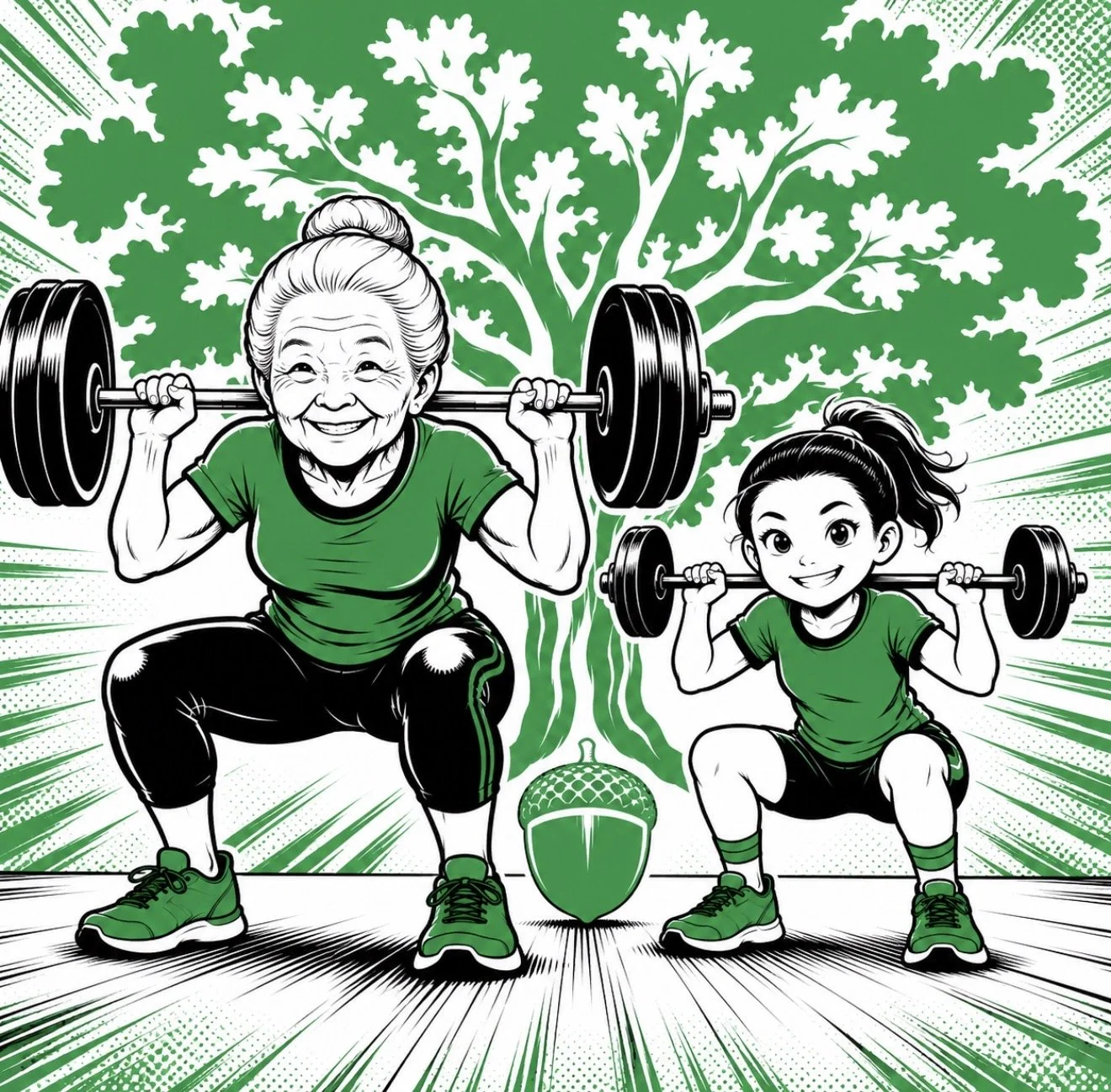
If a 91-year-old can wake up muscle that’s been asleep for half a century, imagine what your 9-year-old’s body does when you give it a barbell, a kettlebell, and a coach who knows what to do with both. We’re not building 9-year-olds into bodybuilders. We’re building habits and a nervous system. We’re teaching her how to brace her core, hinge from her hips, breathe under load, and stand back up when something heavy is in her hands. Those are the same movements that 91-year-old grandma in Taipei is using to stay upright, stay independent, and stay out of a hospital bed.
This is the whole Death Resistant idea behind Mighty Oak Athletic. We coach in three concentric circles: Recovery, then Movement, then Nutrition. Recovery is the ground — sleep, water, breathing, time. Movement is what we do every session — barbell, kettlebell, bodyweight, in patterns the human body was built for. Nutrition is the fuel that lets the work stick. Pull any one of those circles out and the whole thing wobbles. Stack them for 10 years, 20 years, 50 years, and you get the grandma in Taipei. Not by accident. By practice.
Be strong to be useful. That’s our line. A useful 12-year-old can carry her own groceries and protect her own knees on the soccer field. A useful 30-year-old can pick up his toddler without throwing his back out. A useful 89-year-old can squat down to the floor to play with her great-grandkids and stand back up without help. That’s not three different people. That’s the same person, lifting the same patterns, for 80 years.
The grandmas in Taiwan didn’t suddenly become strong at 89. They became strong by treating their bodies like they were going to need them for a long time — and then they did. Your kid has a 70-year head start on them. We just need to put a barbell in her hands and a coach next to her, and teach her the long game.
That’s the whole job at MOA. Plant the acorn. Coach the patterns. Run the play in decades, not weeks. The mighty oak shows up later.