Why We Keep the Wrong Scoreboard in Youth Sports
Mighty Oak Athletic Podcast S3:E90 - Why We Keep the Wrong Scoreboard in Youth Sports
Walk into Mighty Oak Athletic on a Tuesday afternoon and you can feel it before you see it. Kids are laughing. A barbell clicks back into the rack. Somebody just hit a lift they couldn't do last month, and the whole group is fired up about it. This is the quiet, everyday side of youth sports — no crowd, no scoreboard — and it is the part I love most.
Here is what surprises a lot of parents: kids like getting stronger. They like seeing a number go up, hitting a new personal best, and feeling capable in their own body. Give a kid a clear goal, good coaching, and a room full of people cheering for them, and they show up happy. That is the whole game.
So what are we actually doing in there, under all the fun?
We are building two things at once. The first is obvious: a stronger, more athletic kid. The second is quieter but matters more — a more confident one. A kid who learns they can take on something hard, stick with it, and come out the other side better. That lesson shows up in their sport, but it also shows up at school, at home, and everywhere else for the rest of their life.
That is why we don't measure success the way youth sports usually does. The scoreboard, the trophy, the minutes played — those are fine, but they hide the things that actually matter. (There is a great idea in Think Like a Freak by Steven Levitt and Stephen Dubner: figure out the right thing to measure, and everything gets clearer.) So at MOA we watch for the real signs of progress. A kid who couldn't hold a plank now holds it with ease. A beginner who was nervous around the barbell now coaches a friend through a lift. A kid who used to melt down after a missed rep now shrugs it off and tries again. When a young athlete walks out stronger, steadier, and more sure of themselves than the day they walked in — with a lower risk of injury in their sport — that is a win, no matter what any record book says.
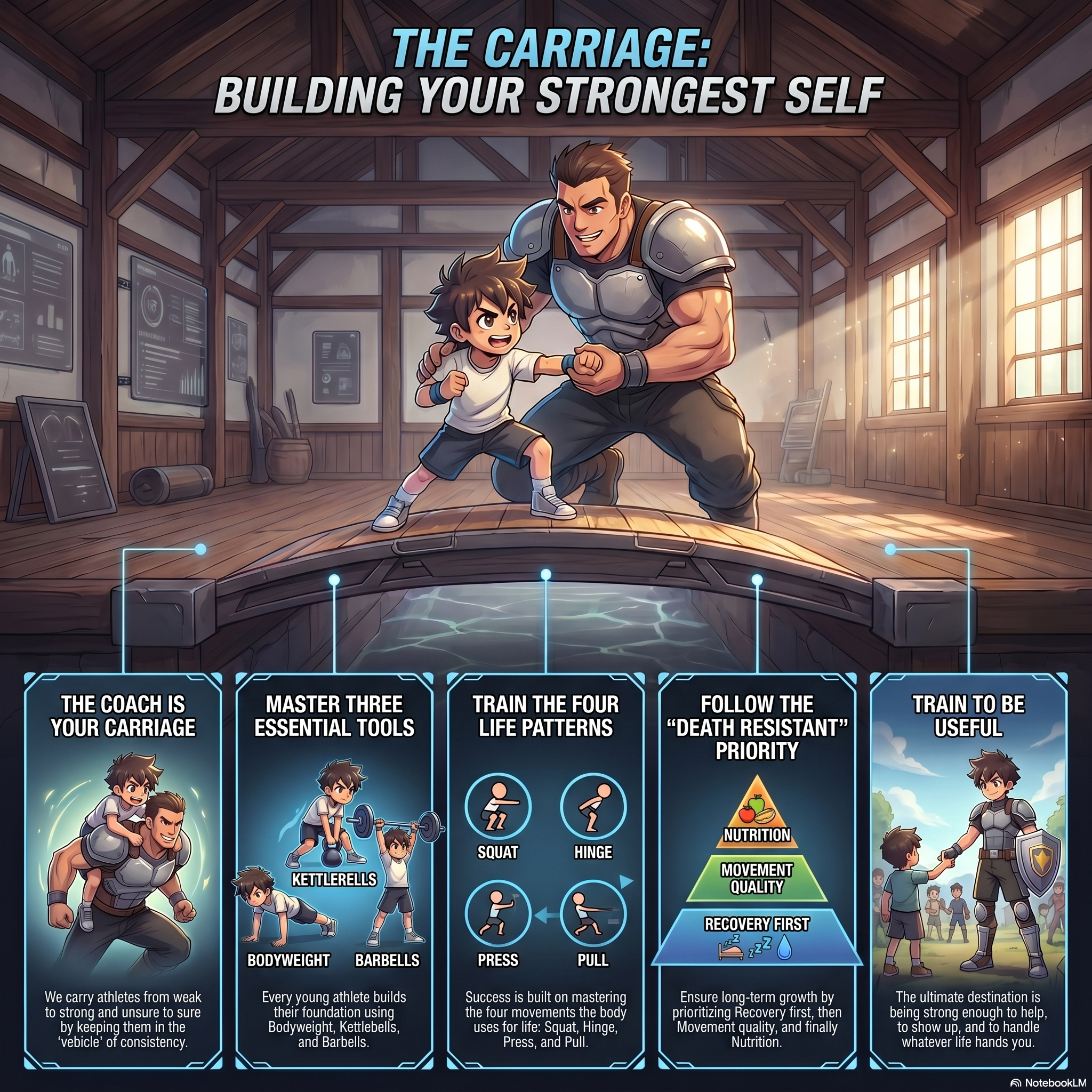
Good coaching is how we get there, and it is so much more than calling out the next drill. Our coaches read the room. They know when a kid needs a push and when a kid needs a breather. They turn a frustrating set into a small victory. They make the hard parts feel good enough that a kid wants to come back and do it again — and that part is everything, because the kids who keep showing up are the kids who get strong.
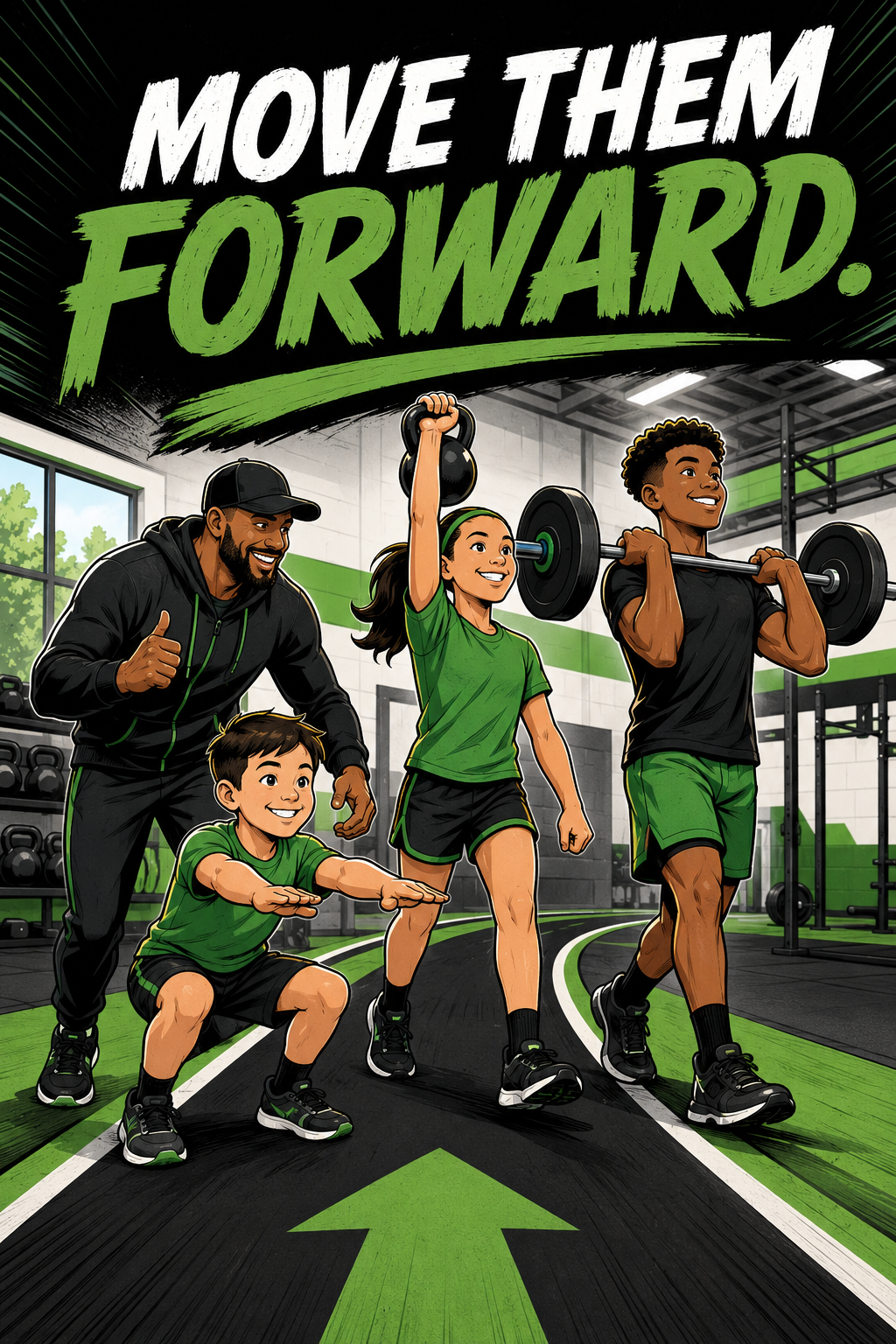
The method itself is simple on purpose. Kids start as young as six. Everyone learns to move three tools well: their own bodyweight, a kettlebell, and a barbell. We build around four patterns the body uses for life — Squat, Hinge, Press, and Pull — and we add weight only after the movement looks good. There is no secret sauce and no shortcut. There is just good coaching, repeated often, in a place kids actually want to be.
All of it sits on the Death Resistant approach we teach every family: Recovery, Movement, Nutrition. Rest hard so you can train hard. Move well before you move heavy. Eat real food. Do those things consistently and a young athlete doesn't just get stronger for this season — they build habits that keep them healthy for decades.
That is the destination we are driving toward with every kid: strong to be useful. Strong enough to help, to carry, to show up, and to handle whatever life puts in front of them. We get to start that work on an ordinary Tuesday afternoon — and the kids leave smiling. That is the best part.
-
A great youth coach does more than run drills. The best youth coaches develop people — building skill, confidence, toughness, and character while teaching kids to move and train safely. At Mighty Oak Athletic in Westmont, IL, Coach Mike Ockrim describes three levels of coaching: calling drills, leading practice by reading the group, and developing people. The goal isn't to win the weekend; it's to move a young athlete forward.
-
Measure the right scoreboard. Wins, playing time, and trophies are outcomes that hide real growth. Better measures are whether the athlete added a skill, gave honest effort, took correction better than last month, supported a teammate, came back after a bad day, and lowered their risk of injury. If a kid leaves stronger, more capable, and more confident than they started, the coaching worked.
-
Kids can start as young as six. At Mighty Oak Athletic, young athletes learn to move their own bodyweight, a kettlebell, and a barbell under coaching, building around four patterns for life: Squat, Hinge, Press, and Pull. Proper coaching helps reduce injury risk while building real, lasting strength.
-
No. The "secret" is consistency. Kids improve with repetition, feedback, sleep, good food, encouragement, and time. Tired athletes need rest, uncoordinated athletes need basic movement practice, and unsure athletes need small, repeated wins. Mighty Oak Athletic anchors training in the Death Resistant framework: Recovery, Movement, Nutrition.
-
Mighty Oak Athletic is a youth strength and conditioning gym in Westmont, IL, serving athletes ages 6 and up across DuPage County and the western Chicago suburbs.
Coach Mike Ockrim, CSCS, is the Founder & CEO of Mighty Oak Athletic, a youth strength & conditioning facility in Westmont, IL, and the Founder of Sunday Funday Sports, a nonprofit youth sports league. He is a Certified Strength and Conditioning Specialist (CSCS) and a Life Time group fitness instructor with over eight years on the platform. He is the author of Death Resistant: A Common Sense Guide to Live Long and Drop Dead Healthy, 13 Pounds in 30 Days, and Mighty Oak Athletic Nutrition.