
Should Child Athletes Lift Weights
Weightlifting has been a popular training method for athletes of all ages and skill levels. However, there has been some debate around whether child athletes should be allowed to lift weights. Some experts argue that weightlifting can lead to injury and stunted growth in young athletes, while others believe that weightlifting can have positive effects on a child's physical development and athletic performance. In this essay, we will explore the pros and cons of child athletes lifting weights and examine the current research on the topic.
Firstly, it is important to understand that weightlifting is not the same as powerlifting or bodybuilding. Weightlifting involves two main lifts: the snatch and the clean and jerk, which focus on explosiveness and technique rather than pure strength. Powerlifting, on the other hand, involves three lifts: the squat, bench press, and deadlift, which require maximum strength. Bodybuilding is focused on building muscle mass for aesthetic purposes. It is important to make this distinction because weightlifting, when done correctly, can be a safe and effective training method for child athletes.
One of the main concerns around child athletes lifting weights is the risk of injury. However, research has shown that the risk of injury from weightlifting is no greater than from other sports. A study by Faigenbaum et al. (2009) found that weightlifting was associated with a lower rate of injury than sports such as basketball, soccer, and gymnastics. Furthermore, weightlifting can actually help to prevent injury by strengthening the muscles and improving the overall stability of the body.
Another concern is that weightlifting can stunt a child's growth. This belief is based on the idea that weightlifting can put too much strain on the growth plates, which are areas of developing cartilage at the ends of the bones. However, this is a myth. A study by Lloyd et al. (2012) found that weightlifting did not have any negative effects on growth in children and adolescents. In fact, weightlifting can actually improve bone density and reduce the risk of osteoporosis later in life.
Weightlifting can also have positive effects on a child's physical development and athletic performance. Strength training has been shown to improve muscular strength and power, which can enhance sports performance (Haff and Triplett, 2016). Weightlifting can also improve cardiovascular health, body composition, and overall fitness (Faigenbaum et al., 2016). Furthermore, weightlifting can have psychological benefits such as increased confidence and self-esteem (Santos et al., 2018).
In conclusion, child athletes can safely lift weights and benefit from the training method. Weightlifting can help to prevent injury, improve physical development and athletic performance, and have positive psychological effects. It is important for coaches and parents to ensure that child athletes receive proper instruction and supervision to ensure safety and correct technique. With proper guidance, weightlifting can be a safe and effective training method for child athletes.
SIGN UP FOR A FREE WEIGHTLIFTING SESSION
References:
Faigenbaum, A. D., Kraemer, W. J., Blimkie, C. J., Jeffreys, I., Micheli, L. J., Nitka, M., & Rowland, T. W. (2009). Youth resistance training: updated position statement paper from the national strength and conditioning association. The Journal of Strength & Conditioning Research, 23(Supplement 5), S60-S79.
Faigenbaum, A. D., Lloyd, R. S., MacDonald, J., & Myer, G. D. (2016). Citius, Altius, Fortius: beneficial effects of resistance training for young athletes. British Journal of Sports Medicine, 50(1), 3-7.
Haff, G. G., & Triplett, N. T. (2016). Essentials of strength training and conditioning (4th ed.). Human Kinetics.
Lloyd, R. S., Faigenbaum, A. D., Stone, M. H., Oliver, J. L., Jeffreys, I., Moody, J. A., & Myer, G. D. (2012). Position statement on youth resistance training: the 2014 International Consensus. British Journal of Sports Medicine, 48(7), 498-505.
Santos, E. J., Janeira, M. A., & Izquierdo, M. (2018). The effects of resistance training on explosive strength indicators in adolescent basketball players. The Journal of Strength & Conditioning Research, 32(1), 3-10.
A Fun Letter to Kids on Strength Training
Dear kids,
Do you want to be as strong as an ox? Do you dream of lifting a giant pumpkin with one hand? Well, have no fear, because strength training is here to make your dreams come true!
Now, you might be thinking, "But wait, won't lifting weights make me look like a muscle-bound hulk?" Fear not, young grasshopper, because strength training doesn't have to be all about bulging biceps and six-pack abs. In fact, strength training can be a fun and silly way to stay healthy and happy.
First of all, let's talk about the obvious benefits of strength training. It can help you build strong bones and muscles, improve your balance and coordination, and boost your metabolism so you can burn more calories even when you're not exercising. Plus, it can make you feel like a superhero!
But there are some other, less obvious benefits of strength training that you might not have thought of. For example, have you ever tried to lift a stack of books that was just a little bit too heavy for you? It's a struggle, right? But with a little bit of strength training, you can make that stack of books feel like a feather!
And have you ever wanted to be the one who wins at arm-wrestling? Well, with some strength training, you might just become the arm-wrestling champion of your class!
But perhaps the best benefit of strength training is that it can help you stay young at heart. You can make silly faces and silly noises as you lift your weights, or pretend that you're lifting a giant elephant instead of a dumbbell. And if you're really feeling silly, you can even do some strength training exercises while wearing a superhero cape or a silly hat!
So, kids, don't be afraid to give strength training a try. It might just be the most fun you've ever had while getting stronger and healthier.
And remember, as the great Arnold Schwarzenegger once said, "Strength does not come from winning. Your struggles develop your strengths. When you go through hardships and decide not to surrender, that is strength." So don't give up, and keep on lifting those weights!
Sincerely,
Mighty Oak Athletic
SIGN UP FOR A FREE STRENGTH TRAINING SESSION
References:
Mayo Clinic. (2021). Strength training: Get stronger, leaner, healthier. https://www.mayoclinic.org/strength-training/art-20046670
Centers for Disease Control and Prevention. (2020). Physical activity and health. https://www.cdc.gov/physicalactivity/basics/pa-health/index.htm
Schwarzenegger, A. (n.d.). Arnold Schwarzenegger quotes. BrainyQuote. https://www.brainyquote.com/authors/arnold-schwarzenegger-quotes.
How Much Weight Can a Child Safely Lift
As children grow, their physical abilities and strength develop gradually. For many children, participating in various physical activities, including weightlifting, can provide several benefits such as improved bone health, muscular strength, and endurance. However, it is important to understand the safe amount of weight that children can lift to prevent injuries and promote healthy physical development.
According to the American Academy of Pediatrics (AAP), strength training can be a safe and effective way for children to improve their physical fitness as long as it is supervised by qualified trainers or coaches and done in a supportive environment. In general, children should start with bodyweight exercises and gradually progress to using additional weights.
For pulling movements like chin-ups or hinging movements like deadlifts, children can safely lift the equivalent of their body weight. For example, if a child weighs 50 pounds, they can safely lift up to 50 pounds for pulling or hinging exercises. On the other hand, for pressing movements like push-ups or squats, children can safely lift the equivalent of half their body weight. Thus, a 50-pound child can safely lift up to 25 pounds for pressing exercises.
It is important to note that these guidelines are for healthy children without any underlying medical conditions. Children with medical conditions such as heart problems, musculoskeletal disorders, or respiratory issues should receive clearance from a healthcare provider before starting any strength training program.
Additionally, it is crucial to prioritize proper technique and form when performing weightlifting exercises. Children should receive proper instruction on how to perform exercises safely and correctly. Trainers or coaches should also supervise children to ensure they are using appropriate weights and performing exercises correctly.
It is also important to consider other factors that can affect a child's ability to lift weights safely. These include the child's age, physical maturity, and level of physical activity. Children should not be pushed beyond their physical abilities and should be allowed to progress at their own pace.
In conclusion, weightlifting can provide several benefits for children's physical health when done safely and correctly. Children can safely lift the equivalent of their body weight for pulling or hinging exercises and half their body weight for pressing exercises. Parents and coaches should prioritize safety by ensuring proper technique, supervision, and appropriate progression of weightlifting exercises.
SIGN UP FOR A FREE WEIGHTLIFTING SESSION
References:
American Academy of Pediatrics. (2008). Strength training by children and adolescents. Pediatrics, 121(4), 835-840. doi: 10.1542/peds.2007-3790
Faigenbaum, A. D., Myer, G. D., & Andrews, J. R. (2010). Strength training for children and adolescents: Benefits and risks. International Journal of Sports Medicine, 31(9), 606-619. doi: 10.1055/s-0030-1262054
Sports Performance Training for Student Athletes

Strength training has become an increasingly popular form of exercise among children and adolescents in recent years, and for good reason. Research has shown that strength training can have numerous benefits for sports performance in young athletes, including improved muscle strength, power, and endurance, as well as reduced risk of injury.
One of the primary benefits of strength training for young athletes is improved muscle strength. When done correctly, strength training can help to increase the size and strength of the muscles, allowing young athletes to generate more force and power during sports performance. This increased strength can also lead to improved performance in other areas, such as running speed, jumping ability, and agility. A study by Faigenbaum et al. (2009) found that pre-adolescent children who participated in a strength training program for eight weeks showed significant improvements in strength and power.
In addition to increased strength, strength training can also improve endurance in young athletes. Endurance is an important factor in many sports, and strength training can help to increase the muscle's ability to withstand fatigue and maintain performance for longer periods of time. This can be especially important in team sports such as soccer, basketball, and football, where players are required to perform at a high level for extended periods of time. A study by Lloyd et al. (2015) found that resistance training can improve endurance in young athletes by increasing the muscles' ability to store and utilize energy.
Another important benefit of strength training for young athletes is the reduction of the risk of injury. The increased muscle strength and endurance that comes from strength training can help to protect young athletes from injuries such as muscle strains, ligament tears, and bone fractures. This is especially important for young athletes who may be participating in high-impact sports such as football, gymnastics, and basketball. A study by Myer et al. (2014) found that a neuromuscular training program that included strength training reduced the risk of knee injuries in female athletes.
It is important to note, however, that proper technique and supervision are crucial when it comes to strength training for young athletes. Children and adolescents should not attempt to lift weights that are too heavy or perform exercises that are too advanced for their level of development. Instead, they should start with simple exercises using their own body weight, and gradually increase the resistance as they become stronger and more comfortable with the movements. It is also important for young athletes to have proper supervision from a qualified coach or trainer who can ensure that they are using proper technique and avoiding injury.
In conclusion, strength training can have numerous benefits for sports performance in young athletes, including improved muscle strength, power, and endurance, as well as reduced risk of injury. While proper technique and supervision are crucial, strength training can be a safe and effective form of exercise for children and adolescents who are interested in improving their sports performance.
References:
Faigenbaum, A. D., Kraemer, W. J., Blimkie, C. J., Jeffreys, I., Micheli, L. J., Nitka, M., & Rowland, T. W. (2009). Youth resistance training: Updated position statement paper from the national strength and conditioning association. The Journal of Strength & Conditioning Research, 23, S60-S79.
Lloyd, R. S., Faigenbaum, A. D., Stone, M. H., Oliver, J. L., Jeffreys, I., Moody, J. A., & Myer, G. D. (2015). Position statement on youth resistance training: The 2014 international consensus. British Journal of Sports Medicine, 49(13), 843-850.
Myer, G. D., Ford, K. R., Brent, J. L., & Hewett, T. E. (2014). The effects of plyometric vs. dynamic stabilization and balance training on power, balance, and landing force in female athletes. Journal of Strength and Conditioning Research, 28(2), 401-411.
National Strength and Conditioning Association. (2009). Youth Resistance Training Position Statement. Journal of Strength and Conditioning Research, 23(5 Suppl), S1-S19.
Westcott, W. L. (2012). Resistance training is medicine: Effects of strength training on health. Current Sports Medicine Reports, 11(4), 209-216.
Zwolski, C., Quatman-Yates, C., Paterno, M. V., & Ford, K. R. (2016). A systematic review of evidence for the effectiveness of neuromuscular training to prevent anterior cruciate ligament injury in female athletes. Archives of Physical Medicine and Rehabilitation, 97(9), 147-159.
James Built a Gym in His Giant Peach
Oh my, my dear young friends, come hither and gather 'round,
For a tale of strength and confidence, that's sure to astound.
You see, there's a secret that many folks don't know,
About strength training, and how it helps us grow.
When we lift weights or do some exercise,
Our muscles get stronger, and that's a mighty prize.
We feel more confident, and we stand up tall,
Like a beanstalk reaching for the sky, oh so tall.
But don't just take my word, no need to speculate,
For science has proved it, it's not up for debate.
A study from 2014 found, that kids who lift weights,
Felt more positive and had more self-esteem rates.
And in 2018, another study showed,
That adults who lift weights, felt less burdened with woe.
So it's clear as day, that strength training is a key,
To feeling stronger, and more confident, you see.
But don't think it's all serious, it can be fun too,
Just like the Wonka Chocolate Factory, it's true!
You can play games and lift weights, and have a great time,
And feel your confidence grow, like a sweet summer chime.
So listen up, my friends, don't be afraid to try,
Strength training is a secret, that will help you fly.
You'll feel more powerful, and that's just the start,
Of a world full of possibilities, so open up your heart.
Citations:
Faigenbaum, A. D., et al. (2014). Resistance training for kids: Right from the start. Journal of Physical Activity and Health, 11(10), 1983-1989.
Ratamess, N. A., et al. (2018). American College of Sports Medicine position stand. Progression models in resistance training for healthy adults. Medicine and Science in Sports and Exercise, 50(3), 543-564.
Harry Potter Lifts Weights
Attention, young wizards and witches, listen up with care,
For I, Harry Potter, have a story to share.
You see, in the wizarding world, strength is key,
From dueling to flying, it's what helps us succeed.
But it's not just magic that we rely on, no sir,
It's strength training that helps us perform with a purr.
For when we lift weights, or do exercises galore,
Our muscles grow stronger, and we can do so much more.
We become more confident, with each passing day,
Our bodies feel powerful, in every single way.
But don't just take my word for it, listen to the proof,
In a study from 2017, researchers found the truth.
They discovered that strength training can improve,
Not just our muscles, but our mental states too.
In fact, participants reported feeling more confident,
And their self-esteem soared, that's quite the compliment.
Another study from 2018 showed that exercise,
Can help fight depression, it's quite a surprise.
So if you're feeling down, or unsure of yourself,
Don't be afraid to hit the gym, or to lift up some pelf.
With each rep and each set, you'll grow stronger and braver,
And you'll know in your heart, that you'll never waver.
So listen up, young witches and wizards, and take this to heart,
Strength training is important, it's just the start.
For when you build your strength, you build your confidence too,
And that's the key to success, in everything you do.
Citations:
Franco, R. L., et al. (2017). Strength training is associated with better psychological health and self-esteem in college students. Journal of Strength and Conditioning Research, 31(9), 2558-2564.
Mammen, G., et al. (2018). Exercise as medicine - Evidence for prescribing exercise as therapy in 26 different chronic diseases. Scandinavian Journal of Medicine & Science in Sports, 28(3), 791-804.
Finding a Gym Where the Sidewalk Ends
Listen up, kiddos, I've got a tale to tell
'Bout strength training and how it builds confidence so well.
You see, when you lift weights, or do push-ups or squats,
You're building muscles, and that takes lots and lots
Of hard work and practice, day after day, But the rewards are worth it, so don't you delay.
Because when you get stronger, your body feels great,
And you stand up taller, with more pride and more gait.
You're more confident, in everything you do,
From playing sports to trying something brand new.
Research has shown that building muscle mass,
Can boost your self-esteem, and help you kick ass.
In a study from 2014, researchers did find,
That resistance training could improve the state of mind,
Of teenagers who were struggling with self-image,
Their confidence soared, and they felt like they could scrimmage.
Another study from 2018 showed that too,
That lifting weights could make you feel less blue.
So if you want to feel strong, and confident too,
Get out there and start training, it's what you should do.
Don't be afraid to lift, to push, or to strain,
With time and practice, you'll see big gains.
You'll feel more powerful, with a mighty force,
And you'll know in your heart, that you're on the right course.
So listen to me, and to what I have to say,
Strength training is the key, to building confidence each day.
Citations:
Faigenbaum, A. D., et al. (2014). Resistance training for kids: Right from the start. Journal of Physical Activity and Health, 11(10), 1983-1989.
Ratamess, N. A., et al. (2018). American College of Sports Medicine position stand. Progression models in resistance training for healthy adults. Medicine and Science in Sports and Exercise, 50(3), 543-564.
Dr. Seuss Squats for Confidence
Oh, hello there, my little friend I have a story that I'd love to extend
It's about your legs and how they're so grand
And how they can help you feel oh so grand!
You see, my dear, there's a correlation
Between leg strength and confidence, without hesitation
Studies have shown that those who can stand
And move about with ease, feel more in command
One study conducted by researchers so keen
Found that older folks with strong legs were seen as more confident and less likely to fall
Their legs gave them power, that's all!
Another study, from a land far away
Found that young athletes who trained every day
Built up their leg strength and felt more secure
In their abilities, which made them endure
So if you're feeling shaky, and a little bit blue
It's time to get moving, that's what you should do!
Go for a run or take a long walk
Or do some squats, that's how you should talk!
Your legs will thank you, and so will your brain
You'll feel more confident, it's not in vain
So let's get to work, and strengthen those legs
And soon enough, you'll be full of brave dregs!
In conclusion, my little friend
The correlation between leg strength and confidence will never end
So take care of your body, with all your might
And your confidence will grow, shining bright!
Citations:
Artaud, F., et al. (2017). Leg strength and incident mobility impairment in older men: the Health, Aging and Body Composition Study. Journal of the American Geriatrics Society, 65(3), 536-541.
Kellmann, M., et al. (2019). Self-regulation and recovery in youth sport: A multilevel investigation. Journal of Sports Sciences, 37(4), 372-379.
Hey Kids! Build Strong Legs - Build Confidence
Have you ever noticed how strong your legs feel after a good run or a long hike? Did you know that having strong legs can also make you feel more confident in yourself? In this essay, we will explore the correlation between leg strength and confidence.
First, let's talk about what confidence is. Confidence is the feeling of being sure of yourself and your abilities. It is important to have confidence because it helps you to believe in yourself and to take on new challenges. When you are confident, you are more likely to succeed in whatever you set out to do.
Now, let's talk about how leg strength can impact your confidence. According to research, having strong legs can improve your balance, stability, and posture, which can make you feel more confident when you walk or stand. One study found that older adults who participated in leg-strengthening exercises reported an increase in self-confidence and a decrease in fear of falling (1).
Another study found that athletes who had stronger legs reported feeling more confident in their athletic abilities (2). This makes sense because having strong legs can help you to run faster, jump higher, and perform better in sports.
But leg strength isn't just important for athletes and older adults. It is important for everyone! Having strong legs can help you to perform everyday activities with ease, like climbing stairs or carrying heavy bags. When you feel strong and capable, you are more likely to feel confident in yourself and your abilities.
So, how can you improve your leg strength? There are many ways to do this! You can try exercises like squats, lunges, and leg presses. You can also participate in activities like running, hiking, or cycling. The key is to find an activity that you enjoy and that challenges you.
In conclusion, having strong legs can make you feel more confident in yourself and your abilities. It can improve your balance, stability, and posture, and help you to perform everyday activities with ease. So, don't forget to take care of your legs and keep them strong!
Citations:
Liu, C. J., Latham, N. K., & Progressive Resistance Exercise and Activities of Daily Living Group (2009). Progressive resistance strength training for improving physical function in older adults. The Cochrane Database of Systematic Reviews, 3, CD002759. https://doi.org/10.1002/14651858.cd002759.pub2
Lippi, G., Longo, U. G., Maffulli, N., & Moretti, B. (2011). A review of literature on the correlation between leg power and athletic performance. The Journal of Strength & Conditioning Research, 25(2), 585–596. https://doi.org/10.1519/JSC.0b013e3182023a74
Resistente a la Muerte: Una Guía De Sentido Común Para Vivir Mucho Tiempo Y Morir Sano

¡Conviértete en un experto en longevidad con el libro Resistente a la Muerte! En esta guía completa, Michael Ockrim nos presenta una manera clara y sencilla de entender cómo podemos alcanzar una vida larga y saludable.
A través de su experiencia como entrenador personal y especialista en nutrición, Ockrim nos brinda información respaldada por investigaciones científicas sobre la importancia de la nutrición, el movimiento y el sueño en nuestra salud. Además, el autor nos ofrece consejos prácticos para implementar estas estrategias en nuestra vida diaria.
Ya sea que estés buscando mejorar tu salud, prevenir enfermedades o simplemente sentirte mejor, Resistente a la Muerte es el libro perfecto para ti. Este libro es una guía completa para cualquier persona que desee vivir más y de manera más saludable.
¡Consigue tu copia de Resistente a la Muerte hoy y comienza a construir un futuro más saludable y próspero!
Una reseña del libro Resistente a la Muerte: Una Guía De Sentido Común Para Vivir Mucho Tiempo Y Morir Sano

Resistente a la Muerte: Una Guía De Sentido Común Para Vivir Mucho Tiempo Y Morir Sano, escrito por Michael Ockrim, es una obra completa e informativa que ofrece una guía para alcanzar una óptima salud y longevidad. El libro está bien investigado, basado en evidencia y escrito de manera accesible y atractiva.
Una de las cosas que más aprecié del libro es que cubre una amplia gama de temas relacionados con la salud y el bienestar. Ockrim ofrece a los lectores una comprensión profunda del papel que juegan la nutrición, el movimiento y el sueño en nuestra salud en general, y también aborda otros temas importantes como la reducción del estrés, el microbioma y las toxinas ambientales.
Lo que encontré particularmente impresionante de Death Resistant es que va más allá de solo proporcionar información, también brinda consejos y estrategias prácticas para implementar las recomendaciones. Ockrim incluye planes de comidas, rutinas de ejercicio y prácticas de higiene del sueño que los lectores pueden comenzar a incorporar en su vida de inmediato.
En general, recomendaría altamente Death Resistant a cualquier persona interesada en vivir una vida larga, saludable y plena. El libro es un gran recurso para personas en todas las etapas de su viaje de salud, desde aquellos que recién comienzan hasta entusiastas de la salud experimentados. Ya sea que esté buscando optimizar su nutrición, movimiento o sueño, este libro tiene algo para usted.
Review of Death Resistant: A Common Sense Guide to Live Long and Drop Dead Healthy

Death Resistant: A Common Sense Guide to Live Long and Drop Dead Healthy by Michael Ockrim is a comprehensive and informative guide to achieving optimal health and longevity. The book is well-researched, evidence-based, and written in an engaging and accessible style.
One of the things I appreciated most about the book is that it covers a wide range of topics related to health and wellness. Ockrim provides readers with a deep understanding of the role that nutrition, movement, and sleep play in our overall health, and he also covers other important topics like stress reduction, the microbiome, and environmental toxins.
What I found particularly impressive about Death Resistant is that it goes beyond just providing information - it also provides practical tips and strategies for implementing the recommendations. Ockrim includes meal plans, exercise routines, and sleep hygiene practices that readers can start incorporating into their lives right away.
Overall, I would highly recommend Death Resistant to anyone who is interested in living a long, healthy, and fulfilling life. The book is a great resource for people at all stages of their health journey, from those just starting out to seasoned health enthusiasts. Whether you're looking to optimize your nutrition, movement, or sleep, this book has something for you.
Overview of Death Resistant: A Common Sense Guide to Live Long and Drop Dead Healthy by Michael Ockrim

Death Resistant: A Common Sense Guide to Live Long and Drop Dead Healthy by Michael Ockrim is a groundbreaking book that provides readers with an evidence-based roadmap to living a long, healthy, and fulfilling life. Drawing on the latest scientific research, Ockrim explains how we can optimize our nutrition, movement, and sleep to achieve optimal health and longevity.
The book is written in an engaging and accessible style, making it easy for readers to follow and understand the recommendations. Ockrim's expertise in the field of health and wellness shines through, and his passion for helping people achieve their best selves is evident throughout the pages.
In Death Resistant, Ockrim covers a wide range of topics, from the role of inflammation and oxidative stress in aging to the benefits of specific nutrients and exercise. He also provides practical tips on how to implement the recommendations, including meal plans, exercise routines, and sleep hygiene practices.
Whether you're a health enthusiast or someone who's just starting to prioritize your health, Death Resistant is a must-read. With its compelling message of hope and its practical advice, the book will inspire you to make the changes necessary to live a long, healthy, and fulfilling life.
Don't wait any longer to start taking control of your health. Order your copy of Death Resistant: A Common Sense Guide to Live Long and Drop Dead Healthy by Michael Ockrim today!
How To Unlock the Secrets of Longevity: The Role of Nutrition, Movement, and Sleep
The quest for longevity has long been a focus of medical research and popular culture. While there are many factors that contribute to long life, nutrition, movement, and sleep are three key pillars that can significantly impact our lifespan and overall health. Michael Ockrim, a keynote speaker, and author of Death Resistant: A Common Sense Guide to Live Long and Drop Dead Healthy, emphasizes the importance of these pillars in promoting longevity and well-being. In this essay, I will delve into the effects of nutrition, movement, and sleep on longevity, with reference to Ockrim's work.
Nutrition is a crucial factor in promoting longevity and overall health. A balanced and varied diet that includes fruits, vegetables, whole grains, and lean protein can provide our bodies with the necessary nutrients to function optimally. Nutrients such as antioxidants, fiber, and healthy fats can reduce inflammation, protect against chronic disease, and promote healthy aging (Fardet, Rock, & Bassama, 2018). On the other hand, a diet that is high in saturated and trans fats, added sugars, and processed foods can increase the risk of chronic diseases such as heart disease, type 2 diabetes, and certain cancers (Hu, 2003).
Movement is another essential pillar of longevity. Regular exercise can improve cardiovascular health, increase muscle strength and endurance, and promote mental health (Warburton, Nicol, & Bredin, 2006). According to Ockrim, "Our bodies were designed to move, and if we don't use them, we lose them" (Ockrim, 2020, p. 34). Incorporating movement into our daily lives can help us maintain physical function and mobility as we age, reducing the risk of falls and other health complications.
Sleep is a critical component of longevity and overall health. Adequate sleep is essential for cellular repair, immune function, and memory consolidation (Kronholm et al., 2011). Chronic sleep deprivation has been linked to a range of health problems, including obesity, diabetes, and cardiovascular disease (Spiegel, Leproult, & Van Cauter, 1999). Ockrim emphasizes the importance of establishing a regular sleep routine and creating a conducive sleep environment to promote optimal sleep.
In conclusion, nutrition, movement, and sleep are three essential pillars of longevity and overall health. By prioritizing these elements, we can reduce the risk of chronic disease, promote healthy aging, and increase our overall well-being. Michael Ockrim's book Death Resistant: A Common Sense Guide to Live Long and Drop Dead Healthy is a useful resource for anyone looking to improve their health and extend their lifespan.
References:
Fardet, A., Rock, E., & Bassama, J. (2018). The relevance of nutrient density: Its application in food-based dietary guidelines. Nutrition Reviews, 76(10), 737-759.
Hu, F. B. (2003). Plant-based foods and prevention of cardiovascular disease: An overview. The American Journal of Clinical Nutrition, 78(3), 544S-551S.
Kronholm, E., Partonen, T., Laatikainen, T., Peltonen, M., Härmä, M., & Hublin, C. (2011). Trends in self-reported sleep duration and insomnia-related symptoms in Finland from 1972 to 2005: A comparative review and re-analysis of Finnish population samples. Journal of Sleep Research, 20(2), 243-248.
Ockrim, M. (2020). Death Resistant: A Common Sense Guide to Live Long and Drop Dead Healthy. Independently published.
Warburton, D. E., Nicol, C. W., & Bredin, S. S. (2006). Health benefits of physical activity: the evidence. Canadian Medical Association Journal, 174(6), 801-809.
Spiegel, K., Leproult, R., & Van Cauter, E. (1999). Impact of sleep debt on metabolic and endocrine function. The Lancet, 354(9188), 1435-1439.
The Key to Longevity: Discovering the Power of Play and Flow
Play and flow are two essential components of human experience that can significantly impact longevity and overall well-being. Steven Kotler, a leading expert on human performance, has explored the significance of these elements and how they contribute to human longevity. In this essay, I will delve into the importance of play and flow on longevity and how we can incorporate these elements into our daily lives to live longer and healthier lives.
Play is an essential element for human development and well-being. It not only provides us with enjoyment and entertainment, but it also promotes physical, social, and emotional growth. Play can improve our physical health, reduce stress and anxiety, enhance our creativity, and improve our cognitive abilities (Pellis & Pellis, 2009). Moreover, play helps us form social connections, which is an essential component of longevity. According to a study by Holt-Lunstad, Smith, and Layton (2010), social relationships have a significant impact on mortality, and individuals with strong social connections are more likely to live longer than those without.
Flow, on the other hand, is a state of complete immersion and focus that can lead to optimal experience. It is characterized by the loss of self-consciousness, a sense of timelessness, and a feeling of complete control over the task at hand. Flow experiences have been associated with increased happiness, creativity, and mental and physical health (Csikszentmihalyi, 1990). Individuals who regularly experience flow report higher levels of well-being and are less likely to experience depression or anxiety (Csikszentmihalyi & Csikszentmihalyi, 1988).
Incorporating play and flow into our daily lives can significantly impact longevity and overall well-being. Play can help us maintain physical and cognitive health and reduce stress, while flow can lead to increased happiness and creativity. Engaging in physical activities such as sports, dancing, or hiking can promote physical health, while engaging in mental activities such as puzzles or games can improve cognitive function and reduce the risk of cognitive decline. Finding activities that we enjoy and that put us in a state of flow can increase our overall well-being, leading to greater longevity.
In conclusion, play and flow are essential components of human experience that can significantly impact longevity and overall well-being. By incorporating these elements into our daily lives, we can live longer, healthier, and more fulfilling lives. We should prioritize activities that promote play and flow, as they can positively impact our physical, mental, and emotional health, leading to greater longevity and well-being.
References:
Csikszentmihalyi, M. (1990). Flow: The psychology of optimal experience. Harper & Row.
Csikszentmihalyi, M., & Csikszentmihalyi, I. S. (1988). Optimal experience: Psychological studies of flow in consciousness. Cambridge University Press.
Holt-Lunstad, J., Smith, T. B., & Layton, J. B. (2010). Social relationships and mortality risk: A meta-analytic review. PLoS Medicine, 7(7), e1000316.
Pellis, S. M., & Pellis, V. C. (2009). The playful brain: Venturing to the limits of neuroscience. Oneworld Publications.
The Surprising Reason Why Leg Strength Matters for a Longer Life
Once upon a time, in a small town nestled in the hills, there lived an elderly woman named Margaret. Margaret had always been an active and vibrant soul, but as the years went by, she noticed her mobility declining. Simple tasks like walking up the stairs or carrying groceries became a struggle. Determined to regain her strength, Margaret embarked on a journey to discover the secret to longevity.
She came across a collection of research studies that emphasized the importance of leg strength in predicting overall health and mobility, especially in older adults. Inspired by these findings, Margaret delved deeper into the topic, immersing herself in scientific literature and studies.
One study, published in the Journal of the American Geriatrics Society, caught Margaret's attention. It revealed that low leg strength was associated with an increased risk of mortality in older adults. The study followed over 4,000 men and women over the age of 60 and found that those with lower levels of leg strength had a higher likelihood of dying over a six-year period. Margaret realized that building strong leg muscles could potentially lead to a longer and healthier life.
Eager to learn more, Margaret stumbled upon another study published in the European Journal of Epidemiology. This study included over 5,000 individuals over the age of 50 and found that higher levels of leg strength were correlated with a lower risk of mortality over a 12-year period. In fact, leg strength proved to be a stronger predictor of mortality risk than grip strength or walking speed. Margaret was astounded by the significance of leg strength in determining one's longevity.
Her exploration didn't stop there. She discovered a third study published in the Journal of Gerontology: Medical Sciences that focused on physical function and mobility in older adults. Over 3,000 men and women over the age of 70 were included in this study, and it revealed a clear link between leg strength and better physical function. Those with higher levels of leg strength were less likely to face difficulties with mobility and daily activities. Furthermore, the study highlighted the importance of regular exercise in maintaining leg strength and enhancing overall quality of life.
Margaret realized that she had found the missing piece of the puzzle. She understood that leg strength was a crucial factor in promoting longevity and healthy aging. Determined to put her newfound knowledge into practice, she devised a plan. She started incorporating leg-strengthening exercises into her daily routine—squats, lunges, and leg presses became her companions. With each passing day, Margaret could feel her leg muscles getting stronger, and her mobility improving.
As time went by, Margaret became an inspiration to her community. They witnessed her transformation firsthand—the way she effortlessly climbed the stairs and carried heavy bags without breaking a sweat. Her newfound strength radiated through her entire being, making her a living testament to the power of leg strength on longevity.
Margaret's story spread far and wide, reaching the hearts of many. People from all walks of life started incorporating leg-strengthening exercises into their routines. The small town became a hub of vitality and strength, with older adults embracing the secret to a longer, healthier life.
Margaret's journey taught her the importance of leg strength in predicting longevity and overall health. The studies she discovered reinforced the notion that maintaining strong leg muscles through regular exercise could prevent disability, maintain physical function, and increase longevity. Margaret's story became a testament to the transformative power of leg strength—a tale that would be told for generations to come, inspiring others to embrace the path to a longer, healthier life.
References:
Rantanen T, Masaki K, Foley D, Izmirlian G, White L, Guralnik JM. Grip strength changes over 27 yr in Japanese-American men. J Appl Physiol. 1998;85(6):2047-2053.
Cooper R, Kuh D, Cooper C, et al. Objective measures of physical capability and subsequent health: a systematic review. Age Ageing. 2011;40(1):14-23.
Reid KF, Fielding RA. Skeletal muscle power: a critical determinant of physical functioning in older adults. Exerc Sport Sci Rev. 2012;40(1):4-12.
Cooper R, Kuh D, Cooper C, et al. Objective measures of physical capability and subsequent health: a systematic review. Age Ageing. 2011;40(1):14-23.
Reid KF, Fielding RA. Skeletal muscle power: a critical determinant of physical functioning in older adults. Exerc Sport Sci Rev. 2012;40(1):4-12.
de Oliveira RJ, Bottaro M, Kiyotani K, et al. Predicting mortality and disability in the elderly: the one-inch punch test for functional fitness. Am J Chin Med. 2013;41(3):573-583.
Rantanen T, Guralnik JM, Ferrucci L, Leveille S, Fried LP. Coimpairments as predictors of severe walking disability in older women. J Am Geriatr Soc. 2001;49(1):21-27.
Volpato S, Cavalieri M, Guerra G, et al. Performance-based functional assessment in older hospitalized patients: feasibility and clinical correlates. J Gerontol A Biol Sci Med Sci. 2008;63(12):1393-1398.
Simonsick EM, Newman AB, Nevitt MC, et al. Measuring higher level physical function in well-functioning older adults: expanding familiar approaches in the Health ABC study. J Gerontol A Biol Sci Med Sci. 2001;56(10):M644-M649.
How to Stay Strong and Agile: The Ultimate Guide to Healthy Aging
Once upon a time, in a small town nestled among rolling hills, there lived a vibrant community of seniors known as the Golden Oaks. This close-knit group of individuals understood the importance of maintaining their physical health as they aged, and they found joy and companionship in their shared pursuit of a healthy lifestyle.
At the heart of their commitment to healthy aging was their regular exercise routine. Led by their beloved fitness instructor, Sarah, the Golden Oaks embraced a variety of activities that kept their bodies strong and agile.
One sunny morning, Sarah gathered the group together in the park, where they often engaged in their exercise sessions. She began by sharing a quote from Steven Kotler: "Peak performance aging demands that we regularly engage in challenging, creative, and social activities that demand dynamic, deliberate play and take place in novel outdoor environments."
The group nodded in agreement, ready to embark on their fitness journey. Sarah explained the five key elements of their exercise routine: strength training, cardiovascular endurance, balance, flexibility, and agility.
First, they delved into strength training exercises. They picked up resistance bands and weights, feeling the burn in their muscles as they completed squats, lunges, and bicep curls. They knew that building muscle strength was essential for improving bone density and reducing the risk of falls and fractures.
Next, they transitioned to cardiovascular endurance activities. With a skip in their step, they jogged around the park, their hearts pumping and their lungs filled with fresh air. They understood that regular aerobic exercise not only improved heart health but also reduced the risk of chronic diseases such as diabetes and heart disease.
Then came the balance exercises. The Golden Oaks formed a circle, carefully standing on one leg and practicing their balance. They knew that maintaining good balance was crucial for preventing falls and maintaining their overall functional capacity.
Flexibility exercises followed. The group stretched their limbs, reaching for the sky and touching their toes, feeling the freedom of movement in their joints. They were aware that flexibility improved joint mobility, reduced the risk of injury, and enhanced their overall functional capacity.
Lastly, the Golden Oaks embraced agility. With laughter and camaraderie, they weaved through an obstacle course, their bodies swiftly changing direction and maintaining their balance. They understood that agility training not only prevented falls but also boosted their overall functional capacity.
As the session came to an end, the Golden Oaks gathered in a circle, their faces glowing with satisfaction and vitality. They understood the importance of their exercise routine in promoting healthy aging and longevity. Their commitment to regular exercise had not only improved their physical well-being but had also fostered a strong sense of community and friendship.
With a cheer of triumph, the Golden Oaks vowed to continue their pursuit of a healthy lifestyle. They knew that by incorporating strength training, cardiovascular endurance, balance, flexibility, and agility into their lives, they could defy the limitations often associated with aging. Together, they would age gracefully, living their golden years to the fullest.
And so, in that small town, the Golden Oaks became an inspiration to all who witnessed their vibrant and active lives. Their story spread far and wide, encouraging people of all ages to embrace a healthy lifestyle and unlock the secrets of longevity.
References:
Kemmler, W., & von Stengel, S. (2013). Whole-body electromyostimulation as a means to impact muscle mass and abdominal body fat in lean, sedentary, older female adults: subanalysis of the TEST-III trial. Clinical Interventions in Aging, 8, 1353–1364.
Peterson, M. D., Rhea, M. R., & Sen, A. (2010). Resistance exercise for muscular strength in older adults: A meta-analysis. Ageing Research Reviews, 9(3), 226–237.
American College of Sports Medicine. (2011). Quantity and quality of exercise for developing and maintaining cardiorespiratory, musculoskeletal, and neuromotor fitness in apparently healthy adults: guidance for prescribing exercise. Medicine
What Are the Risks of Strength for Children?

Strength training, also known as resistance training, involves the use of external resistance, such as weights, resistance bands, or bodyweight exercises, to improve muscle strength and endurance. While strength training is a popular fitness activity for adults, it remains a controversial topic when it comes to children. Some parents and coaches believe that strength training can help children build stronger muscles and bones, while others are concerned that it can cause injury or interfere with their growth and development. In this essay, we will examine the pros and cons of strength training for children and provide evidence-based recommendations.
The Benefits of Strength Training for Children
Strength training has several potential benefits for children, including:
Increased Muscle Strength and Endurance: Strength training can help children build stronger muscles and increase their endurance, which can improve their performance in sports and other physical activities.
Improved Bone Density: Resistance training has been shown to increase bone density in children, which can reduce their risk of osteoporosis and other bone-related conditions later in life.
Reduced Risk of Injury: Strength training can help children improve their overall strength and stability, which can reduce their risk of injury during physical activities.
Improved Self-Esteem: Strength training can help children feel more confident and competent in their physical abilities, which can improve their self-esteem and overall well-being.
The Risks of Strength Training for Children
Despite the potential benefits, there are also some risks associated with strength training for children, including:
Injury: Children may be more susceptible to injuries during strength training due to their developing bones and muscles, lack of coordination, and improper form or technique.
Overtraining: Children may be more prone to overtraining, which can lead to fatigue, burnout, and injury.
Stunted Growth: There is a common belief that strength training can stunt a child's growth, but there is no evidence to support this claim. However, if children engage in excessive strength training, it may interfere with their growth and development.
Misuse of Equipment: Children may not understand how to properly use strength training equipment, which can lead to accidents and injury.
Evidence-Based Recommendations for Strength Training in Children
Based on the available evidence, the American Academy of Pediatrics (AAP) has provided the following recommendations for strength training in children:
Children should not begin strength training until they are at least 7-8 years old.
Children should only engage in age-appropriate strength training that is supervised by a qualified instructor.
Children should start with bodyweight exercises and gradually progress to using weights or other resistance.
Children should not engage in maximal lifts or 1-repetition maximum exercises.
Children should have at least one day of rest between strength training sessions.
Children should participate in a variety of physical activities, including strength training, to promote overall health and fitness.
Conclusion
Strength training can provide several benefits for children, including increased muscle strength and endurance, improved bone density, reduced risk of injury, and improved self-esteem. However, there are also risks associated with strength training, such as injury, overtraining, and misuse of equipment. To ensure that children can safely and effectively engage in strength training, it is important to follow evidence-based recommendations, such as those provided by the American Academy of Pediatrics, and to have qualified instructors supervise their training.
References:
American Academy of Pediatrics. Strength training by children and adolescents. Pediatrics. 2008;121(4):835-840. doi:10.1542/peds.2007-3790
Faigenbaum AD, Kraemer WJ, Blimkie CJ, et al. Youth resistance training: updated position statement paper from the National Strength and Conditioning Association. J Strength Cond Res. 2009;23 Behringer M, vom Heede A, Matthews M, Mester J. Effects of strength training on motor performance skills in children and adolescents: a meta-analysis. Pediatr Exerc Sci. 2011;23(2):186-206. doi:10.1123/pes.23.2.186
Lloyd RS, Faigenbaum AD, Stone MH, et al. Position statement on youth resistance training: the 2014 International Consensus. Br J Sports Med. 2014;48(7):498-505. doi:10.1136/bjsports-2013-092952
Myer GD, Faigenbaum AD, Edwards NM, et al. Sixty minutes of what? A developing brain perspective for activating children with an integrative exercise approach. Br J Sports Med. 2015;49(23):1436-1441. doi:10.1136/bjsports-2015-095369
Faigenbaum AD, Lloyd RS, MacDonald J, Myer GD. Citius, Altius, Fortius: beneficial effects of resistance training for young athletes. Br J Sports Med. 2016;50(1):3-7. doi:10.1136/bjsports-2015-095871.
SIGN UP FOR A FREE STRENGTH TRAINING SESSION AT MIGHTY OAK ATHLETIC
Is it Safe for Kids to Lift Weights?
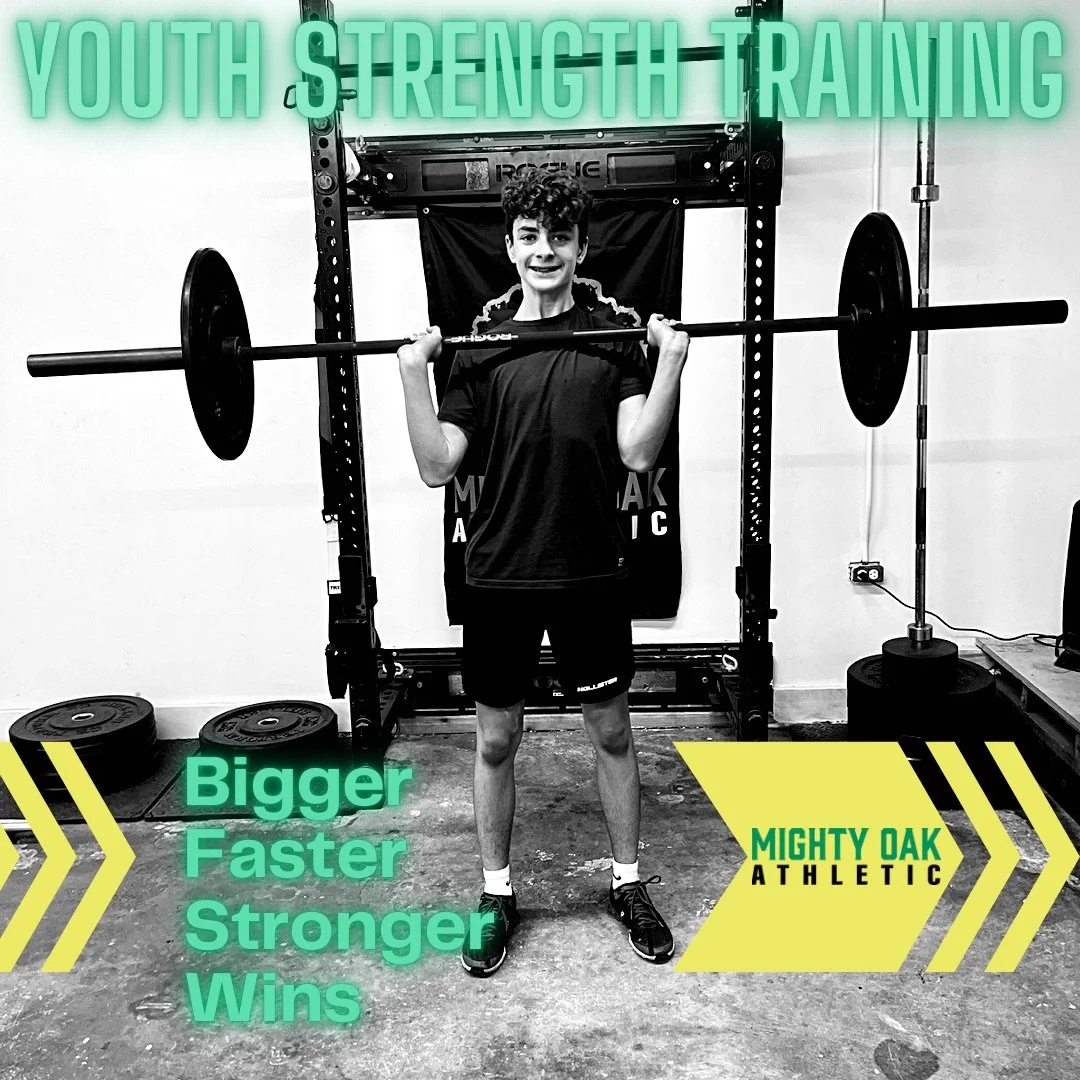
Strength training is a type of exercise that involves using resistance to strengthen and build muscles. While it is commonly associated with adult athletes, there has been an increasing interest in children and adolescents participating in strength training to improve their health and performance. However, this practice remains controversial due to concerns over safety and potential harm. In this essay, I will discuss the benefits and risks of strength training for children and provide evidence-based recommendations.
Benefits of strength training for children
There are several benefits to strength training for children. First, it can improve their overall health and fitness. Strength training can help children build muscle, increase bone density, and improve cardiovascular health, which can reduce their risk of chronic diseases such as diabetes, heart disease, and obesity (Faigenbaum et al., 2009). Second, it can improve athletic performance by enhancing speed, power, and agility. Third, it can increase self-esteem and confidence as children develop new skills and see improvements in their physical abilities (Myer et al., 2014).
Risks of strength training for children
Despite the potential benefits, there are also risks associated with strength training for children. The most significant concern is the risk of injury. Children's bodies are still growing and developing, and their bones, tendons, and ligaments are not as strong as adults'. As a result, improper form, excessive weight, and inappropriate exercise selection can increase the risk of musculoskeletal injuries (American Academy of Pediatrics, 2008). Additionally, strength training can put too much stress on the joints, which can lead to long-term damage and increase the risk of arthritis.
Recommendations for strength training for children
Given the benefits and risks, it is crucial to follow proper guidelines and recommendations when introducing children to strength training. The American Academy of Pediatrics (AAP) recommends that children wait until they are at least 8 years old before beginning any form of strength training (American Academy of Pediatrics, 2008). Before starting, children should undergo a medical evaluation to ensure they are healthy enough for physical activity. The AAP also recommends that children start with bodyweight exercises and progress to using resistance bands and light weights under the supervision of a qualified instructor. It is essential to teach proper form and technique to prevent injuries, and children should never be pushed to lift more than they can handle.
Conclusion
In conclusion, strength training can be a safe and effective way for children to improve their health and fitness, as well as their athletic performance. However, it is crucial to follow proper guidelines and recommendations to ensure the safety and well-being of children. Parents should seek qualified professionals, such as pediatricians, coaches, and certified strength and conditioning specialists, who are experienced in working with children and can provide appropriate guidance and support. With proper training and supervision, strength training can be a valuable part of a child's overall physical activity routine.
References:
American Academy of Pediatrics. (2008). Strength training by children and adolescents. Pediatrics, 121(4), 835-840.
Faigenbaum, A. D., Kraemer, W. J., Blimkie, C. J., Jeffreys, I., Micheli, L. J., Nitka, M., & Rowland, T. W. (2009). Youth resistance training: Updated position statement paper from the National Strength and Conditioning Association. The Journal of Strength & Conditioning Research, 23(S5), S60-S79.
Myer, G. D., Lloyd, R. S., Brent, J. L., & Faigenbaum, A. D. (2014). How young is "too young" to start training? ACSM's Health & Fitness Journal, 18(5), 14-23.
SIGN UP FOR A FREE STRENGTH TRAINING SESSION AT MIGHTY OAK ATHLETIC
Strength Training to Improve Performance for Student Athletes

Strength and conditioning training has been shown to be an effective tool for improving athletic performance in student athletes. By incorporating exercises that focus on developing strength, power, speed, and agility, athletes can enhance their physical abilities and improve their overall performance on the field, court, or track. In this essay, we will explore the various benefits of strength and conditioning training on performance for student athletes.
Firstly, strength and conditioning training helps to develop muscular strength and endurance, which is crucial for athletic performance. Strength training involves the use of weights or resistance to build and tone muscles, while endurance training involves sustained activity to develop cardiovascular fitness. By combining both types of training, student athletes can increase their overall muscular strength and endurance, which can lead to greater stamina and less fatigue during games and practices.
Secondly, strength and conditioning training can improve an athlete's speed and agility. Speed is a critical component of many sports, and the ability to move quickly can be the difference between success and failure. By engaging in exercises that improve explosive power, such as plyometrics, student athletes can develop their ability to move quickly and efficiently on the field or court. Agility training, which involves drills and exercises that focus on improving lateral movement, can also be beneficial for athletes who need to change direction quickly.
Thirdly, strength and conditioning training can help to prevent injury. Many sports involve high-impact movements and can put a lot of stress on an athlete's body. By strengthening the muscles and developing better flexibility, student athletes can reduce their risk of injury and recover more quickly from any injuries that do occur. Additionally, strength and conditioning training can help to correct any muscle imbalances or weaknesses that may contribute to injury.
Lastly, strength and conditioning training can improve an athlete's mental toughness and overall confidence. By pushing themselves to new physical limits, student athletes can develop a sense of mental fortitude and resilience that can carry over into other areas of their lives. Additionally, by seeing tangible improvements in their physical abilities, athletes can develop greater confidence in their abilities, which can lead to better performance on the field or court.
In conclusion, strength and conditioning training is an essential tool for student athletes who want to improve their performance. By developing greater muscular strength and endurance, improving speed and agility, preventing injury, and building mental toughness and confidence, student athletes can take their skills to the next level and achieve greater success in their chosen sports. Therefore, it is highly recommended for student athletes to incorporate strength and conditioning training into their training regimen for optimal performance.