Key Takeaways
Yes, 70 mph at 14 is a solid number. Most published charts put a typical 14-year-old in the 60s to low 70s.
Common ranges: about 45 to 60 mph at ages 11 to 12, 55 to 75 at 13 to 14, 80 to 90 for high school seniors, and 85 to 95 in Division I college baseball.
A lot of velocity comes from growth. Taller, heavier pitchers throw harder on average.
The trainable part is the legs and trunk. In one study of 14-year-old pitchers, jump force and height explained about 43 percent of the difference in fastball velocity.
Pitch Smart guidelines for ages 13 to 14: 95 pitches a day at most, four days of rest after 66 or more, and at least four months off from throwing each year.
Free download: The Mighty Oak At-Home Athlete Program, a no-equipment training plan with a video for every exercise.
Somewhere around age 13, the radar gun shows up. A dad buys one, a travel coach brings one to a bullpen, or a tournament posts a reading next to every pitcher's name. Then the question lands in my inbox. My son is 14 and throws 70. Is that good?
Short answer: yes. Seventy at 14 is a solid number. There's no official chart, and the published ones disagree by a few miles per hour, but most of them put a typical 14-year-old somewhere in the 60s to low 70s. A 14-year-old at 70 is at or above the middle of his age group in nearly all of them.
Here's how the rest of the ladder usually looks in those same charts. Kids who are 11 and 12 mostly throw between 45 and 60. At 13 and 14 the common range is 55 to 75, which tells you how much growth spurts spread kids out at that age. High school freshmen tend to sit 65 to 75. By senior year, most varsity pitchers are somewhere between 80 and 90. Division I college pitchers are usually listed at 85 to 95, and recruiters start paying close attention when a high school junior touches 88. So if you've wondered whether 90 is fast for a high school pitcher, it is. That's a college arm.
Now the part that matters more than the number. Where does velocity come from?
A lot of it comes from growing. Taller, heavier kids throw harder on average, and nobody controls when the growth spurt arrives. A 14-year-old who hasn't hit his yet is being compared to kids who have. That gap usually closes.
The part you can train is the legs and trunk. A recent study in the Journal of Human Kinetics tested 32 junior high pitchers with an average age of 14. Each one did a simple vertical jump on a force plate and then threw fastballs. The pitchers who produced more force in the jump threw harder. Braking force in the jump plus body height explained about 43 percent of the difference in velocity from one kid to the next. Another study of 47 high school pitchers found that muscle volume in the legs and throwing arm was tied to ball speed, though the researchers were careful to say that muscle is only part of the story and pitching skill counts for a lot. Those are correlations, so they don't prove that getting stronger adds miles per hour for every kid. But they line up with what good pitching coaches have said for years: the ball is thrown from the ground up.
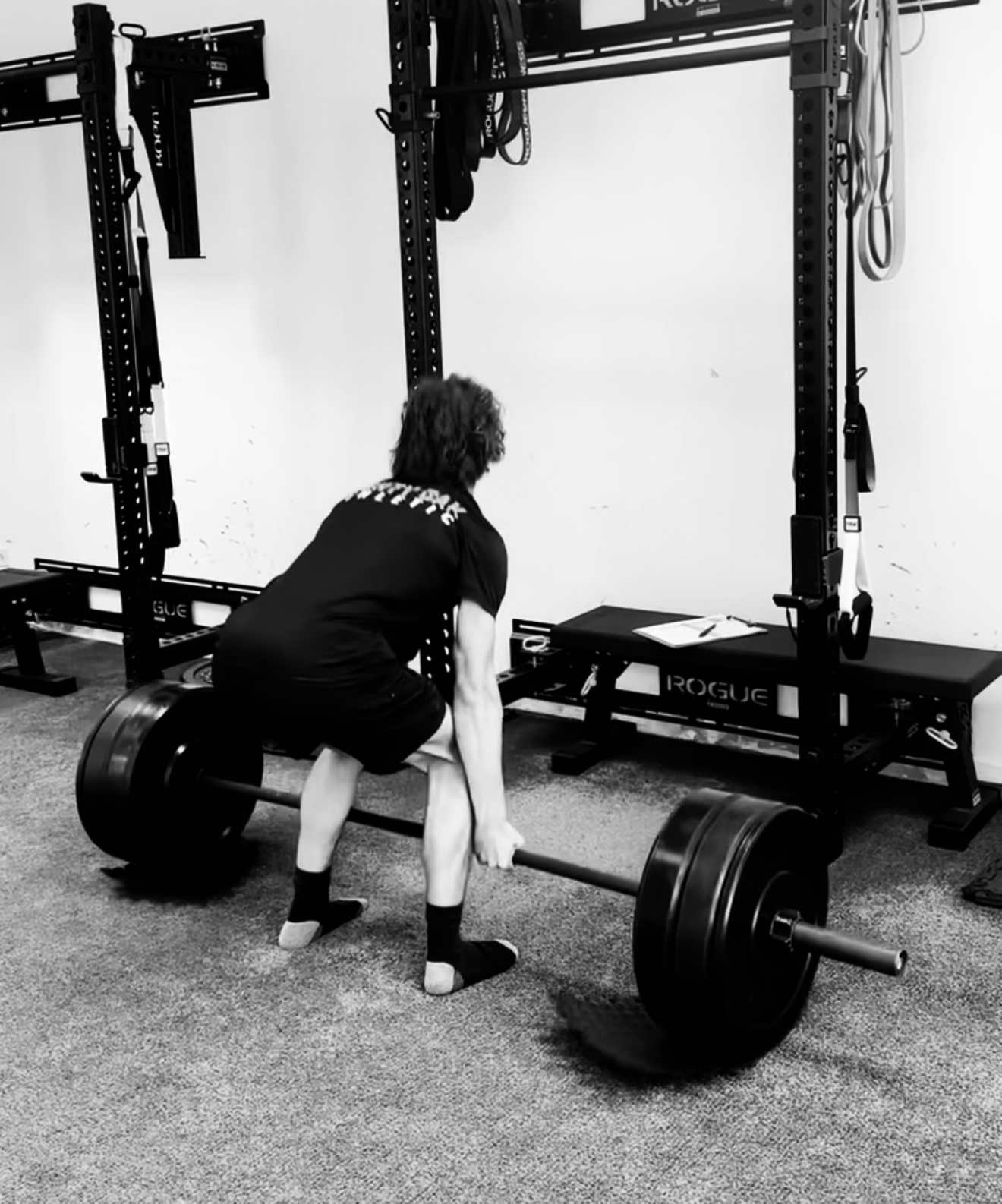
That's why I'd rather see a 14-year-old spend the winter getting stronger than throwing more. In our gym, a pitcher trains the same five patterns as every other athlete: squat, press, pull, hinge, and crawl. Squats and deadlifts build the leg drive that starts the throw. Rows and pull-ups build the upper back that slows the arm down after release. Overhead pressing and crawling build shoulders that stay stable through the whole motion. Medicine ball throws and jumps teach the body to use that strength fast. None of it looks like pitching, and all of it shows up on the mound. If you want a place to start, our free off-season baseball program lays out the whole thing.
The other half of a healthy arm is workload. MLB and USA Baseball publish the Pitch Smart guidelines, and they're worth taping to the refrigerator. For ages 13 and 14, the daily limit is 95 pitches in a game. Throw 66 or more and the pitcher rests four days. Take at least four months off from throwing each year, with two to three of them in a row, and stay under 100 innings in any 12-month stretch. A strong body plus a sensible pitch count is the combination that lets velocity keep climbing through high school. I go deeper on arm care in our post on shoulder and elbow health for baseball and softball players.
One more thing for the parent holding the radar gun. The number at 14 is a snapshot. It mostly tells you where your kid is in his growth, and it changes fast. What you can do this winter is build the engine, protect the arm, and let him keep loving the game.
If you live in the western suburbs, his first session at our gym in Westmont is free. If you're farther away, start with the free Mighty Oak At-Home Athlete Program. It needs no equipment, and every exercise has a video.
Be strong to be useful.
— Coach Mike
Book a free first session: https://calendly.com/mightyoakathletic/youth-strength
Frequently Asked Questions
Is 70 mph at 14 good?
Yes. Most published velocity charts put a typical 14-year-old pitcher in the 60s to low 70s, so 70 mph is at or above the middle of the age group. Charts vary by a few miles per hour because there is no official standard.
Is 90 mph fast for a high school pitcher?
Yes. Most high school varsity pitchers throw between 75 and 90 mph, with seniors commonly listed at 80 to 90. A high school pitcher who reaches 90 is throwing at a college level.
How fast do D1 pitchers throw?
Division I college pitchers are commonly listed at 85 to 95 mph. Recruiting guides say college scouts start tracking high school juniors who reach about 88 mph.
How can a 14-year-old pitcher throw harder?
Growth does part of the work. The trainable part is leg and trunk strength: squats, deadlifts, rows, overhead presses, jumps and medicine ball throws, coached with good technique. Follow Pitch Smart pitch counts and take at least four months off from throwing each year.