What Qualifications Should a Youth Strength Coach Actually Have?
Key Takeaways
Look for a CSCS (Certified Strength and Conditioning Specialist) — the gold-standard credential from the NSCA, requiring a bachelor's degree and a rigorous exam.
Ask how long they've coached KIDS, not just adults. Coaching a 7-year-old is a different skill than coaching a 27-year-old.
Watch a session before you sign up. Good coaches teach technique first and add weight second.
A free trial session is a green flag — confident coaches let their coaching sell itself.
What Qualifications Should You Look For in a Youth Strength and Conditioning Coach?
You wouldn't hand your car keys to someone who watched a few driving videos. So why do so many parents hand their kids to trainers whose only credential is a weekend certificate and a nice Instagram page?
Here's the problem: "trainer" is not a protected title. Anyone can print business cards tomorrow. That's why knowing what to look for matters — especially when the athlete is 8 years old and still learning how their body moves.
Start with the letters: CSCS
The credential that matters most is the CSCS — Certified Strength and Conditioning Specialist — issued by the National Strength and Conditioning Association. It's not a weekend course. It requires a bachelor's degree, a demanding exam covering exercise science and program design, and ongoing continuing education to keep it.
Plenty of certifications exist. Most take a weekend. The CSCS takes years of preparation. When a coach holds one, it tells you they treat this as a profession, not a side hustle.
Other credentials worth respecting: USA Weightlifting certifications (for teaching the barbell lifts properly) and sport-specific coaching credentials. Stack them together and you're looking at someone who has invested seriously in their craft.
Experience with kids — not just experience
Here's what the certificate can't tell you: whether the coach can actually coach children.
A great adult trainer can be a terrible kids' coach. Kids need shorter instructions, more patience, more play, and a coach who can tell the difference between "I'm tired" and "I'm bored." They need someone who knows that a 6-year-old learning to squat is doing something completely different than a 16-year-old preparing for high school sports — even if the movement looks the same.
Ask the question directly: How many years have you coached athletes under 18? How young do you start? What does a session for a 7-year-old look like versus a 14-year-old? A qualified youth coach answers those questions immediately and specifically. An unqualified one changes the subject.
Watch how they teach
Before you commit, watch a session. You're looking for three things.
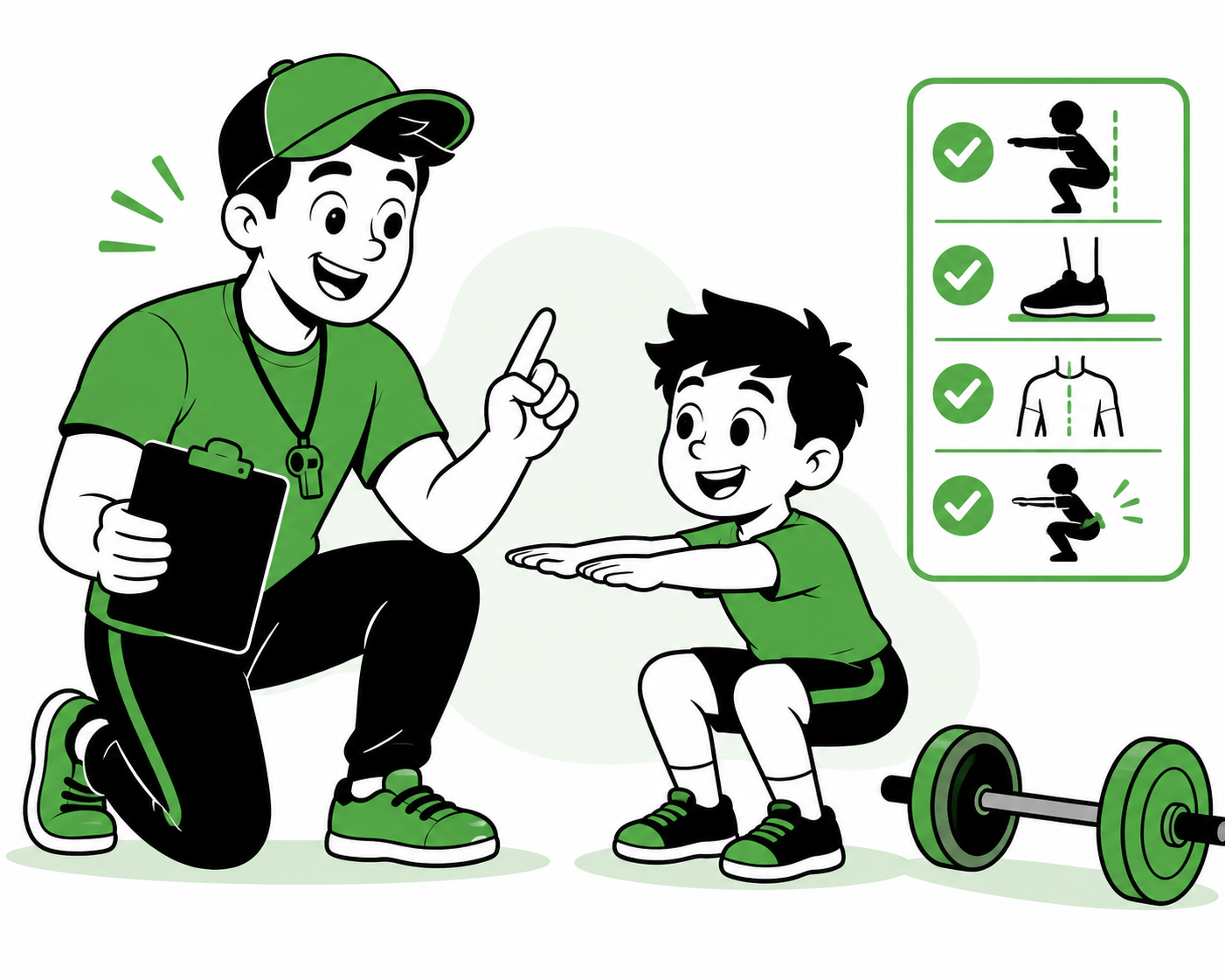
First, technique before load. Kids should master the movement — squat, hinge, press, pull — with light weight or bodyweight before anything heavy touches their hands. If you see kids straining under weights with sloppy form while a coach scrolls their phone, walk out.
Second, progression with a plan. Ask the coach how athletes advance. There should be a real answer — structured programs that build in measured steps, not random daily workouts. Training is a calculated path. Working out is just sweating.
Third, the room itself. Are kids engaged? Are they being corrected kindly and specifically? Does the coach know every kid's name? Culture is a qualification too.
The free trial test
One more green flag: a free trial session. Coaches who are confident in their program let you see it before you pay for it. A hard sell, pressure tactics, or long-term contracts before your child has ever set foot in the gym — those are the marks of a business protecting itself, not a coach protecting your kid.
The long game
The right coach isn't building your child for next season. They're building them for the next forty years — strong bones, confident movement, and a relationship with training that lasts long after the last youth game ends. Be strong to be useful. That's the standard. Find a coach who holds it.
If you're in the western Chicago suburbs, come watch a session at Mighty Oak Athletic in Westmont. First one's free — because it should be.
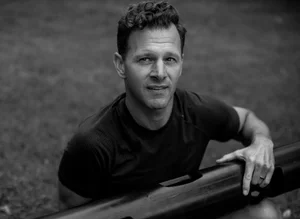
Coach Mike Ockrim is a Certified Strength and Conditioning Specialist (CSCS), USA Weightlifting Level 1 coach, USA Triathlon coach, and second-degree black belt. He founded Mighty Oak Athletic in Westmont, IL in 2013, runs the Sunday Funday Sports youth leagues, has taught group fitness at Life Time for more than eight years, and is the author of Death Resistant, 13 Pounds in 30 Days, and MOA Nutrition. He lives in the western suburbs with his wife Carey and their four kids.
-
Look for the CSCS (Certified Strength and Conditioning Specialist) from the NSCA — it requires a bachelor's degree and a rigorous exam. Add years of experience coaching kids specifically, credentials like USA Weightlifting Level 1, and a teaching style that puts technique before weight.
-
Yes. The CSCS is the most respected credential in strength and conditioning. It signals formal education in exercise science and program design — the foundation for training growing athletes safely.
-
Heavy weights with sloppy form, no structured progression plan, pressure to sign long-term contracts, and coaches who can't explain how they train different ages differently. If you can't watch a session first, keep looking.
-
Yes. Every new athlete at Mighty Oak Athletic in Westmont, IL gets one free trial session. Membership is $199/month, unlimited training, no contracts. Call 630-464-9498 or visit MightyOakAthletic.com.