Mighty Oak Athletic Podcast S3:E109 - How Much Protein Do You Actually Need? Kids vs. Parents
Key Takeaways
Youth athletes need about 1.5 grams of protein per kilogram a day (two-thirds of a gram per pound), if they eat enough total food. That's about 60 grams for a 90-pound 12-year-old.
The RDA (0.95 g/kg for ages 4 to 13, 0.85 for 14 to 18, 0.8 for adults) is a floor, not an athlete's target.
Active adults need 1.2 to 2.0 g/kg a day. After 50, aim for about 30 grams at each meal, because older muscles need a bigger dose per meal.
A protein label doesn't make food healthy: a serving of Pop-Tarts Protein has 10 grams of protein and 31 grams of sugar.
Build breakfast on protein and fat from real food (eggs, plain Greek yogurt, cottage cheese, leftover meat), not supplements.
Walk down the breakfast aisle this fall and you'll find protein in places it was never meant to be. There's protein in the waffles, protein in the chips, and since last November, protein in Pop-Tarts. The box brags about 10 grams of protein. Flip it over and the same two pastries carry 31 grams of sugar. That's the moment I want every parent to slow down, because protein has become the most confusing word in the grocery store.
Here's the short answer. How much protein you need depends on three things: your age, how active you are, and what you're trying to do with your body. A 12-year-old who trains and plays a sport needs about two-thirds of a gram per pound of body weight a day. A 50-year-old parent who lifts needs roughly half a gram to nine-tenths of a gram per pound, packed into bigger doses at each meal. And both should get it from food that looks like food, starting at breakfast.
The number most people have heard is the government's Recommended Dietary Allowance. For adults it's 0.8 grams per kilogram of body weight. For kids it's a little higher: 0.95 for ages 4 to 13 and 0.85 for ages 14 to 18. Those numbers are real. But they were set as a floor to keep people from coming up short, not as a target for a kid who is growing, training and recovering. For a 90-pound 12-year-old, the RDA works out to about 39 grams a day.
Young athletes need more. A 2023 review in the Journal of the Pediatric Orthopaedic Society of North America put youth athletes at about 1.5 grams per kilogram a day, as long as they eat enough total food. For that same 90-pound kid, that's about 60 grams. The review says protein at breakfast helps shift kids into a positive balance. Smaller doses every three to four hours keep them there longest. Here's the twist: it also notes that teenagers commonly eat enough protein to clear their daily requirement. So for a lot of kids, the problem isn't how much. It's when they eat it and what it comes wrapped in.
Parents are a different story. The joint position of the American College of Sports Medicine, the Academy of Nutrition and Dietetics and Dietitians of Canada puts active adults at 1.2 to 2.0 grams per kilogram a day. For a 180-pound parent who trains, that's roughly 100 to 160 grams. The catch is age. In one analysis of muscle-building studies, men around 71 needed about 0.40 grams per kilogram in a single meal to max out muscle building. Men around 22 needed 0.24. Your muscles get harder of hearing as you age, so you have to talk louder. At 50 you're on that road. That's why I tell parents to aim for about 30 grams at each meal instead of a 10-gram breakfast and a 70-gram dinner.
Your goal changes the math too. If you're carrying extra weight and want to lose it, figure your protein off your goal weight instead of today's scale number. It keeps the target realistic, and more protein while you eat less overall helps you hold on to muscle as the fat comes off. If your kid is underweight or a picky eater, protein alone won't fix it. That 1.5-gram number assumes they're eating enough food in the first place. The answer is more real meals, not a shake.
Which brings me back to the Pop-Tart. The biggest protein myth right now is that a number on the front of the box makes the food inside healthy. It doesn't. A serving of Pop-Tarts Protein has more than double the protein of the original and about the same sugar. The American Heart Association says kids should keep added sugar under 25 grams for the whole day. Adding protein to a dessert doesn't turn it into breakfast. It turns it into dessert with a better marketing team.
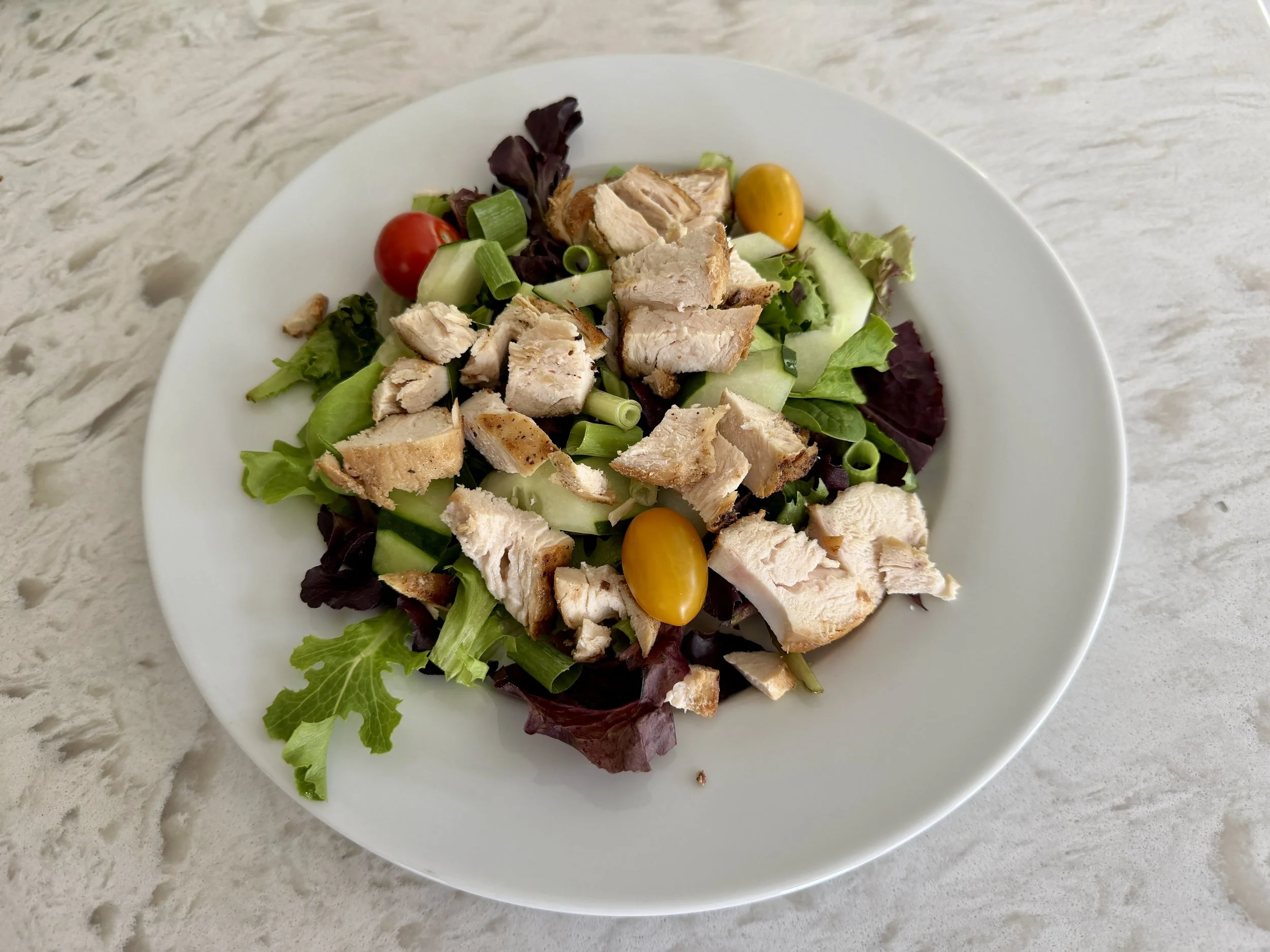
And that's the bigger problem. A lot of families eat dessert for breakfast and call it breakfast: frosted cereal, syrup-soaked waffles, giant muffins, a "protein" bar that's really a candy bar. It tastes great and it's gone by second period. A breakfast built on protein and fat works the other way. Eggs, yolk and all. Plain Greek yogurt with berries. Cottage cheese. Nuts, avocado, cheese, whole milk. Last night's chicken or steak. In my house, seared chicken breast shows up at breakfast on a lot of mornings. Protein and fat digest slower and keep you full longer. Real food also brings the vitamins and minerals a growing body needs, packaged the way nature intended.
Here's what that looks like. For a 12-year-old athlete: Spanish eggs and a glass of milk before school, a turkey sandwich at lunch, plain Greek yogurt after practice, and turkey tacos at dinner. That clears 60 grams without a single shake. For a 50-year-old parent: a square of egg strata baked the night before, a salad topped with chicken at lunch, teriyaki salmon at dinner, and a cottage cheese snack. That lands around 100 grams, about 30 at each meal. Want more ideas? Here are the exact meals our strongest athletes eat at home, and the playbook below lists the recipes my family cooks. Shakes? For a busy adult, now and then. For kids, Sports Dietitians Australia says it plainly: young athletes should meet their needs with real food, not supplements.
This is why we talk about food with our youngest athletes, not just our high schoolers. At Mighty Oak Athletic we start strength training at age 6, and the habits start then too: show up, train hard, recover, eat real food. It's the same order I teach adults in Death Resistant: recovery, movement, nutrition. Our members get the printed Mighty Oak Athletic Nutrition book and daily journal free, and I go over it with them in person every week. What gets written down gets eaten on purpose. Not a member? Grab the book, or join our Sports Nutrition Coaching program. Kids who learn at 8 that breakfast is fuel, not dessert, carry that into high school sports and beyond.
So skip the protein Pop-Tart. Figure your number by who you are and what you want, spread it across the day, and get it from eggs, yogurt, meat, fish and the rest of the real-food aisle. Protein isn't a trend. It's the raw material for a body strong enough to carry a team, a job and a family. If you want help building that for your kid, your first session at Mighty Oak Athletic in Westmont is free. Be strong to be useful.
Coach Mike's Real-Food Protein Playbook
These are the recipes my family actually cooks. Pick one from each meal and you'll hit your number without a shake.
Protein-and-fat breakfasts
Big-protein lunches and dinners
Make-ahead pots (cook Sunday, eat all week)
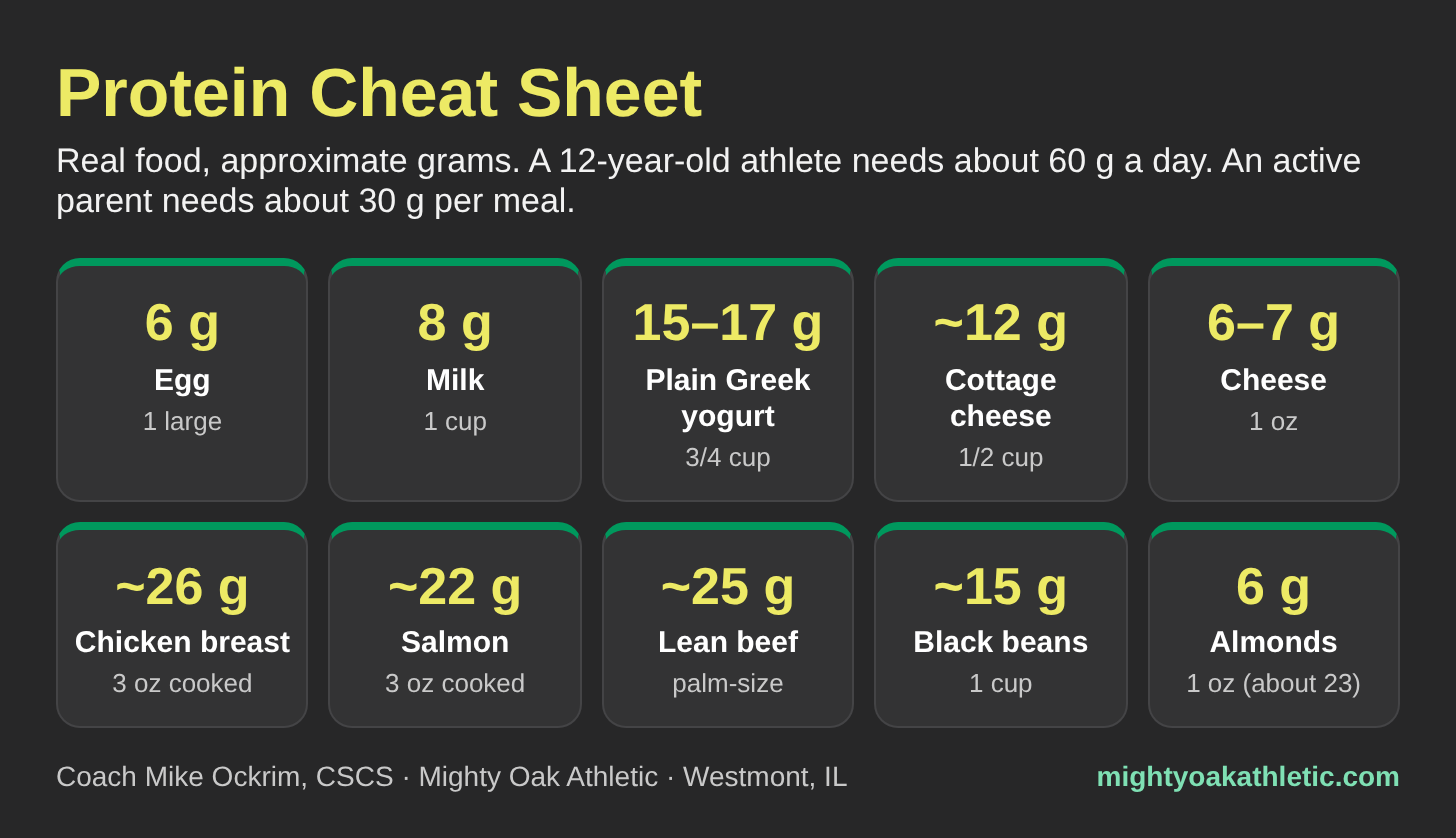
Protein cheat sheet
Amounts are approximate.
Keep reading
Frequently Asked Questions
How much protein does a 12-year-old athlete need? About 1.5 grams per kilogram of body weight a day, or two-thirds of a gram per pound, as long as they eat enough total food. A 90-pound athlete needs about 60 grams, spread over breakfast, lunch, an after-practice snack and dinner.
How much protein should a 50-year-old eat? Active adults need 1.2 to 2.0 grams per kilogram a day, roughly 100 to 160 grams for a 180-pound parent who trains. Aim for about 30 grams at each meal, because older muscles need a bigger dose per meal to build.
Are high-protein snacks like protein Pop-Tarts healthy? No. A serving of Pop-Tarts Protein has 10 grams of protein and 31 grams of sugar, and the American Heart Association says kids should keep added sugar under 25 grams for the whole day. Protein on the label doesn't change what's inside.
What's a good high-protein breakfast for kids? Eggs with the yolk, like Spanish eggs or a make-ahead egg strata, plain Greek yogurt with berries, cottage cheese, or leftover seared chicken, with milk, nuts or avocado on the side. Protein and fat keep kids full longer, and real food brings the vitamins and minerals a supplement can't.