Off-Ice Training for Hockey Players: What Coach Mike Has Learned Training the DuPage Stars
TL;DR: Coach Mike Ockrim, CSCS, founder of Mighty Oak Athletic in Westmont, IL, is the official strength and conditioning coach for DuPage Stars Hockey. Off-ice training builds the leg strength, hip power, and core control that skating alone does not. Stronger players skate faster, win more puck battles, and lower their risk of the hip and groin problems common in hockey.
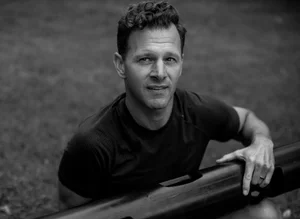
On Tuesday and Thursday evenings during hockey season, Coach Mike Ockrim is not at Mighty Oak Athletic. He is at Seven Bridges Ice Arena in Woodridge, a few steps from the rink, coaching DuPage Stars players through squats, hinges, and carries in gym shoes instead of skates. Coach Mike is the official strength and conditioning coach for DuPage Stars Hockey, and after years in that role he explains the job to hockey parents in one sentence: the ice builds the hockey player, and off-ice training builds the athlete inside the gear.
That difference matters more than most families realize. Ice time is expensive and limited, so practice goes to skating, puck skills, and systems, which is exactly where it should go. But none of that work makes a kid much stronger. A skating stride is a one-leg push, driven by the hips and thighs, out to the side and back. The more force a player can put into the ice with that push, the longer the stride and the quicker the first three steps. Speed in hockey is strength used fast, and strength is built off the ice, where a player can load a squat or a clean in a way a pair of skates never will.
Then there is the posture. Hockey players spend hours bent at the hips with their knees flexed and their chest forward. It is a great position for skating and a hard one on a growing body. Hips get tight, and the groin muscles take a beating from thousands of side-to-side pushes, which is why hip and groin strains are among the most common complaints in the sport. Off-ice training is where players balance that out, with full-range squats, hinges, single-leg work, and loaded carries that strengthen the muscles around the hips and trunk. No program can promise a kid will never get hurt. A stronger player is a more durable one, though, and durable players stay in the lineup.
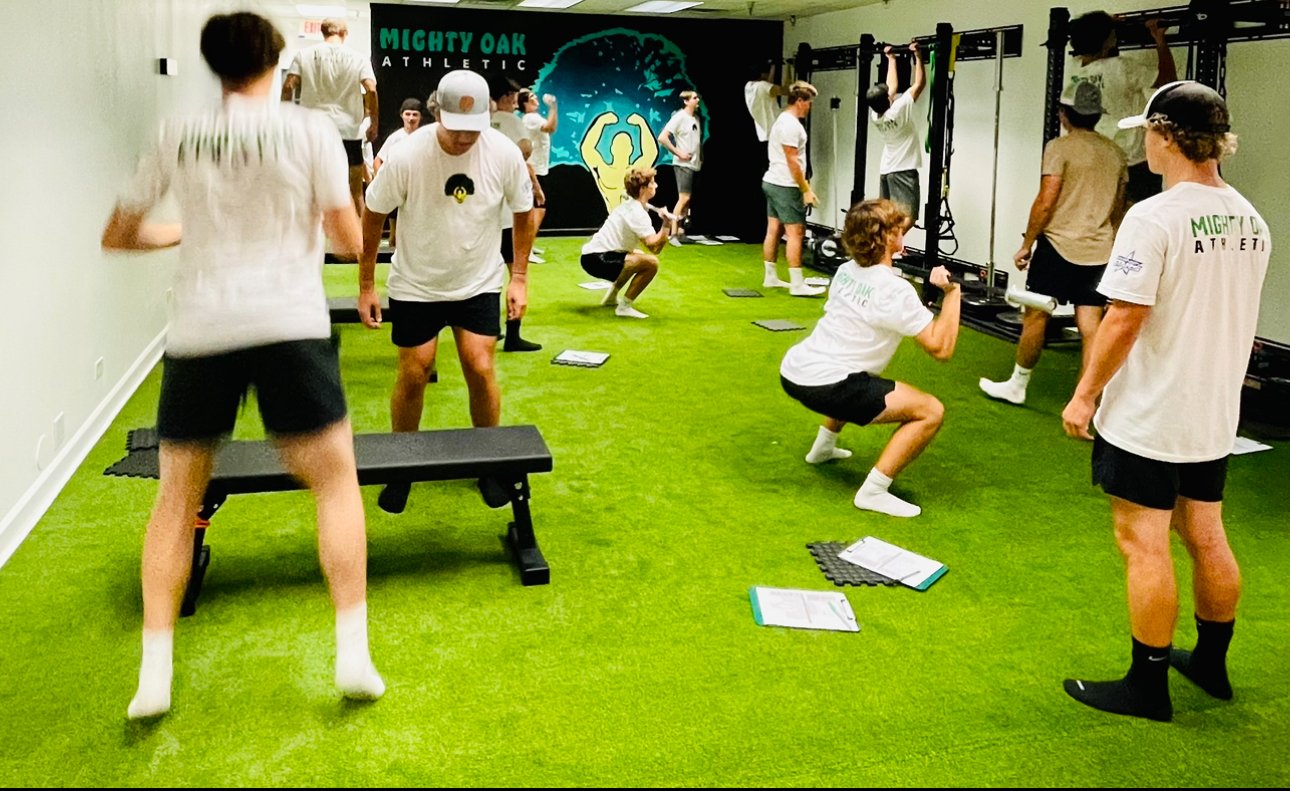
What does off-ice training for hockey players look like with Coach Mike? It looks a lot like every session at Mighty Oak Athletic. Players train the same five movement patterns our athletes train at every level: squat, hinge, push, pull, and carry. They use a barbell, a kettlebell, and their own bodyweight, with jumps and short sprints for power. There is no stickhandling on a wobble board and no workout built to look like hockey. Technique comes first, and the weight goes up only when every rep looks right. A hockey player does not need a hockey-shaped workout. A hockey player needs to be a strong, fast, well-coordinated athlete who happens to play hockey.
The timing matters too. Many families treat strength work as a summer project and drop it when the season starts. The Stars train off the ice during the season, because strength fades when it is not used, and the games that matter most come at the end of a long winter. One or two short sessions a week is enough to hold on to what a player built in the offseason, and often to keep building. We wrote more about that in our guide to in-season strength training for youth athletes. USA Hockey's American Development Model points the same direction, encouraging off-ice athletic development and playing more than one sport.
The lesson that repeats every season is consistency. The players who show up twice a week, with no game on the line, are the ones who feel the difference when the puck drops. That is true for a Stars player in Woodridge, and it is true for the hockey players from Downers Grove, Darien, Hinsdale, Willowbrook, and across DuPage County who train with us in Westmont.
If your son or daughter plays hockey, the first session at Mighty Oak Athletic is free. We train athletes ages 6 to 18 at 6424 S. Cass Ave. in Westmont, with a maximum of 12 athletes per session. Book a free training session here. Coaching a hockey team? Team strength and agility training is $10 per athlete per session with a 10-athlete minimum, at our facility or yours.
Be strong to be useful.
Coach Mike
FAQ
What is off-ice training for hockey players?
Off-ice training, also called dryland training, is the strength, power, and movement work hockey players do away from the rink. At Mighty Oak Athletic it means squats, hinges, pushes, pulls, carries, jumps, and short sprints, using a barbell, a kettlebell, and bodyweight.
Why is off-ice training important for youth hockey players?
Skating builds skill but does not build much strength. Off-ice training builds the leg and hip strength behind a powerful stride, the core control that helps in puck battles, and stronger muscles around the hips and groin, where hockey players are most often hurt.
At what age should hockey players start off-ice strength training?
Kids can start supervised strength training at age 6. Mighty Oak Athletic trains athletes ages 6 to 18. The National Strength and Conditioning Association and the American Academy of Pediatrics both support supervised strength training for children.
Should hockey players lift weights during the season?
Yes. Strength fades when it is not trained, and the biggest games come at the end of the season. One or two short strength sessions a week during the season helps players keep the strength and speed they built in the offseason.
How often should a youth hockey player do off-ice training?
Two sessions a week is a good target for most youth hockey players. During a heavy stretch of games, one session a week is enough to maintain strength.
Who is the strength coach for DuPage Stars Hockey?
Michael Ockrim, known as Coach Mike, is the official strength and conditioning coach for DuPage Stars Hockey. He is a Certified Strength and Conditioning Specialist (CSCS) and the founder of Mighty Oak Athletic in Westmont, IL.
Where can hockey players train near Westmont, Woodridge, and Downers Grove?
Mighty Oak Athletic is at 6424 S. Cass Ave. in Westmont, IL, a short drive from Woodridge, Downers Grove, Darien, Hinsdale, and Willowbrook. The first training session is free, and team training is $10 per athlete per session with a 10-athlete minimum.