What to say when your kid wants to quit mid-season
Mighty Oak Athletic Podcast S3:E104 - What to say when your kid wants to quit mid-season
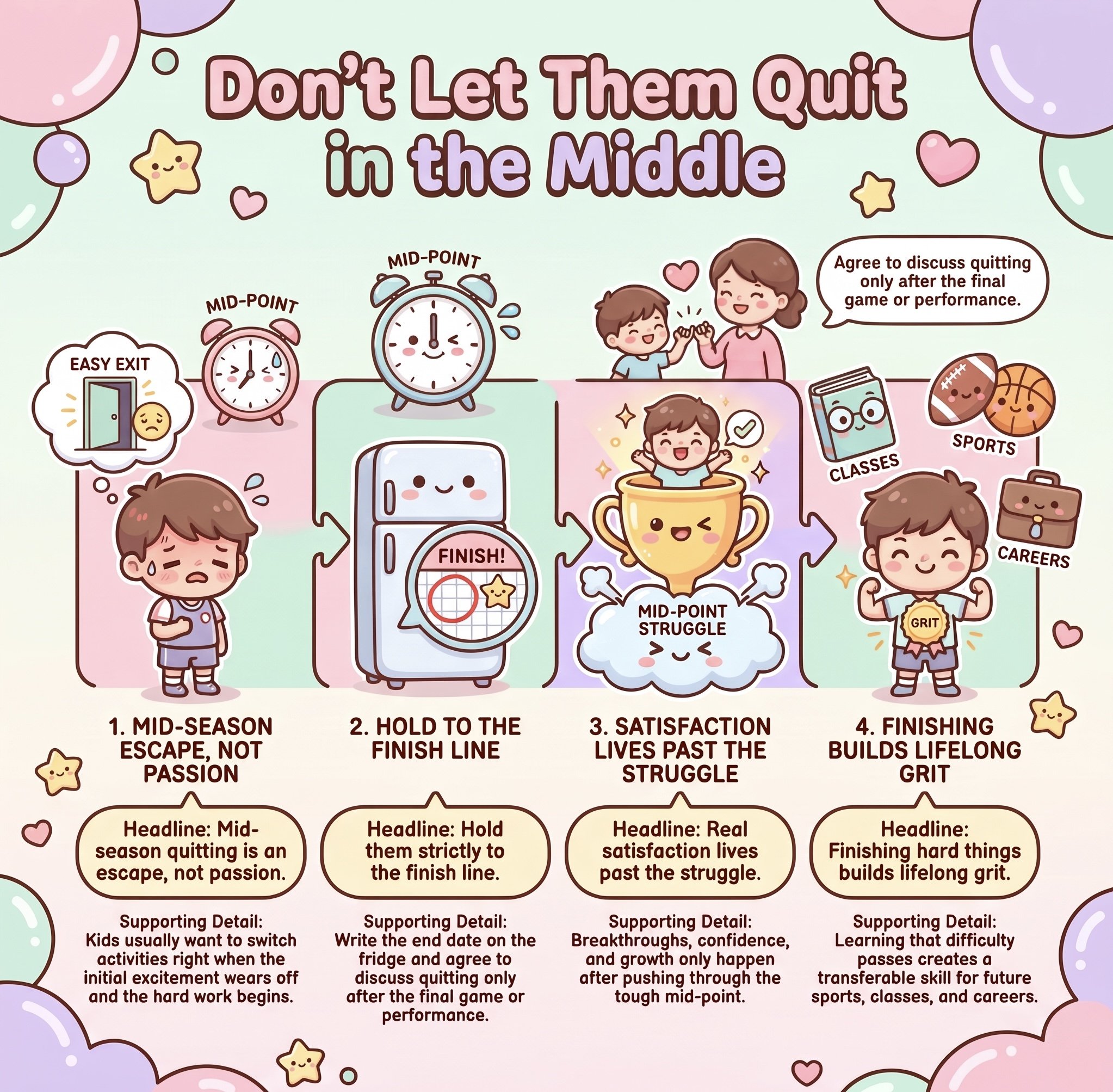
The short version: Kids rarely want to quit at the end of something. The urge shows up in the middle, right when the new wears off and the work starts, and it usually arrives dressed as a better idea: a different sport, a different instrument, the other gym. The rule for your house is simple. Every commitment comes with a finish line, the last game, the recital, closing night, the end of a six-week program. You finish to the finish line. Then you decide. Quitting stays on the table; it just moves to the one spot where it means something.
Kids rarely ask to quit at the end of something. The night after the recital, the ride home from the last game, the day the program sheet is full, those are not when the conversation happens. It happens in week four of a twelve-week season, in the practice room three weeks before the show, halfway through a six-week program, which is exactly when the new has worn off and what's left is the work.
That's when you get the speech from the back seat. I don't want to do this anymore. And it rarely comes alone. It comes with a plan. Lacrosse instead of soccer. Guitar instead of piano. The other gym, the one a friend goes to. The new thing sounds better, and it tends to sound best at the precise moment the current thing got hard. That is not a coincidence. Your kid hasn't discovered a passion. They're trying to buy back the feeling of week one.
What makes this hard is that the kid is half right. Maybe lacrosse is the better fit. Maybe piano really isn't their instrument. The problem is that you can't tell from the middle, because the middle of everything feels the same. Every sport, every instrument, every program has a stretch where the easy wins dry up and improvement goes quiet. If your kid learns that the urge to leave is the same as permission to leave, they'll feel that urge in every hard thing they ever start, and they'll always have a good-sounding reason to act on it.
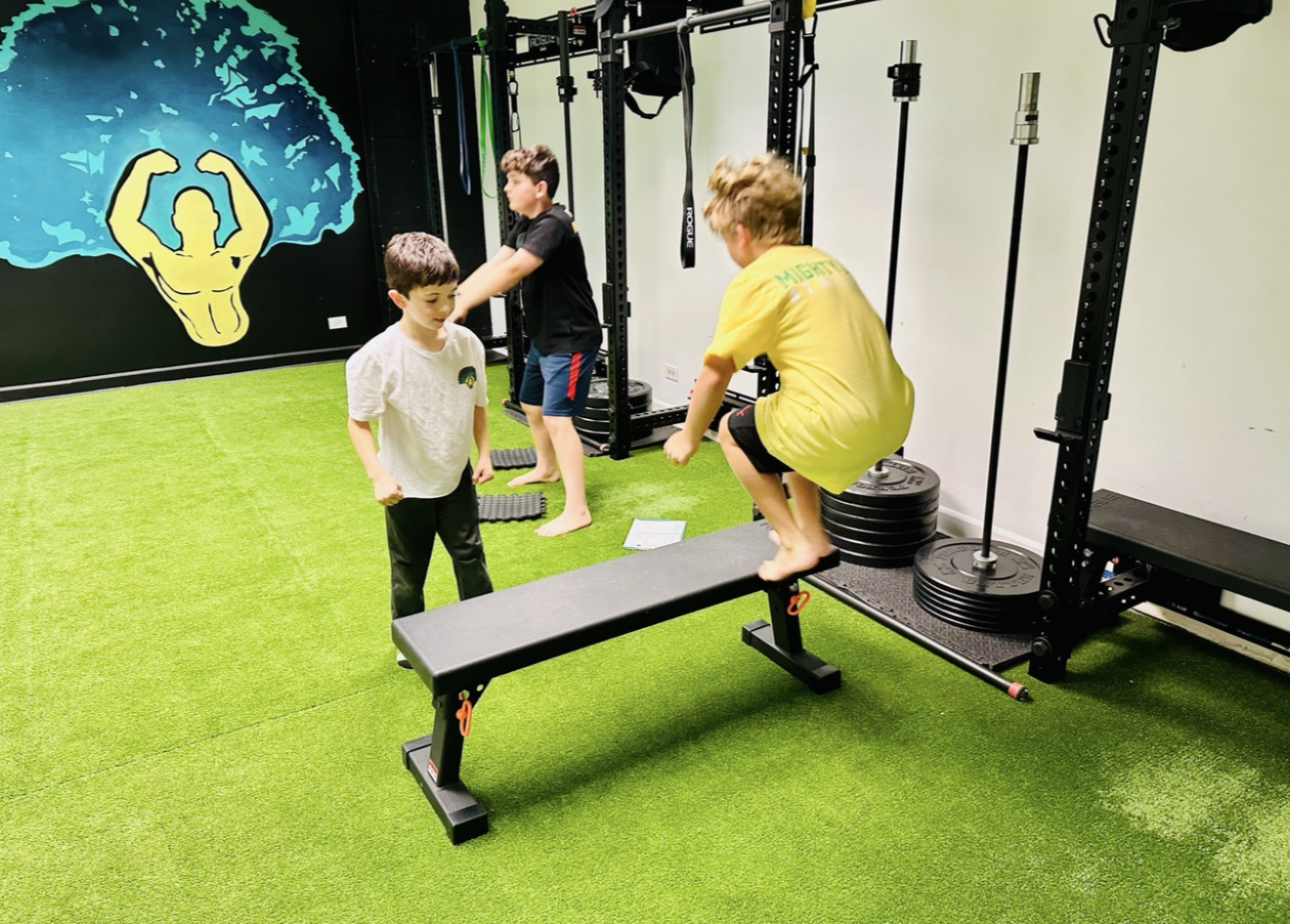
So here's the rule. Every commitment comes with a finish line. The season ends at the last game. The instrument ends at the recital. Drama club ends on closing night. At MOA, a program is six weeks, and it ends when the sheet is full and the lift gets retested. You finish to the finish line. Then you decide. Nobody is telling your kid they can never quit. The quit just moves to the one spot where it's a real decision instead of an escape.
This is not tiger parenting. You didn't pick the sport. You didn't pick the instrument. You let them choose, and you'll let them choose again. The only thing you're holding is the distance between the start and the end of what they already chose. It's the speech most of us heard at some point and some of us have already given: I'm not going to tell you what to do, but once you commit to something, you see it through. The lesson was never soccer. The lesson is that the hard middle is not a signal to leave.
And here's what the kid gets at the finish line that they can't get anywhere else. They get the data. Some kids play out the season and never want to touch a soccer ball again, and that's a clean decision made with full information. Most of them hit a point somewhere in the back half where it turns. The recital goes fine. The play gets a laugh in the right spot. The deadlift that was 30 pounds in week one comes off the floor at 45 in week six and the shirt changes color. That feeling is the whole point, and it is only available on the far side of the middle. You cannot buy it in week one of something new.
Practically, it looks like this. When the back-seat speech comes, don't argue the merits of lacrosse. Ask one question: when's the finish line? Name the date. The last game, the recital, closing night, the end of the program. Write it on the fridge. Then give them the deal. We finish. After that, if you still want lacrosse, we'll talk about lacrosse. A lot of the time the conversation never comes up again, because what they wanted to escape was the middle, not the sport.
This is why we run MOA in six-week programs instead of open-ended memberships that drift. A kid who has finished one program, start to retest, knows something about themselves they didn't know before. They know the middle passes. That is a transferable skill. It shows up in the next season, the next recital, the next hard class, and eventually in the first job that gets uncomfortable in month three. The barbell was just where they practiced it first.
Be strong to be useful. The kid who finishes one hard thing learns he can finish the next one, and that's a lesson no amount of switching can teach.