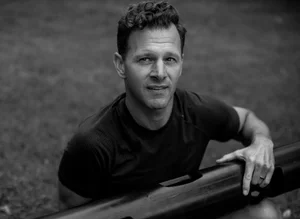
Mighty Oak Athletic Podcast S3:E96 - Screens Are Winning - Here’s How a 6-Year-Old Fights Back

Key Takeaways
Strength is like a well: you dig it years before you need it. Kids who start at 6 build bone density, movement patterns, and confidence that pay off at 12, 16, and 60.
Waiting for a problem — an injury, poor posture, low confidence — means starting from behind. Early training is prevention, not performance.
The "lifting stunts growth" myth is dead. The American Academy of Pediatrics and the NSCA agree: supervised, age-appropriate strength training is safe and beneficial for kids.
At age 6, training means bodyweight first — squatting, hinging, crawling, carrying, hanging — taught by a qualified coach, one clean rep at a time.
Dig the Well Before You're Thirsty
Leo is six. Last Tuesday he spent forty-five minutes at Mighty Oak Athletic squatting to a box, bear crawling the length of the turf, carrying a sandbag hugged to his chest, and hanging from a pull-up bar until his grip gave out and he dropped, grinning, to the mat.
His mom watched from the bench by the door. When the session ended, she asked the question I hear every single week: "Isn't he a little young for this?"
I asked her a question back. "When's the best time to dig a well?"
She looked at me like I'd lost my mind. Fair. But here's the answer: before you're thirsty.
Nobody digs in a drought
Most families find strength training the same way they find a plumber — after something breaks. A shoulder that aches every throwing season. Posture collapsing under a backpack and six hours of screens. A kid who quits a sport because they're always the slowest, the weakest, the last one picked.
By then, the family isn't training. They're rehabbing. They're playing catch-up against years of missed development. It works — kids are wonderfully adaptable — but it's harder, slower, and it started with pain.
Strength doesn't work on demand. You can't cram it the week before tryouts. Bone density is built across childhood and banked for a lifetime. Movement patterns — squat, hinge, push, pull, carry — are grooved most easily when the nervous system is young and hungry to learn. Confidence compounds like interest. All of it takes time, and time is the one thing a six-year-old has more of than anyone else in the gym.
That's the well. You dig it now, quietly, one session at a time, so the water's there when the drought comes — the growth spurt, the tryout, the season, and eventually the long game of being a durable adult human.
"But won't lifting stunt his growth?"
No. That myth has been dead for years — the science just travels slower than the fear.
The American Academy of Pediatrics' clinical report on youth resistance training states plainly that supervised, age-appropriate strength training is safe for children and carries real benefits: stronger bones, better body composition, improved motor skills, and fewer sports injuries. The National Strength and Conditioning Association says the same. The consistent finding across the research is that injuries in youth training come from poor supervision and poor technique — not from training itself.
Which is exactly why how a six-year-old trains matters more than whether they train. At MOA, a six-year-old doesn't touch a loaded barbell. They earn their way through a bodyweight-first progression: squat to a box before squatting free, hinge with a dowel before a kettlebell, crawl and carry and hang and jump — supervised by a certified strength and conditioning coach who teaches one clean rep at a time. Load comes later, only after movement is owned. That's not a marketing line. That's the safety system.
Strong to be useful
Here's what Leo's mom couldn't see from the bench: her son wasn't just exercising. He was learning that hard things are doable. That his body is a tool he can trust. That effort — not talent — is what moves the needle.
We tell every kid at MOA the same thing: be strong to be useful. Strong enough to carry the groceries, help a teammate up, haul their own hockey bag, and someday shovel their neighbor's driveway without a second thought. Strength isn't about the mirror. It's about capacity — physical and mental — that the world will absolutely, eventually call on.
You don't know when the drought's coming. You just know it is.
Dig the well now.
Ready to start digging? Mighty Oak Athletic offers a free training session for new athletes ages 6–18. Book yours at MightyOakAthletic.com — and see what one clean rep at a time can build.
-
Strength qualities like bone density, movement patterns, and coordination develop most efficiently during childhood and compound over time. Starting at 6 means a child builds these foundations before growth spurts, sports seasons, and injuries test them — prevention instead of rehab. Waiting for a problem means starting from behind.
-
Bodyweight first. At Mighty Oak Athletic in Westmont, IL, 6-year-olds learn to squat to a box, hinge with a dowel, crawl, carry, jump, and hang — supervised by a certified strength and conditioning coach. Loaded barbells come years later, only after movement patterns are owned.
-
Yes. Research cited by the American Academy of Pediatrics and the NSCA shows that appropriately coached resistance training improves bone strength, motor skill, and body control, and reduces sports injury risk in young athletes. The injuries seen in youth training come from poor supervision and technique — not from training itself.
-
Kids who train early bank higher bone density, cleaner movement patterns, better coordination, and durable confidence — advantages that carry through the teenage years and into adulthood. Early strength training builds a more capable, resilient human, not just a better athlete.