
From Sweat to Smiles: How to Revolutionize Your Kids' Fitness Program

The Surprising Reason Why Health and Wellness Keynote Speaker, Michael Ockrim, is a Hit at Fitness Conferences
Chasing Laughter: The Unexpected Route to Fitness Joy for Kids
In the realm of kids' fitness, there's a delightful twist taking root - one that's sweeping across the nation and injecting an essential dose of fun into young athletic programs. From Los Angeles to Boston, from Kids’ Fitness Instructor Conferences to grassroots gym sessions, the watchword is "laughter." The philosophy? Embrace fun as the foundation for fostering a lasting love for fitness among the younger generation.
The secret ingredient in this transformative approach is something as delightful as it is unexpected. We're not talking about the latest tech in kids' fitness equipment or groundbreaking scientific studies; instead, we're focusing on the power of laughter.
If you're an organizer at any of the nationwide Kids’ Fitness Instructor Conferences, you might have noticed the shift already. Weaving joy into physical exercise programs is the highlight. Health and wellness keynote speakers have repeatedly underscored the significance of laughter in children's fitness, arguing that it's not just about building muscle or endurance but cultivating a love for active, healthy lifestyles.
One such health and wellness keynote speaker who stands out from the crowd is Michael Ockrim from Mighty Oak Athletic. Ockrim's mantra of 'Chasing Laughter' has sparked a fitness revolution, a unique approach that combines fun and physical well-being in a harmonious blend.
Ockrim emphasizes, "When children associate fitness with laughter and fun, they're more likely to stick with it. Laughter is a natural motivator, making the fitness journey enjoyable rather than an uphill task." It's a powerful notion that has gained traction across the industry, prompting conference organizers and fitness instructors alike to rethink how they approach kids' fitness.
Through his interactive sessions, Ockrim not only talks the talk but also walks the walk, showcasing how to seamlessly incorporate fun and laughter into fitness routines. The response has been nothing short of phenomenal. The impact? An ever-growing number of children who are not only healthier and fitter, but also happier.
As we turn towards the future of kids' fitness, this focus on laughter and joy isn't merely a trend—it's becoming the new norm. It's a testament to the innovative thinkers in the field, the conference organizers, and the health and wellness keynote speakers who are pushing the envelope to make fitness a joyous journey for our kids.
If you're organizing a conference or event and need a fresh, dynamic approach to kids' fitness, consider reaching out to Michael Ockrim. He embodies the 'Chasing Laughter' mantra, delivering it with a genuine love for fitness and an infectious enthusiasm that's sure to inspire your audience. Take the leap and embrace this unexpected route to fitness joy for kids - because, after all, who said fitness couldn't be fun?
Helping Your Child Improve at Sports

Is your child passionate about sports? Do they aspire to improve their athletic abilities and performance? In today's active world, promoting child fitness is more important than ever. As parents, we have the ability and the responsibility to foster this healthy lifestyle and help our children excel in their chosen sports. This guide will empower you with the knowledge and tools needed to enhance your child's sports skills effectively.
How To Nurture A Sporting Environment at Home
First and foremost, children imitate what they see around them. Demonstrating an active lifestyle yourself is an excellent way to inspire your children. Try to engage in physical activities as a family, be it biking, hiking, or even playing a game of catch in the backyard. This environment can foster a love for physical fitness in your child, making their sports training more enjoyable and less of a chore (Sallis et al., 2000).
The Ultimate Guide to Sport-Specific Drills
Each sport requires a unique set of skills. Focused, sport-specific drills are a proven way to enhance these abilities. For instance, if your child is into basketball, dribbling drills could be a game-changer. Football enthusiasts, on the other hand, could benefit from agility ladder exercises. These drills not only help in skill development but also improve the child's overall fitness (Faigenbaum et al., 2011).
Exercises for Child Fitness: Not Just About the Sport
While sport-specific drills are essential, general fitness exercises shouldn't be ignored. Incorporating a well-rounded fitness routine including strength training, flexibility exercises, and cardio can greatly benefit your child's sports performance. Notably, strength training exercises can also enhance bone health in children, making them more resilient against potential sports injuries (Lloyd et al., 2014).
The Surprising Reason Why Mindset Matters
It's not just physical; the mental aspect of sports is equally, if not more, critical. Encourage your child to have a growth mindset – the belief that abilities can improve with practice. Research has shown that children with a growth mindset are more likely to bounce back from failures and show increased motivation to improve (Dweck, 2008).
Strategies to Avoid Burnout
In your quest to boost your child's sports skills, ensure that the process doesn't become overwhelming for them. Balance is key. Allowing time for rest and other activities ensures your child doesn't suffer from burnout. This approach will keep their love for the sport alive and ensure sustained improvement over time (Gould & Carson, 2008).
Why Regular Feedback is Crucial
Children need constant encouragement and constructive feedback to keep improving. Highlight their efforts, not just their victories, and encourage them to view mistakes as opportunities to learn and grow. This nurturing approach can boost their confidence, fostering an environment conducive to learning and development (Horn & Horn, 2007).
The Mighty Oak Athletic Way
Now that you're equipped with effective strategies to enhance your child's sports skills and overall fitness, it's time to take action. At Mighty Oak Athletic, we offer expert coaching and a supportive environment tailored to help your child excel in their sporting journey.
Sign up today for a free training session, and watch your child take their first steps towards sporting greatness!
References:
1. Dweck, C. S. (2008). Mindset: The New Psychology of Success. Random House.
2. Faigenbaum, A. D., Kraemer, W. J., Blimkie, C. J., Jeffreys, I., Micheli, L. J., Nitka, M., & Rowland, T. W. (2011). Youth resistance training: updated position statement paper from the national strength and conditioning association. Journal of Strength and Conditioning Research, 23(5 Suppl), S60-S79.
3. Gould, D., & Carson, S. (2008). Life skills development through sport: Current status and future directions. International Review of Sport and Exercise Psychology, 1(1), 58-78.
4. Horn, T. S., & Horn, J. L. (2007). Family influences on children's sport and physical activity participation, behavior, and psychosocial responses. Handbook of Sport Psychology, 3, 685-711.
5. Lloyd, R. S., Faigenbaum, A. D., Stone, M. H., Oliver, J. L., Jeffreys, I., Moody, J. A., ... & Myer, G. D. (2014). Position statement on youth resistance training: the 2014 International Consensus. British Journal of Sports Medicine, 48(7), 498-505.
6. Sallis, J. F., Prochaska, J. J., & Taylor, W. C. (2000). A review of correlates of physical activity of children and adolescents. Medicine and Science in Sports and Exercise, 32(5), 963-975.
Strength Training and Kids' Mental Health

Childhood, often perceived as an age of innocence and playfulness, is increasingly marred by concerns about mental health, particularly anxiety and depression, among children aged 8-14 in the United States. These conditions can profoundly affect children's physical, emotional, and academic well-being (National Institute of Mental Health, 2021). Given these realities, there is a pressing need for efficient strategies that can aid parents in fostering their children's mental health while balancing work and family life and dealing with the challenges of adolescence. A viable and potent approach in this regard is "strength training for kids." This essay seeks to shed light on how strength training for kids can serve as an instrumental tool in mitigating mental health issues.
The Role of Strength Training for Kids in Mental Health
According to the American Academy of Pediatrics (2018), strength training for kids, when appropriately supervised and conducted, can lead to various physical health benefits, such as increased muscle strength and bone density. Moreover, research shows that this form of physical activity can also boost children's mental health.
Strength training aids in alleviating symptoms of anxiety and depression by enhancing mood and promoting relaxation. A study by Wegner et al. (2014) shows that regular physical exercise like strength training increases the release of endorphins, the body's natural mood elevators. This not only aids in counteracting feelings of stress but also promotes an overall sense of well-being.
Coping with Adolescence
Adolescence, with its myriad of physical and psychological changes, poses significant challenges to both children and their parents. Strength training for kids can act as a stabilizing force during this tumultuous phase. By setting achievable goals and tracking their progress in strength training, children can enhance their self-esteem and self-efficacy (Faigenbaum et al., 2013). This empowerment could help them navigate the emotional upheaval of adolescence more confidently.
Strengthening Family Bonds and Teaching Values
Strength training for kids also opens avenues for parents to spend quality time with their children, helping to strike a balance between work and family life. It provides opportunities for positive interaction and shared experiences, thus strengthening family bonds (Walsh, 2019).
Furthermore, through strength training, children can learn crucial values like discipline, perseverance, and goal-setting. The consistent effort required in strength training echoes the message of persistence and hard work. Simultaneously, the pursuit of personal fitness goals can teach them about setting and achieving objectives, imparting a sense of responsibility and dedication (Lubans, Richards, Hillman, Faulkner, Beauchamp, Nilsson, Kelly, Smith, Raine, & Biddle, 2016).
Creating a Safe and Supportive Environment
A safe and supportive home environment plays a pivotal role in fostering children's mental health. By engaging children in strength training at home, parents can create a sense of security and comfort. This kind of routine can cultivate a sense of normalcy and control, which can be incredibly beneficial for children dealing with anxiety or depression (Wegner et al., 2014).
In a world where mental health issues are increasingly affecting children, innovative and effective strategies like strength training for kids offer promising prospects. By promoting physical health, boosting mental well-being, aiding in the navigation of adolescence, and fostering valuable life skills, strength training stands as a robust tool that can help parents accomplish their goal of raising healthy, happy, and successful children.
References
American Academy of Pediatrics. (2018). Strength Training by Children and Adolescents. Pediatrics, 121(4), 835-840.
Faigenbaum, A. D., & Myer, G. D. (2013). Pediatric Resistance Training: Benefits, Concerns, and Program Design Considerations. Current Sports Medicine Reports, 12(3), 161-168.
Resistance Training: Benefits, Concerns, and Program Design Considerations. Current Sports Medicine Reports, 12(3), 161-168.
Lubans, D.R., Richards, J., Hillman, C., Faulkner, G., Beauchamp, M., Nilsson, M., Kelly, P., Smith, J., Raine, L., & Biddle, S. (2016). Physical Activity for Cognitive and Mental Health in Youth: A Systematic Review of Mechanisms. Pediatrics, 138(3), e20161642.
National Institute of Mental Health. (2021). Mental Health Information: Statistics.
Walsh, A. (2019). Fitness in the family: The impact of parents on the fitness behaviors of children. ACSM's Health & Fitness Journal, 23(1), 35-39.
Wegner, M., Helmich, I., Machado, S., Nardi, A. E., Arias-Carrion, O., & Budde, H. (2014). Effects of Exercise on Anxiety and Depression Disorders: Review of Meta-Analyses and Neurobiological Mechanisms. CNS & Neurological Disorders - Drug Targets, 13(6), 1002-1014.
5 Reasons Why Strength Training is a Game-Changer for Kids' Mental Health

Once upon a time, in a land where the Mighty Oak stood tall, there lived a little creature named Moki. Moki was a lively and playful being, but sometimes, he felt a storm of emotions brewing inside him that he didn't understand. He'd feel happy one moment, then sad, and sometimes scared or angry. The changing winds of his feelings often left him feeling confused and a little lost.
One day, the Wise Owl, known for her wisdom throughout the land, noticed Moki's troubled face. "Moki," she hooted, "why the long face?" Moki sighed and explained his dilemma to the Wise Owl. "I see," she replied. "It seems like you're going through what every young creature experiences. But do not worry, for there is a way to weather this storm."
The Wise Owl introduced Moki to the concept of strength training, explaining how it could help him make sense of his feelings and grow stronger, just like the Mighty Oak.
"Strength training," she began, "will help you feel less worried or sad. It's like a magical potion that releases happy bubbles, called endorphins, inside you, which can make you feel better."
She continued, "Growing up can be hard, just like it's hard for a seed to become a Mighty Oak. But strength training gives you a power, a belief in yourself. You see your own growth, and this helps you believe you can weather the changes that come with growing up."
"Moki," the Wise Owl said, "strength training can also bring you and your parents closer together. You see, while you're training and growing stronger, you're also spending time with them, building memories and bonding in a special way."
"Moreover," she added, "just as I am teaching you about strength training, it, in turn, will teach you important lessons - about setting goals, being disciplined, and persevering. These are lessons that will help you throughout your life."
Lastly, she explained, "by training at home, under the protective branches of the Mighty Oak, you create a safe and cozy space, a place where you feel secure and supported. This feeling of safety and routine can help you feel calm and in control, even when your emotions feel like a storm."
With each day of training, Moki began to understand his feelings better and felt a growing sense of strength, not just in his body but also in his heart. He began to see that like the Mighty Oak, he too could stand strong amidst the stormy winds of emotions, growing taller and stronger with each passing day.
Just like Moki, every child can harness the power of strength training to navigate the storm of emotions and grow into their mighty selves. And remember, just as Moki learned, it's okay to feel all sorts of different emotions - what's important is learning how to navigate through them and grow stronger each day.
References:
Llenas, A. (2015). The Color Monster: A Pop-Up Book of Feelings. Sterling Children's Books.
Wegner, M., Helmich, I., Machado, S., Nardi, A. E., Arias-Carrion, O., & Budde, H. (2014). Effects of Exercise on Anxiety and Depression Disorders: Review of Meta-Analyses and Neurobiological Mechanisms. CNS & Neurological Disorders - Drug Targets, 13(6), 1002-1014.
Faigenbaum, A. D., & Myer, G. D. (2013). Pediatric Resistance Training: Benefits, Concerns, and Program Design Considerations. Current Sports Medicine Reports, 12(3), 161-168.
Walsh, A. (2019). Fitness in the family: The impact of parents on the fitness behaviors of children. ACSM's Health & Fitness Journal, 23(1), 35-39.
Lubans, D.R., Richards, J., Hillman, C., Faulkner, G., Beauchamp, M., Nilsson, M., Kelly, P., Smith, J., Raine, L., & Biddle, S. (2016). Physical Activity for Cognitive and Mental Health in Youth: A Systematic Review of Mechanisms. Pediatrics, 138(3), e20161642.
Three Simple Exercises for Kids' Mental Health
In a technologically driven world, fostering a love for physical activity among children is paramount. In this pursuit, the Mighty Oak Athletic program stands as an effective beacon, integrating strength training as a principal component of children's exercise regimen. The benefits of the Mighty Oak Athletic are multidimensional, transcending mere physical strength and fitness, to fostering cognitive development and emotional resilience. This essay will delve into these benefits and introduce three bodyweight exercises that children can perform anytime, anywhere, without any equipment.
Physical Benefits of Mighty Oak Athletic:
Strength training for children, encapsulated in the Mighty Oak Athletic approach, improves muscular strength and endurance, and enhances overall physical health. Regular participation in strength exercises promotes bone density, joint stability, and body coordination (Faigenbaum et al., 2009). The American Academy of Pediatrics (AAP) reported that resistance training could boost muscular strength by 30% to 50% in children (AAP, 2008). The Mighty Oak Athletic program capitalizes on these physical benefits in its exercise routines, sculpting children to be strong like mighty oaks.
Cognitive Development:
Mighty Oak Athletic also contributes to children's cognitive development. Hillman et al. (2014) found that regular physical activity, including strength training, has a positive impact on cognitive abilities in children, leading to improved academic performance and overall cognitive functioning. The Mighty Oak Athletic program's structured strength training exercises can enhance brain function, attention span, and memory retention, fostering a generation of mentally agile kids.
Emotional Well-being:
Furthermore, the Mighty Oak Athletic program plays a vital role in children's emotional well-being. Physical activities stimulate the release of endorphins, natural mood-enhancers that help maintain emotional equilibrium (Biddle & Asare, 2011). The Mighty Oak Athletic program recognizes this connection, using strength training as a means to promote mental health among children. Regular engagement in such exercises can reduce stress, boost self-esteem, and foster emotional resilience.
Three Bodyweight Exercises for Kids:
a) Bird Dog: This exercise strengthens the core, hips, and back muscles. To perform a bird dog, kids should start on all fours, ensuring their hands are directly under their shoulders and their knees under their hips. They then extend one arm straight ahead and the opposite leg straight behind, holding this position for a few seconds before switching sides.
b) Squat Jump: This exercise enhances lower body strength and cardiovascular fitness. To perform a squat jump, children should start by standing with their feet shoulder-width apart. They lower into a squat, keeping their chest up, and then explosively jump upwards, landing back in the squat position to repeat the exercise.
c) Push-Up: This exercise is excellent for strengthening the chest, shoulders, and triceps. To perform a push-up, kids should start in a plank position with their arms straight. They lower their bodies until their chest nearly touches the floor, keeping their body in a straight line throughout. They then push their bodies up to the starting position.
The benefits of the Mighty Oak Athletic extend beyond physical strength and fitness. This program enhances physical well-being, fosters cognitive development, and nurtures emotional resilience. With the incorporation of simple exercises like the bird dog, squat jump, and push-up, strength training becomes an accessible and fun activity for kids, requiring no special equipment. Therefore, encouraging children to engage in strength training can set the foundation for a holistic healthy lifestyle, allowing them to stand strong and resilient like mighty oaks.
American Academy of Pediatrics (AAP). (2008). Strength training by children and adolescents. Pediatrics, 121(4), 835–840.
Biddle, S. J., & Asare, M. (2011). Physical activity and mental health in children and adolescents: a review of reviews. British Journal of Sports Medicine, 45(11), 886-895.
Faigenbaum, A. D., Kraemer, W. J., Blimkie, C. J., Jeffreys, I., Micheli, L. J., Nitka, M., & Rowland, T. W. (2009). Youth resistance training: updated position statement paper from the national strength and conditioning association. Journal of Strength and Conditioning Research, 23(5), S60-S79.
Hillman, C. H., Erickson, K. I., & Kramer, A. F. (2008). Be smart, exercise your heart: exercise effects on brain and cognition. Nature reviews neuroscience, 9(1), 58-65.
The Ultimate Guide to Finding a Personal Training Space That Fits Your Needs

Looking for the perfect personal training space that understands the value of versatile and space-efficient equipment? Look no further than Mighty Oak Athletic! We know that trainers like you need equipment that maximizes your clients' workouts while optimizing the use of your training space.
At Mighty Oak Athletic, we offer top-of-the-line gym space for rent, designed specifically with personal trainers in mind. We understand the pain points you face when it comes to a training space and the need for equipment that can adapt to various exercises and training styles.
Our gym space for lease is equipped with a wide range of versatile and Rogue space-efficient equipment that will make you feel like a superhero in your training sessions. Say goodbye to cluttered spaces and hello to optimized training areas that allow your clients to move freely and safely.
Imagine having access to a collection of barbells and bumper plates that perfectly cater to your clients' strength-building needs. No more worries about bulky machines taking up unnecessary space. And let's not forget about our kettlebells! They come in various sizes and weights from 4kg to 40kg, allowing you to progressively overload your clients' workouts.
Mighty Oak Athletic offers gym space for rent specifically tailored to personal trainers like yourself. You no longer have to compromise on quality when searching for the perfect fitness studio for rent. Our facility is here to support you and your training business by providing the equipment and space you need to thrive.
Don't settle for a limited training environment. Choose Mighty Oak Athletic as your go-to fitness studio for rent, and experience the freedom and efficiency that versatile and space-efficient equipment can bring to your training sessions. Contact us today to explore our gym space for rent and take your personal training business to new heights.
Youth Strength and Conditioning: A Parent's Starting Point

Once upon a time, there was a young and enthusiastic athlete named Alex. Alex had dreams of becoming a star athlete but faced various challenges along the way. Determined to help their child succeed, Alex's parents embarked on a quest to find the ultimate guide to boosting their child's athletic performance.
Their journey led them to Mighty Oak Athletic, a renowned training facility dedicated to youth strength and conditioning. As they delved into the world of youth sports, they discovered the importance of consistency in training. Mighty Oak Athletic understood this all too well and offered a flexible class schedule that could accommodate Alex's other commitments. Finally, Alex could receive regular training sessions without worrying about conflicting schedules.
Another challenge they encountered was the lack of individual attention in many training programs. Recognizing the importance of personalized attention, Mighty Oak Athletic took a different approach. Their certified coaches worked closely with each child, identifying their unique strengths, weaknesses, and goals. By tailoring workouts to address specific needs, Mighty Oak Athletic provided the focused attention that Alex needed to enhance their athletic performance. With each session, Alex's confidence soared, and their belief in their abilities grew stronger.
Cost was yet another obstacle that Alex's parents faced. They believed that financial constraints should never hinder a child's access to quality athletic training. Mighty Oak Athletic shared this belief and offered cost-effective solutions without compromising on the quality of coaching and facilities. With their dedication to accessibility, they aimed to make youth strength and conditioning training affordable for families from all walks of life. Finally, Alex's parents felt relieved knowing that their child's potential would not be limited by their budget.
As Alex continued their training journey, they experienced remarkable outcomes. Through Mighty Oak Athletic's scientifically proven training methods, Alex's strength and fitness levels soared. Progressive resistance training, plyometrics, and cardiovascular exercises became a regular part of their routine, resulting in improved athletic performance, reduced risk of injury, and a solid foundation for long-term health.
But it didn't stop there. Mighty Oak Athletic also prioritized enhancing speed and agility, recognizing them as crucial components of success in any sport. Alex engaged in specific drills, sprint training, agility exercises, and coordination drills, honing their ability to change direction swiftly and maintain optimal body control. The results were astounding, as Alex's speed and agility on the field surpassed expectations.
Yet, Mighty Oak Athletic understood that athletic training was more than just physical development. They nurtured mental resilience in their young athletes, emphasizing the importance of a growth mindset, perseverance, and mental toughness. Through challenging workouts, goal setting, and positive reinforcement, Alex learned to overcome obstacles, handle pressure, and develop a strong mental fortitude that would serve them both on and off the field.
In the end, Alex's journey with Mighty Oak Athletic proved transformative. Their dreams of becoming a star athlete were no longer distant fantasies but achievable goals. With consistent training, personalized attention, and affordable options, Mighty Oak Athletic had provided the ultimate guide to boost Alex's athletic performance.
As Alex stood on the podium, basking in the glory of their achievements, they knew that Mighty Oak Athletic had been the guiding light in their journey. They owed their success to the innovative solutions offered by Mighty Oak Athletic, which had addressed the pain points of inconsistent class schedules, lack of individual attention, and high costs. Thanks to this incredible experience, Alex had increased strength and fitness, enhanced speed and agility, and developed the mental resilience needed to overcome any challenge.
And so, the story of Alex's remarkable athletic journey with Mighty Oak Athletic became an inspiration to all young athletes seeking to unlock their full potential. The ultimate guide to youth strength and conditioning had transformed not only Alex's athletic performance but also their entire outlook on life.
What Age Can Kids Safely Start Lifting Weights?
Mighty Oak Athletic Podcast S3:E87 - What Age Can Kids Safely Start Lifting Weights?
By Coach Mike Ockrim, CSCS Founder, Mighty Oak Athletic • Founder, Sunday Funday Sports • Author of Death Resistant, 13 Pounds in 30 Days, and Mighty Oak Athletic Nutrition
Key Takeaways for Parents in Westmont, DuPage County, and the Chicago Suburbs
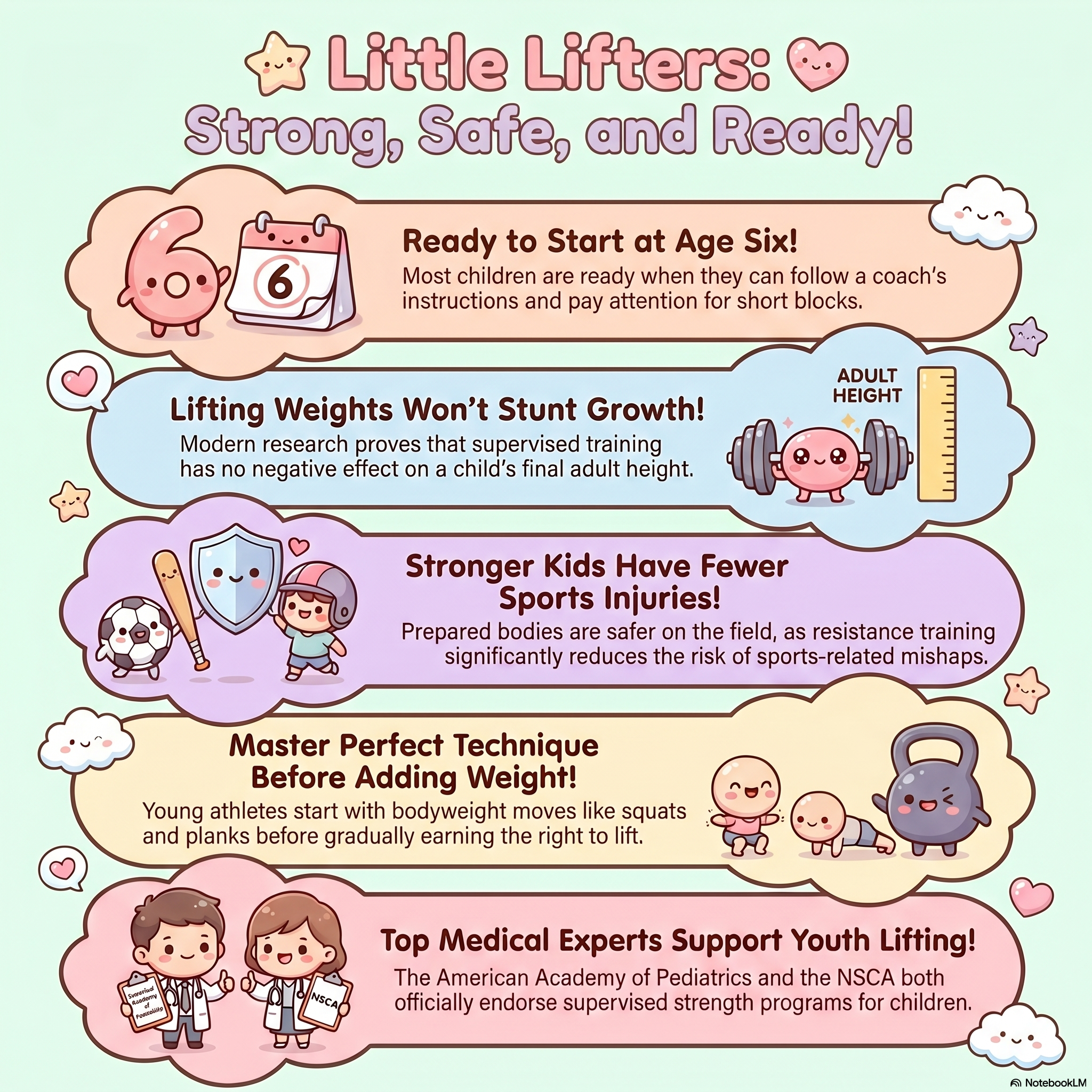
There is no universal "right age." Readiness matters more than a birthday.
Most kids are ready around age 6 or 7 — which is why Mighty Oak Athletic starts youth strength training at age 7.
Strength training, when properly supervised, does not stunt growth. That myth has been dead for decades.
The American Academy of Pediatrics, in its 2020 statement reaffirmed in November 2024, supports resistance training for children and adolescents.
Properly supervised strength training reduces injury risk in youth sports — it does not increase it.
Parents in Westmont, Hinsdale, Clarendon Hills, and Downers Grove ask me this question more than any other:
"At what age can my kid safely start lifting weights?"
Most parents expect the answer to be "high school" or "after puberty." That answer is wrong. It has been wrong for over twenty years. And the gap between what the research says and what most parents believe is one of the biggest reasons kids in our area get hurt playing sports.
Here is what the science actually says — and what we do about it at Mighty Oak Athletic in Westmont.
The Short Answer
There is no magic age. The right question is not "how old is my kid?" — the right question is "is my kid ready?"
Most healthy children are ready by age 6 or 7. That is the entry age we use at MOA, and it matches the consensus from the leading sports medicine and strength science organizations in the country.
A child is ready to start strength training when they can:
Follow directions from a coach
Pay attention for short blocks of time
Understand and demonstrate safe technique on simple movements
If your child can sit through a math lesson, take turns in a soccer drill, and listen to a coach for ten minutes — they are ready. The barrier is not strength. The barrier is attention and instruction.
What the Research Says
The three biggest names in this field all reached the same conclusion years ago.
The American Academy of Pediatrics (AAP) published its current statement on resistance training for children and adolescents in 2020. That statement was reaffirmed in November 2024. The AAP supports properly designed and supervised resistance training programs for healthy youth — and explicitly notes the benefits for both athletes and non-athletes. Source: Stricker PR, Faigenbaum AD, McCambridge TM, et al. Resistance Training for Children and Adolescents. Pediatrics 2020;145(6):e20201011.
The National Strength and Conditioning Association (NSCA) published its updated position statement on youth resistance training in 2009 — the foundational paper that pediatricians, strength coaches, and athletic trainers still reference. The NSCA confirms that resistance training is safe and beneficial for children when prescribed and supervised by a qualified professional, and that the benefits include improved strength, motor skill performance, and injury risk reduction. Source: Faigenbaum AD, Kraemer WJ, Blimkie CJ, et al. Youth resistance training: updated position statement paper from the National Strength and Conditioning Association. J Strength Cond Res 2009;23(5 Suppl):S60-S79.
The British Journal of Sports Medicine published the landmark 2016 paper "Citius, Altius, Fortius" — Latin for "Faster, Higher, Stronger," the Olympic motto. That paper laid out the case that resistance training in young athletes improves performance and reduces the risk of sports-related injury when grounded in motor skill development and proper coaching. Source: Faigenbaum AD, Lloyd RS, MacDonald J, Myer GD. Citius, Altius, Fortius: beneficial effects of resistance training for young athletes: narrative review. Br J Sports Med 2016;50(1):3-7.
Three independent organizations. Same answer.
The Three Myths Parents Still Believe
Myth #1: "Lifting weights stunts growth."
This one has been thoroughly debunked. The fear came from old, low-quality case reports — almost all involving unsupervised teenagers, ego-lifting, or improper technique. When kids train under proper supervision with appropriate loads, the research shows no negative effect on growth plates or final adult height. The AAP, the NSCA, and the British Journal of Sports Medicine all agree on this point.
Myth #2: "Wait until they hit puberty."
Pre-pubertal kids can absolutely build strength. Most of the early gains come from neural adaptation — the brain learning how to recruit muscle fibers more efficiently — rather than from muscle size. Waiting until puberty also means missing the window when kids most easily learn motor skills. The earlier a child learns to squat, hinge, press, and pull with good technique, the better off they are for the rest of their athletic life.
Myth #3: "Strength training isn't safe for kids."
This is the most damaging myth of all, because the truth is the opposite. Children supervised in properly designed resistance training programs have lower injury rates than children playing most organized youth sports. The injury risk is not in the squat rack. The injury risk is in unprepared bodies playing high-velocity sports.
What "Lifting Weights" Actually Looks Like for an 8-Year-Old
Most parents picture a teenager grinding under a loaded barbell. That picture is not what youth strength training looks like — at MOA or anywhere else doing it right.
For our youngest athletes, "lifting weights" means:
Bodyweight movements — squats, push-ups, planks, hangs, jumps, carries
Light kettlebells and dumbbells introduced gradually as technique earns the load
Empty or lightly-loaded barbells for kids who have mastered the bodyweight version
Four foundational movement patterns — squat, hinge, press, pull
Time spent learning — technique always comes before load
We do not chase one-rep maxes. We do not load kids before they have earned the movement. We teach the pattern, then add the load. That sequence is the entire game.
If you want a deeper look at exactly how we keep kids safe and progress them through these patterns, read our cornerstone guide: Youth Strength Training Safety: How Mighty Oak Athletic Keeps Kids Safe Under the Bar.
Why We Start at Age 6 at Mighty Oak Athletic
Six is not a magic number — it is the age where the majority of kids in our community hit the readiness threshold. They can follow a coach. They can pay attention for a 45-minute session. They can learn a movement pattern and reproduce it. Some 5-year-olds are ready. Some 9-year-olds are not. We meet kids where they are, but age 6 is the line where we open the door.
By starting at 6, we get years to build the movement foundation before the kid hits the middle school and high school stage where sports get fast, contact gets real, and unprepared bodies start getting hurt. That is the Death Resistant approach in action — Recovery, Movement, Nutrition — built into a kid's life before they need it.
Be Strong to Be Useful
The phrase that anchors everything we do at MOA is "be strong to be useful." Strength is not for showing off. It is not for chasing numbers. It is the foundation that lets a kid run faster, jump higher, fall safer, recover quicker, and stay in the game longer.
The right age to start building that foundation is the age when your child is ready to learn it — and for most kids in the Chicago suburbs, that age is 6 or 7.
If you are wondering whether your child is ready, the best way to find out is to bring them in for a free trial session at our Westmont gym. We will spend 45 minutes with your kid, assess where they are, and tell you honestly whether they are ready to start now or whether we should wait a few months.
Book your free trial at Mighty Oak Athletic →
-
The American Academy of Pediatrics, in its 2020 clinical report (reaffirmed November 2024), states that for children ages 5 to 7, it is reasonable to begin strength-building activities using bodyweight movements like frog jumps, bear crawls, and one-leg hops. Mighty Oak Athletic starts kids at age 6, right in the middle of that AAP-supported window. The real readiness markers are the ability to follow a coach's directions, pay attention for short blocks of time, and learn and reproduce a simple movement pattern. There is no universal "right age" — readiness matters more than birthday.
-
No. The American Academy of Pediatrics (2020 statement, reaffirmed November 2024) states directly that "Appropriately designed resistance training programs have no apparent negative effect on linear growth, physeal health, or the cardiovascular system." The growth-stunting myth was based on old, low-quality case reports involving unsupervised teenagers and improper technique. The National Strength and Conditioning Association and the British Journal of Sports Medicine reached the same conclusion.
-
At Mighty Oak Athletic, strength training for young kids centers on bodyweight movements (squats, push-ups, planks, hangs, jumps, carries), light kettlebells and dumbbells introduced gradually, and four foundational movement patterns — squat, hinge, press, and pull. Technique is taught before any load is added. The session is structured, supervised, and matched to the child's developmental stage.
-
Yes — for healthy children in properly designed and supervised programs. The American Academy of Pediatrics' 2020 clinical report states directly: "Injury rates in youth resistance training settings that adhere to qualified supervision and proper technique are lower than those occurring in other sports or general recess play at school." The British Journal of Sports Medicine's 2016 narrative review confirmed that an integrative training program grounded in resistance training and motor skill development reduces sports-related injury risk in young athletes.
Coach Mike Ockrim is the founder of Mighty Oak Athletic in Westmont, IL. He is a Certified Strength and Conditioning Specialist (CSCS) through the National Strength and Conditioning Association, a USA Weightlifting Level 1 Coach, and a USA Taekwondo Coach holding a 2nd-degree black belt. He has over 30 years of personal training experience and has taught group fitness at Life Time Fitness for more than 8 years. He is the author of three wellness books: Death Resistant, 13 Pounds in 30 Days, and Mighty Oak Athletic Nutrition. MOA serves families in Westmont, Hinsdale, Clarendon Hills, Downers Grove, Darien, Burr Ridge, Oak Brook, Willowbrook, Lisle, Woodridge, La Grange, Western Springs, and the surrounding western Chicago suburbs.
Should Child Athletes Lift Weights
Weightlifting has been a popular training method for athletes of all ages and skill levels. However, there has been some debate around whether child athletes should be allowed to lift weights. Some experts argue that weightlifting can lead to injury and stunted growth in young athletes, while others believe that weightlifting can have positive effects on a child's physical development and athletic performance. In this essay, we will explore the pros and cons of child athletes lifting weights and examine the current research on the topic.
Firstly, it is important to understand that weightlifting is not the same as powerlifting or bodybuilding. Weightlifting involves two main lifts: the snatch and the clean and jerk, which focus on explosiveness and technique rather than pure strength. Powerlifting, on the other hand, involves three lifts: the squat, bench press, and deadlift, which require maximum strength. Bodybuilding is focused on building muscle mass for aesthetic purposes. It is important to make this distinction because weightlifting, when done correctly, can be a safe and effective training method for child athletes.
One of the main concerns around child athletes lifting weights is the risk of injury. However, research has shown that the risk of injury from weightlifting is no greater than from other sports. A study by Faigenbaum et al. (2009) found that weightlifting was associated with a lower rate of injury than sports such as basketball, soccer, and gymnastics. Furthermore, weightlifting can actually help to prevent injury by strengthening the muscles and improving the overall stability of the body.
Another concern is that weightlifting can stunt a child's growth. This belief is based on the idea that weightlifting can put too much strain on the growth plates, which are areas of developing cartilage at the ends of the bones. However, this is a myth. A study by Lloyd et al. (2012) found that weightlifting did not have any negative effects on growth in children and adolescents. In fact, weightlifting can actually improve bone density and reduce the risk of osteoporosis later in life.
Weightlifting can also have positive effects on a child's physical development and athletic performance. Strength training has been shown to improve muscular strength and power, which can enhance sports performance (Haff and Triplett, 2016). Weightlifting can also improve cardiovascular health, body composition, and overall fitness (Faigenbaum et al., 2016). Furthermore, weightlifting can have psychological benefits such as increased confidence and self-esteem (Santos et al., 2018).
In conclusion, child athletes can safely lift weights and benefit from the training method. Weightlifting can help to prevent injury, improve physical development and athletic performance, and have positive psychological effects. It is important for coaches and parents to ensure that child athletes receive proper instruction and supervision to ensure safety and correct technique. With proper guidance, weightlifting can be a safe and effective training method for child athletes.
SIGN UP FOR A FREE WEIGHTLIFTING SESSION
References:
Faigenbaum, A. D., Kraemer, W. J., Blimkie, C. J., Jeffreys, I., Micheli, L. J., Nitka, M., & Rowland, T. W. (2009). Youth resistance training: updated position statement paper from the national strength and conditioning association. The Journal of Strength & Conditioning Research, 23(Supplement 5), S60-S79.
Faigenbaum, A. D., Lloyd, R. S., MacDonald, J., & Myer, G. D. (2016). Citius, Altius, Fortius: beneficial effects of resistance training for young athletes. British Journal of Sports Medicine, 50(1), 3-7.
Haff, G. G., & Triplett, N. T. (2016). Essentials of strength training and conditioning (4th ed.). Human Kinetics.
Lloyd, R. S., Faigenbaum, A. D., Stone, M. H., Oliver, J. L., Jeffreys, I., Moody, J. A., & Myer, G. D. (2012). Position statement on youth resistance training: the 2014 International Consensus. British Journal of Sports Medicine, 48(7), 498-505.
Santos, E. J., Janeira, M. A., & Izquierdo, M. (2018). The effects of resistance training on explosive strength indicators in adolescent basketball players. The Journal of Strength & Conditioning Research, 32(1), 3-10.
How Much Weight Can a Child Safely Lift
As children grow, their physical abilities and strength develop gradually. For many children, participating in various physical activities, including weightlifting, can provide several benefits such as improved bone health, muscular strength, and endurance. However, it is important to understand the safe amount of weight that children can lift to prevent injuries and promote healthy physical development.
According to the American Academy of Pediatrics (AAP), strength training can be a safe and effective way for children to improve their physical fitness as long as it is supervised by qualified trainers or coaches and done in a supportive environment. In general, children should start with bodyweight exercises and gradually progress to using additional weights.
For pulling movements like chin-ups or hinging movements like deadlifts, children can safely lift the equivalent of their body weight. For example, if a child weighs 50 pounds, they can safely lift up to 50 pounds for pulling or hinging exercises. On the other hand, for pressing movements like push-ups or squats, children can safely lift the equivalent of half their body weight. Thus, a 50-pound child can safely lift up to 25 pounds for pressing exercises.
It is important to note that these guidelines are for healthy children without any underlying medical conditions. Children with medical conditions such as heart problems, musculoskeletal disorders, or respiratory issues should receive clearance from a healthcare provider before starting any strength training program.
Additionally, it is crucial to prioritize proper technique and form when performing weightlifting exercises. Children should receive proper instruction on how to perform exercises safely and correctly. Trainers or coaches should also supervise children to ensure they are using appropriate weights and performing exercises correctly.
It is also important to consider other factors that can affect a child's ability to lift weights safely. These include the child's age, physical maturity, and level of physical activity. Children should not be pushed beyond their physical abilities and should be allowed to progress at their own pace.
In conclusion, weightlifting can provide several benefits for children's physical health when done safely and correctly. Children can safely lift the equivalent of their body weight for pulling or hinging exercises and half their body weight for pressing exercises. Parents and coaches should prioritize safety by ensuring proper technique, supervision, and appropriate progression of weightlifting exercises.
SIGN UP FOR A FREE WEIGHTLIFTING SESSION
References:
American Academy of Pediatrics. (2008). Strength training by children and adolescents. Pediatrics, 121(4), 835-840. doi: 10.1542/peds.2007-3790
Faigenbaum, A. D., Myer, G. D., & Andrews, J. R. (2010). Strength training for children and adolescents: Benefits and risks. International Journal of Sports Medicine, 31(9), 606-619. doi: 10.1055/s-0030-1262054
Hey Kids! Build Strong Legs - Build Confidence
Have you ever noticed how strong your legs feel after a good run or a long hike? Did you know that having strong legs can also make you feel more confident in yourself? In this essay, we will explore the correlation between leg strength and confidence.
First, let's talk about what confidence is. Confidence is the feeling of being sure of yourself and your abilities. It is important to have confidence because it helps you to believe in yourself and to take on new challenges. When you are confident, you are more likely to succeed in whatever you set out to do.
Now, let's talk about how leg strength can impact your confidence. According to research, having strong legs can improve your balance, stability, and posture, which can make you feel more confident when you walk or stand. One study found that older adults who participated in leg-strengthening exercises reported an increase in self-confidence and a decrease in fear of falling (1).
Another study found that athletes who had stronger legs reported feeling more confident in their athletic abilities (2). This makes sense because having strong legs can help you to run faster, jump higher, and perform better in sports.
But leg strength isn't just important for athletes and older adults. It is important for everyone! Having strong legs can help you to perform everyday activities with ease, like climbing stairs or carrying heavy bags. When you feel strong and capable, you are more likely to feel confident in yourself and your abilities.
So, how can you improve your leg strength? There are many ways to do this! You can try exercises like squats, lunges, and leg presses. You can also participate in activities like running, hiking, or cycling. The key is to find an activity that you enjoy and that challenges you.
In conclusion, having strong legs can make you feel more confident in yourself and your abilities. It can improve your balance, stability, and posture, and help you to perform everyday activities with ease. So, don't forget to take care of your legs and keep them strong!
Citations:
Liu, C. J., Latham, N. K., & Progressive Resistance Exercise and Activities of Daily Living Group (2009). Progressive resistance strength training for improving physical function in older adults. The Cochrane Database of Systematic Reviews, 3, CD002759. https://doi.org/10.1002/14651858.cd002759.pub2
Lippi, G., Longo, U. G., Maffulli, N., & Moretti, B. (2011). A review of literature on the correlation between leg power and athletic performance. The Journal of Strength & Conditioning Research, 25(2), 585–596. https://doi.org/10.1519/JSC.0b013e3182023a74
Benefits of Strength and Conditioning Training on Performance for Student Athletes

Strength and conditioning training is a crucial component for enhancing athletic performance in student athletes. In recent years, numerous studies have shown the benefits of strength and conditioning training on athletic performance. In this essay, we will explore the benefits of strength and conditioning training on performance for student athletes and provide evidence-based research to support these claims.
One of the primary benefits of strength and conditioning training is its ability to improve muscular strength and endurance. Studies have shown that resistance training can lead to increased muscle strength and power, which can translate into improved athletic performance (1). Additionally, endurance training has been shown to enhance cardiovascular fitness, which is essential for sustained performance during games and practices (2).
Strength and conditioning training can also improve an athlete's speed and agility. According to a study published in the Journal of Strength and Conditioning Research, plyometric training can improve sprinting and jumping performance in young athletes (3). Additionally, agility training has been shown to improve change-of-direction ability, which is essential for many sports (4).
Injury prevention is another critical benefit of strength and conditioning training. The American College of Sports Medicine recommends that athletes engage in strength training to prevent injuries and improve overall health (5). A systematic review published in the British Journal of Sports Medicine found that strength training can significantly reduce the incidence of sports injuries (6).
Finally, strength and conditioning training can improve an athlete's mental toughness and overall confidence. A study published in the Journal of Applied Sport Psychology found that strength and conditioning training can lead to improvements in self-confidence and self-efficacy in young athletes (7). By developing greater physical strength and endurance, athletes can feel more confident in their abilities and perform at a higher level.
In conclusion, strength and conditioning training is an essential tool for student athletes who want to improve their performance. By improving muscular strength and endurance, enhancing speed and agility, preventing injuries, and building mental toughness and confidence, strength and conditioning training can have a significant impact on athletic performance. Therefore, it is recommended that student athletes incorporate strength and conditioning training into their training regimen to optimize their performance.
References:
Peterson MD, Rhea MR, Alvar BA. Maximizing strength development in athletes: a meta-analysis to determine the dose-response relationship. J Strength Cond Res. 2004;18(2):377-382.
Weston M, Taylor KL, Batterham AM, Hopkins WG. Effects of low-volume high-intensity interval training (HIT) on fitness in adults: a meta-analysis of controlled and non-controlled trials. Sports Med. 2014;44(7):1005-1017.
Lloyd RS, Faigenbaum AD, Stone MH, Oliver JL, Jeffreys I, Moody JA, et al. Position statement on youth resistance training: the 2014 International Consensus. Br J Sports Med. 2014;48(7):498-505.
Chaouachi A, Manzi V, Chaalali A, Wong del P, Chamari K, Castagna C. Determinants analysis of change-of-direction ability in elite soccer players. J Strength Cond Res. 2012;26(10):2667-2676.
American College of Sports Medicine. Position stand on the recommended quantity and quality of exercise for developing and maintaining cardiorespiratory and muscular fitness, and flexibility in healthy adults. Med Sci Sports Exerc. 1998;30(6):975-991.
Lauersen JB, Bertelsen DM, Andersen LB. The effectiveness of exercise interventions to prevent sports injuries: a systematic review and meta-analysis of randomised controlled trials. Br J Sports Med. 2014;48(11):871-877.
Johnson MB, Thornell N. The effects of strength training on self-confidence and self-efficacy in high school students. J Appl Sport Psychol. 2015;27(4):365-375.
Free, Fun, and Easy Exercises for Kids to Try at Home

Physical activity is an essential component of a healthy lifestyle for children. Engaging in regular exercise helps children develop strong muscles and bones, improve coordination and balance, and reduce the risk of obesity and chronic disease. However, getting kids to exercise can sometimes be a challenge. In this essay, we will explore some fun and easy exercises for kids to try, along with references to support their benefits.
Jumping Jacks: This classic exercise is easy to do and can be done virtually anywhere. Jumping jacks help to increase heart rate and work several muscles, including the legs, arms, and core. According to a study published in the Journal of Physical Activity and Health, jumping jacks are a beneficial exercise for improving cardiovascular fitness in children (Mintjens et al., 2018).
Hula Hooping: Hula hooping is a fun and engaging exercise that can improve coordination and balance. It can also be a social activity, as kids can practice together and challenge each other. A study published in the American Journal of Health Promotion found that hula hooping is an effective way to increase physical activity levels in children (Timmons et al., 2019).
Running or Walking: Running or walking is a great way to get kids moving and active. They can start with short distances and gradually increase their time and distance as their fitness level improves. Running or walking helps to develop cardiovascular fitness, as well as strengthen the muscles in the legs and core. A study published in the Journal of Exercise Science & Fitness found that running is an effective way to improve cardiovascular fitness in children (Kwon et al., 2020).
Dancing: Dancing is a fun and creative way for kids to exercise. They can dance to their favorite music or learn new moves by following along with dance videos. Dancing can improve coordination, balance, and flexibility. A study published in the Journal of Physical Activity and Health found that dancing is an effective way to increase physical activity levels in children (Irwin et al., 2018).
Playground Activities: Playground activities, such as climbing, swinging, and playing on the monkey bars, provide a fun and challenging way for kids to exercise. These activities help to develop upper body and core strength, as well as improve coordination and balance. A study published in the Journal of Physical Activity and Health found that playground activities are an effective way to improve physical activity levels in children (Erwin et al., 2014).
In conclusion, there are many fun and easy exercises that kids can try to improve their physical fitness and health. Jumping jacks, hula hooping, running or walking, dancing, and playground activities are all beneficial forms of exercise for children. Encouraging kids to engage in regular physical activity can help them develop healthy habits that will benefit them throughout their lives.
References:
Erwin, H. E., Beighle, A., & Morgan, C. F. (2014). Effect of playground equipment on school recess physical activity. Journal of Physical Activity and Health, 11(4), 719-725.
Irwin, J. D., Irwin, L. M., & Ryan, T. D. (2018). Sit less and move more: Perspectives on family physical activity from families with overweight and obesity. Journal of Physical Activity and Health, 15(3), 166-174.
Kwon, S., Kim, Y., Park, S., & Kwon, Y. (2020). The effect of regular exercise on cardiovascular fitness in Korean children. Journal of Exercise Science & Fitness, 18(1), 12-16.
Mintjens, S., Menting, M. D., Daams, J. G., van Poppel, M. NH., Renders, C. M., & de Vries, N. K. (2018). Cardiorespiratory fitness in children: A call for action. Journal of Physical Activity and Health, 15(2), 98-105.
Timmons, B. W., Naylor, P. J., & Pfeiffer, K. A. (2019). Physical activity for children: A statement of guidelines for children ages 5-12. American Journal of Health Promotion, 33(2), 305-307.
SIGN UP FOR A FREE STRENGTH TRAINING TRIAL SESSION AT MIGHTY OAK ATHLETIC
A Four Week Guide to Drinking Less Alcohol
Drinking alcohol is a common social activity, but excessive consumption can lead to negative health and personal consequences. Here is a four-week guide to help you reduce your alcohol intake:
Week 1: Awareness and tracking
Keep a record of the number of drinks you have each day and the times you drink them.
Use a smartphone app or write it down in a journal.
Set a goal for the week, such as reducing the number of drinks you have each day or cutting out alcohol for one or two days each week.
Week 2: Alternatives and self-reflection
Try non-alcoholic alternatives, such as sparkling water with a twist of lemon or lime, club soda with bitters, or kombucha.
Reflect on why you drink, the situations and emotions that trigger drinking, and what you hope to achieve by reducing your alcohol consumption.
Consider seeking support from a trusted friend or family member or seeking professional help.
Week 3: Planning and preparation
Plan ahead for social events, such as bringing non-alcoholic drinks or suggesting alternative activities that don’t involve drinking.
Make healthier food choices to reduce cravings and support your goal to drink less alcohol.
Find new activities and hobbies that bring you pleasure and help you relax without alcohol.
Week 4: Review and reinforcement
Review your progress, the benefits you’ve experienced, and what you’ve learned about yourself and your relationship with alcohol.
Reinforce your commitment to reducing your alcohol consumption, and remind yourself of the reasons why you started this journey.
Celebrate your achievements and consider setting new goals for the future.
Reducing alcohol consumption requires effort and commitment, but the benefits to your health, relationships, and overall well-being are well worth it. If you need additional support, consider talking to a healthcare provider or reaching out to a support group, such as Alcoholics Anonymous (AA).
References:
National Institute on Alcohol Abuse and Alcoholism. (2021). Rethinking Drinking. Retrieved from https://www.rethinkingdrinking.niaaa.nih.gov/
Substance Abuse and Mental Health Services Administration. (2021). Resources for Cutting Down or Quitting Drinking. Retrieved from https://www.samhsa.gov/find-help/at-recovery/resources-cutting-down-or-quitting-drinking
SIGN UP FOR A FREE 10 MINUTE 1-on-1 COACHING CALL
Improve Your Ability to Get Up and Down From the Floor
Being able to get up off the floor is an important aspect of physical function and mobility. As we age, our ability to perform this task can decline, making it difficult to perform everyday activities and increasing the risk of falls. However, there are exercises that can help improve flexibility, balance, motor coordination, and muscle power, making it easier to get up off the floor.
Flexibility is the ability to move your joints through their full range of motion. Stretching exercises such as hamstring stretches, quad stretches, and calf stretches can help improve flexibility in the legs, making it easier to get up off the floor. Yoga and Pilates can also be great ways to improve flexibility and balance.
Balance is the ability to maintain control of the body's center of gravity. Exercises such as single-leg balance, heel-to-toe walking, and tai chi can help improve balance and reduce the risk of falls.
Motor coordination is the ability to coordinate movement between different parts of the body. Exercises such as ladder drills, obstacle courses, and agility training can help improve motor coordination and make it easier to get up off the floor.
Muscle power is the ability to generate force quickly. Resistance training exercises such as squats, lunges, and leg press can help improve muscle power and make it easier to get up off the floor.
It's important to note that these exercises should be performed under the guidance of a trained professional, especially if you have any underlying health conditions or injuries. Start with low-impact, simple exercises and gradually increase difficulty as your strength and flexibility improves.
In summary, being able to get up off the floor is an important aspect of physical function and mobility. Stretching, balance, motor coordination, and resistance training exercises can help improve flexibility, balance, motor coordination, and muscle power, making it easier to get up off the floor. It's important to start with low-impact exercises and gradually increase difficulty as your strength and flexibility improves. Consult with a professional trainer or physical therapist to create a safe and effective exercise program.
Volleyball Strength and Conditioning Program
By Coach Mike Ockrim, CSCS, USA Weightlifting Level 1 Coach
Founder, Mighty Oak Athletic • Founder, Sunday Funday Sports • Author of Death Resistant, 13 Pounds in 30 Days, and Mighty Oak Athletic Nutrition
🏐 Key Takeaways
Volleyball is a jumping and landing sport — and research shows most serious lower-body injuries happen on the landing, not the takeoff.
The fix isn't more volleyball. It's strength and landing skill built off the court, where you can slow things down and coach them right.
MOA builds young players around four movement patterns — squat, hinge, press, and pull — using barbell, kettlebell, and bodyweight work every session. The "press" is overhead, which is exactly how a player serves and spikes.
The American Academy of Pediatrics says kids as young as 5 can build strength with moves like one-legged hops and jumps. MOA starts kids at age 6.
You can start at home today with the 20-minute "Jump & Land" workout below: jump squats, lateral bounds, broad jumps, and single-leg balance.
The 20-Minute "Jump & Land" Workout (At Home)
No equipment needed. This bodyweight session trains the takeoff and the landing, which is the part most kids never practice. Move with control. A quiet, soft landing beats a high jump every time.
Bodyweight Squats — 2 rounds of 12 (warm up the jump)
Broad Jumps — 3 rounds of 5, sticking each landing for 2 seconds (power out, land soft)
Lateral Bounds — 3 rounds of 6 per side, pausing on each landing (side-to-side control for the net)
Jump Squats — 3 rounds of 6, landing quiet and bending the knees and hips (the volleyball motion)
Single-Leg Balance — 3 rounds of 20 seconds per leg (the foundation of a safe one-leg landing)
Glute Bridges — 3 rounds of 12 (wake up the hips that absorb the load)
The rule for every jump: land like a ninja. Soft, balanced, hips back. Do this twice a week and your player will jump higher and land safer.
A good volleyball player jumps a lot. Serve, block, spike, repeat — a single match can mean dozens and dozens of explosive jumps, each one ending in a hard landing. Now multiply that across a club season. That's a huge amount of force traveling through a young athlete's knees and ankles, over and over.
Here's what most parents don't realize: the strength that protects your young volleyball player isn't built on the court. It's built off it. More reps at practice won't fix a shaky landing. Slowing down and teaching the body how to absorb force will. That's what we do at Mighty Oak Athletic in Westmont.
What the Research Says
Volleyball is "non-contact," but the loads are anything but gentle. The constant jumping and landing — especially on spikes — puts heavy, repeated stress on the lower body, and that's where most volleyball injuries show up. The two big ones are ankle sprains and knee injuries, and the serious knee injuries tend to happen during landings, often when a player comes down off-balance or on one leg.
The good news is that landing well is a skill — and skills can be taught. Studies comparing experienced and beginner players found that the experienced ones simply land in safer positions. Even better, research on young athletes shows that strength and neuromuscular training programs measurably reduce lower-body injury risk, including the scary knee injuries. In plain terms: a stronger, better-coordinated athlete who has practiced landing is a safer athlete.
And before anyone worries that strength training is too much for a young body — it isn't. The American Academy of Pediatrics, in its 2020 clinical report (reaffirmed in November 2024), says well-designed resistance training has no shown negative effect on kids' growth plates, height, or heart health. It even points out that children as young as 5 can build strength with simple moves like one-legged hops and jumps. That's not a coincidence — those are landing drills.
The Four Patterns for Volleyball
At MOA, every athlete trains the four movement patterns that build real athletic performance: squat, hinge, press, and pull. For a volleyball player, each one has a clear job.
Squat builds the legs that drive every jump. A higher, more powerful vertical starts here.
Hinge teaches the hips to load and absorb force — the exact motion of a soft, safe landing. This is the most under-trained pattern in most young players, and the most important for protecting knees.
Press at MOA is an overhead press. It builds the shoulder strength and stability a player uses on every serve and spike, and research shows shoulder strength work lowers injury risk from all that repetitive overhead action.
Pull balances out all that pressing and keeps the shoulders healthy for the long haul.
We coach these with barbell, kettlebell, and bodyweight, all three, every session — light and clean first, heavier only when a kid earns it.
Recovery, Movement, Nutrition
Strength is just one piece. Our Death Resistant framework runs on three circles: Recovery, Movement, and Nutrition. A young player who jumps all weekend but sleeps badly and eats junk is running on empty. Training is the Movement circle — but it only pays off when sleep and food back it up. That's the long game, and it's how you keep a player healthy across a whole season.
Why We Start at Age 6
Plenty of gyms make families wait until middle school. We don't. The AAP supports strength work for kids in the 5-to-7 window using bodyweight and light resistance — and the hops and jumps they recommend are the same landing skills a volleyball player needs anyway. We open the door at 6 because the science opens it at 5, and because every year a young athlete spends learning to move well is a year of advantage they keep for life.
Be Strong to Be Useful
A strong volleyball player isn't just a bigger threat at the net. They're a more durable athlete, a more confident kid, and someone whose body can handle whatever comes next — in sport and out of it. That's our whole philosophy at MOA: be strong to be useful.
Want to see what off-court training looks like for your young player? Book a free trial at Mighty Oak Athletic in Westmont and let's build a stronger, safer athlete — one clean landing at a time.
Coach Mike Ockrim is the founder of Mighty Oak Athletic in Westmont, IL. He is a Certified Strength and Conditioning Specialist (CSCS) through the National Strength and Conditioning Association, a USA Weightlifting Level 1 Coach, and a USA Taekwondo Coach holding a 2nd-degree black belt. He has over 30 years of personal training experience and has taught group fitness at Life Time Fitness for more than 8 years. He is the author of three books: Death Resistant, 13 Pounds in 30 Days, and Mighty Oak Athletic Nutrition. MOA serves families in Westmont, Hinsdale, Clarendon Hills, Downers Grove, Darien, Burr Ridge, Oak Brook, Willowbrook, Lisle, Woodridge, La Grange, Western Springs, and the surrounding western Chicago suburbs.
How To Be Beach Ready All Year Round: A Guide to Living a Healthy and Active Lifestyle
Want to go to the beach? Like right now? Is it possible to pack a bag and be on the next flight to a tropical paradise? Or will it take a few weeks of preparation and planning?
Most people are not always beach ready. While this sounds like it’s about vanity, well, it is. And it isn’t. Always being beach ready is also about living a healthy and active lifestyle all of the time - not just when the calendar turns to a new year, when spring break is around the corner, or summertime brings less clothing and more skin.
Riding a wave of health is actually unhealthy. Fluctuating between periods of great nutrition, consistent movement, and deep rest, alternated with junk food binges, sedentary movie marathons, and restless nights is brutal on the body and the mind.
Live a healthy and active life. All the time. Not just when an exterior factor pushes in the direction of healthier choices. Make health choices consistently, as if that beach vacation were tomorrow. Then, when Eddie calls and says he has two tickets to paradise, it will be easy to pack a bag and leave tonight!
The Mighty Oak Strength Standard
The Mighty Oak Strength Standard
Before attempting to lift heavy weights, it is important to build relative strength - the ability to move one’s body with ease and efficiency. Just like not all oak trees look identical with the same number of branches or leaves, becoming a Mighty Oak will vary from person-to-person. Below is an example of a Mighty Oak Athletic bodyweight workout. Complete the sequence without having to break the reps up to be a true Mighty Oak!

From Acorn to Mighty Oak
What does it take to develop from a Mighty Acorn into a Mighty Oak? It takes consistent growth over a long period of time. This is the same process that a tiny acorn uses to grow into a hearty sapling and then into a robust tree. The process cannot be rushed. Be patient and take a long view. Do not focus on being healthy and active just for an upcoming vacation, rather, think about what it takes to be healthy and active over the age of 100.
How long until a healthy and active life is achieved? This will vary for each person. This is because everyone will be starting at a different level of health, have a different level of commitment, and a different definition of healthy. It is important to remember that health is not a destination - it is a way of life. Once a desired level of wellness is attained, it is necessary to continually maintain that level of wellness through consistent nutrition, movement, and recovery.
Seriously, how long? Ok, here is a general template. Most new healthy behaviors will get positive results for most people for about one month. Through proper nutrition movement and recovery, by day 6, the face will be less puffy and the body less sweaty. On day 12, pants will be less tight and the belly less bloated. Day 18 will have joints less creaky and shirts fitting less tight. By day 24, energy levels will be high throughout the day and friends will start to take notice and ask for the “secret.”
Then what? That is when it will become more challenging. After the first month, making small changes will no longer yield large improvements. The health improvements will become more incremental. Be patient and stay the course.
After approximately six months of consistent dedication to nutrition, movement, and sleep, there will be noticeable, sustainable changes. The body will have reset. The brain will be more clear, energy will be consistently high all day, sleep will be deep and rejuvenating, body fat will be replaced by lean muscle, and mobility will be significantly improved. This is where many people think that the work is done and begin to coast. Just like the slow process to achieving health, the reverse is also true. People at this stage begin to slowly erode the healthy habits and slide back into doing the things that got them unhealthy in the first place. Do not get complacent! Remember: lifetime commitment, not a destination.
After approximately 2-3 years of being committed to a healthy and active lifestyle, most people will have broken through and are in for the long haul. If that sounds like a long time, again, widen the view. Start thinking in terms of decades, not months.
Do not get overwhelmed! While it is a long, slow process, stay focused on the immediate tasks. Do not get discouraged by small setbacks or unforeseen challenges. Again, take the long view. There will be moments of weakness at a breakfast buffet, or injuries from over-enthusiastic activities - that is ok! Maintain the long view and see the setbacks for what they are - a small blip on the journey to leading a healthy and active lifestyle.